• Türkiye's Billions of Dollars Railway Ambition: Connecting China, Europe and the Middle East!

    Türkiye is accelerating its transformation into a major global trade and logistics hub, targeting stronger China–Europe freight connectivity by 2031 while developing strategic routes linking Central Asia, the Gulf and Europe.

    Four major transport corridors are shaping the region's future:

    Middle Corridor: Connects China to Europe through Central Asia, the Caspian Sea, Azerbaijan, Georgia and Türkiye.

    Zangezur Corridor: Aims to strengthen connections between Türkiye, Azerbaijan and Central Asia through a new strategic transport link.

    Iraq Development Road: A planned railway and highway network connecting Iraq's Grand Faw Port to Türkiye and European markets.

    Modern Hijaz Railway: A proposed revival and expansion connecting Türkiye through Syria and Jordan toward Saudi Arabia, with longer-term ambitions to reach Oman.

    Faster and more diversified international trade routes
    Stronger access between Asian and European markets
    New investment opportunities in railways, ports and logistics
    Greater economic integration across the Middle East and Central Asia

    The bigger picture: Türkiye aims to become a central crossroads of Eurasian trade, linking multiple regional freight networks into a more connected transport system.

    Could these corridors reshape global trade routes over the next decade?
    Türkiye's Billions of Dollars Railway Ambition: Connecting China, Europe and the Middle East! Türkiye is accelerating its transformation into a major global trade and logistics hub, targeting stronger China–Europe freight connectivity by 2031 while developing strategic routes linking Central Asia, the Gulf and Europe. Four major transport corridors are shaping the region's future: 🚞 Middle Corridor: Connects China to Europe through Central Asia, the Caspian Sea, Azerbaijan, Georgia and Türkiye. 🚄 Zangezur Corridor: Aims to strengthen connections between Türkiye, Azerbaijan and Central Asia through a new strategic transport link. 🚆 Iraq Development Road: A planned railway and highway network connecting Iraq's Grand Faw Port to Türkiye and European markets. 🚂 Modern Hijaz Railway: A proposed revival and expansion connecting Türkiye through Syria and Jordan toward Saudi Arabia, with longer-term ambitions to reach Oman. ✅ Faster and more diversified international trade routes ✅ Stronger access between Asian and European markets ✅ New investment opportunities in railways, ports and logistics ✅ Greater economic integration across the Middle East and Central Asia 🌐 The bigger picture: Türkiye aims to become a central crossroads of Eurasian trade, linking multiple regional freight networks into a more connected transport system. 💬 Could these corridors reshape global trade routes over the next decade?
    0 Σχόλια 0 Μοιράστηκε
  • TURKEY: A COUNTRY CONNECTING EUROPE AND ASIA

    Turkey occupies a strategic position between Europe and Asia, with coastlines along the Black Sea, Aegean Sea, and Mediterranean Sea.

    It shares land borders with 8 countries, stretching from the Balkans to the Caucasus and the Middle East.

    Turkey’s Land Borders:

    Syria — 911 km
    Iran — 534 km
    Iraq — 367 km
    Armenia — 328 km
    Georgia — 273 km
    Bulgaria — 259 km
    Greece — 206 km
    Azerbaijan — ~17 km via Nakhchivan

    Key Facts

    Capital: Ankara
    Area: ~783,562 km²
    Population: ~86 million
    Official language: Turkish
    Currency: Turkish lira
    Highest peak: Mount Ararat — 5,137 m
    Government: Presidential republic
    Location: Europe & Asia
    Seas: Black Sea, Aegean Sea & Mediterranean Sea

    Did you know Turkey shares land borders with 8 countries?

    #Turkey #Geography #WorldMap #Europe #Asia
    🇹🇷 TURKEY: A COUNTRY CONNECTING EUROPE AND ASIA 🌍 Turkey occupies a strategic position between Europe and Asia, with coastlines along the Black Sea, Aegean Sea, and Mediterranean Sea. It shares land borders with 8 countries, stretching from the Balkans to the Caucasus and the Middle East. 🗺️ Turkey’s Land Borders: 🇸🇾 Syria — 911 km 🇮🇷 Iran — 534 km 🇮🇶 Iraq — 367 km 🇦🇲 Armenia — 328 km 🇬🇪 Georgia — 273 km 🇧🇬 Bulgaria — 259 km 🇬🇷 Greece — 206 km 🇦🇿 Azerbaijan — ~17 km via Nakhchivan 📌 Key Facts 🏙️ Capital: Ankara 📐 Area: ~783,562 km² 👥 Population: ~86 million 🗣️ Official language: Turkish 💰 Currency: Turkish lira ⛰️ Highest peak: Mount Ararat — 5,137 m 🏛️ Government: Presidential republic 🌍 Location: Europe & Asia 🌊 Seas: Black Sea, Aegean Sea & Mediterranean Sea 💬 Did you know Turkey shares land borders with 8 countries? #Turkey #Geography #WorldMap #Europe #Asia
    0 Σχόλια 0 Μοιράστηκε
  • Azerbaijani Muslim woman stitches entire Qur’an by hand in three years

    A Muslim female artist from Azerbaijan has completed an extraordinary spiritual project by stitching the entire Holy Qur’an onto silky fabric over a period of three years.

    The work reflects devotion, patience, and deep reverence for the sacred text, drawing admiration across communities.

    How do such acts of dedication strengthen personal faith?
    Azerbaijani Muslim woman stitches entire Qur’an by hand in three years A Muslim female artist from Azerbaijan has completed an extraordinary spiritual project by stitching the entire Holy Qur’an onto silky fabric over a period of three years. The work reflects devotion, patience, and deep reverence for the sacred text, drawing admiration across communities. How do such acts of dedication strengthen personal faith?
    0 Σχόλια 0 Μοιράστηκε
  • Hamidiye Camii in Kırşehir, Turkiye, is a truly unique mosque unlike any other. Its interior features a ceiling painted like the sky and a carpet resembling grass, inspired by Qur’an 2:22, which describes the earth as a dwelling and the sky as a canopy.

    Designed by an Azerbaijani architect, the mosque draws visitors from around the world for prayer, reflection, and admiration. Its wooden minbar is crafted to resemble tree trunks, blending naturally with the overall theme. Originally built in the 1910s during the Ottoman era and named after Sultan Abdülhamid II, the mosque later fell into disrepair, was demolished, and rebuilt in 2016.

    With its sky-and-garden imagery, Hamidiye Camii is often said to evoke the gardens of Paradise, making it a serene place for contemplation and worship.

    Fund honest independent Muslim journalism: https://support.islamchannel.tv
    Hamidiye Camii in Kırşehir, Turkiye, is a truly unique mosque unlike any other. Its interior features a ceiling painted like the sky and a carpet resembling grass, inspired by Qur’an 2:22, which describes the earth as a dwelling and the sky as a canopy. Designed by an Azerbaijani architect, the mosque draws visitors from around the world for prayer, reflection, and admiration. Its wooden minbar is crafted to resemble tree trunks, blending naturally with the overall theme. Originally built in the 1910s during the Ottoman era and named after Sultan Abdülhamid II, the mosque later fell into disrepair, was demolished, and rebuilt in 2016. With its sky-and-garden imagery, Hamidiye Camii is often said to evoke the gardens of Paradise, making it a serene place for contemplation and worship. Fund honest independent Muslim journalism: https://support.islamchannel.tv
    0 Σχόλια 0 Μοιράστηκε
  • We extend our warmest congratulations to the Government and people of Azerbaijan on the auspicious occasion of their National Day.

    May this day bring elevated prosperity, unity, and continued progress. Here's to stronger cooperation and lasting brotherly and sisterly relations between Azerbaijan and other #D8 Member States.

    #Azerbaijan #D8
    We extend our warmest congratulations to the Government and people of Azerbaijan on the auspicious occasion of their National Day. May this day bring elevated prosperity, unity, and continued progress. Here's to stronger cooperation and lasting brotherly and sisterly relations between Azerbaijan and other #D8 Member States. #Azerbaijan #D8
    0 Σχόλια 0 Μοιράστηκε
  • #Turkey is located at the crossroads of Asia and Europe. It is bordered by Greece and Bulgaria to the northwest, the Black Sea to the north, Georgia to the northeast, Armenia, the Azerbaijani exclave of Nakhchivan, and Iran to the east, Iraq to the southeast, Syria and the Mediterranean Sea to the south, and the Aegean Sea to the west.
    Area: 783,562 square kilometers.
    Topography: Includes the Taurus Mountains in the south, the Pontic Mountains in the north, fertile plains like the Anatolian Plain, and the Central Anatolian Plateau, along with lakes such as Lake Van.
    Water Bodies: Borders four major seas: the Black Sea, the Sea of Marmara, the Aegean Sea, and the Mediterranean Sea.
    2. Climate:
    Coastal Areas:
    Mediterranean and Aegean Coasts: Mediterranean climate with hot, dry summers and mild, wet winters.
    Black Sea Coast: Moderate and humid climate year-round.
    Inland Regions: Continental climate with hot, dry summers and very cold, snowy winters.
    Climate Change: Turkey faces challenges like drought and rising temperatures due to climate change.
    3. Population:
    Population Size: Approximately 84.5 million (2021).
    Population Distribution: Istanbul is the largest city with over 15.5 million residents. Ankara is the second largest, followed by Izmir, Bursa, and Antalya.
    Ethnic Diversity: Predominantly Turks, with a significant Kurdish minority, and smaller Armenian, Arab, and Greek communities.
    Population Growth: About 1.2% annually.
    4. Economy:
    GDP: Approximately $7.209 trillion in 2021.
    Exports: Includes agricultural products, automobiles, textiles, and electronics, valued at $225 billion.
    Imports: Mainly energy and raw materials, totaling $271 billion.
    Unemployment Rate: Around 10.3%.
    Agriculture and Industry: Notable for wheat, hazelnuts, and olives, as well as being a leading producer of automobiles and steel.
    5. Currency:
    The official currency is the Turkish Lira (TRY), which experiences fluctuations in value against foreign currencies.
    6. Tourism:
    Visitor Numbers: Turkey welcomed around 30 million tourists in 2021.
    Revenue: Approximately $24.5 billion.
    Top Destinations:
    Istanbul: Iconic landmarks like Hagia Sophia, the Blue Mosque, and Topkapi Palace.
    Antalya: A hub for coastal tourism.
    Cappadocia: Known for its unique landscapes and hot air balloons.
    Historical Sites: Ephesus and Troy.
    7. History:
    Civilizations: Turkey has been home to various civilizations, including the Hittites, Persians, Romans, and Byzantines.
    Ottoman Era: Spanned from the 14th century to the early 20th century.
    Modern Republic: Established in 1923 under Mustafa Kemal Atatürk, who moved the capital to Ankara and initiated widespread reforms.
    8. Education:
    Education System: Mandatory for 12 years (6 years primary, 3 years middle, 3 years secondary).
    Higher Education: Home to numerous universities, including Istanbul University and Middle East Technical University.
    Literacy Rate: Approximately 96%.
    9. Healthcare:
    Healthcare System: Turkey has a well-developed healthcare system encompassing public and private sectors.
    Medical Tourism: A popular destination for medical and cosmetic treatments, attracting thousands of patients annually.
    Hospitals: Equipped with state-of-the-art medical technology.
    10. Culture:
    Official Language: Turkish.
    Religion: Islam is the predominant religion, with Christian and Jewish minorities.
    Traditions: A blend of Eastern and Western cultural influences.
    Turkey serves as a bridge between East and West, with a rich history and modern development.
    #Turkey is located at the crossroads of Asia and Europe. It is bordered by Greece and Bulgaria to the northwest, the Black Sea to the north, Georgia to the northeast, Armenia, the Azerbaijani exclave of Nakhchivan, and Iran to the east, Iraq to the southeast, Syria and the Mediterranean Sea to the south, and the Aegean Sea to the west. Area: 783,562 square kilometers. Topography: Includes the Taurus Mountains in the south, the Pontic Mountains in the north, fertile plains like the Anatolian Plain, and the Central Anatolian Plateau, along with lakes such as Lake Van. Water Bodies: Borders four major seas: the Black Sea, the Sea of Marmara, the Aegean Sea, and the Mediterranean Sea. 🌐 2. Climate: Coastal Areas: Mediterranean and Aegean Coasts: Mediterranean climate with hot, dry summers and mild, wet winters. Black Sea Coast: Moderate and humid climate year-round. Inland Regions: Continental climate with hot, dry summers and very cold, snowy winters. Climate Change: Turkey faces challenges like drought and rising temperatures due to climate change. 🌐 3. Population: Population Size: Approximately 84.5 million (2021). Population Distribution: Istanbul is the largest city with over 15.5 million residents. Ankara is the second largest, followed by Izmir, Bursa, and Antalya. Ethnic Diversity: Predominantly Turks, with a significant Kurdish minority, and smaller Armenian, Arab, and Greek communities. Population Growth: About 1.2% annually. 🌐 4. Economy: GDP: Approximately $7.209 trillion in 2021. Exports: Includes agricultural products, automobiles, textiles, and electronics, valued at $225 billion. Imports: Mainly energy and raw materials, totaling $271 billion. Unemployment Rate: Around 10.3%. Agriculture and Industry: Notable for wheat, hazelnuts, and olives, as well as being a leading producer of automobiles and steel. 🌐 5. Currency: The official currency is the Turkish Lira (TRY), which experiences fluctuations in value against foreign currencies. 🌐 6. Tourism: Visitor Numbers: Turkey welcomed around 30 million tourists in 2021. Revenue: Approximately $24.5 billion. Top Destinations: Istanbul: Iconic landmarks like Hagia Sophia, the Blue Mosque, and Topkapi Palace. Antalya: A hub for coastal tourism. Cappadocia: Known for its unique landscapes and hot air balloons. Historical Sites: Ephesus and Troy. 🌐 7. History: Civilizations: Turkey has been home to various civilizations, including the Hittites, Persians, Romans, and Byzantines. Ottoman Era: Spanned from the 14th century to the early 20th century. Modern Republic: Established in 1923 under Mustafa Kemal Atatürk, who moved the capital to Ankara and initiated widespread reforms. 🌐 8. Education: Education System: Mandatory for 12 years (6 years primary, 3 years middle, 3 years secondary). Higher Education: Home to numerous universities, including Istanbul University and Middle East Technical University. Literacy Rate: Approximately 96%. 🌐 9. Healthcare: Healthcare System: Turkey has a well-developed healthcare system encompassing public and private sectors. Medical Tourism: A popular destination for medical and cosmetic treatments, attracting thousands of patients annually. Hospitals: Equipped with state-of-the-art medical technology. 🌐 10. Culture: Official Language: Turkish. Religion: Islam is the predominant religion, with Christian and Jewish minorities. Traditions: A blend of Eastern and Western cultural influences. Turkey serves as a bridge between East and West, with a rich history and modern development.
    0 Σχόλια 0 Μοιράστηκε
  • The Linguistic Structure of Iran
    Iran is a highly diverse country with many languages spoken across its regions. The most prominent language is Persian (Farsi), which serves as the official language. However, there are several other major languages, often categorized into distinct linguistic groups:
    1. Indo-Iranian Group
    • Persian (Farsi) – Official and widely spoken across Iran.
    • Kurdish – Mainly spoken in western regions.
    • Baluchi – Spoken in southeastern Iran.
    2. Turkic Group
    • Azerbaijani (Azeri) – Predominantly spoken in the northwest.
    • Turkmen – Spoken in the northeastern provinces.
    • Qashqai (Kashkai) is a Turkic language spoken by the Qashqai people, a semi-nomadic pastoralist group primarily living in the southwestern region of Iran, particularly in Fars province. It belongs to the Oghuz branch of the Turkic language family, which includes Azerbaijani, Turkish, and Turkmen. Qashqai is closely related to Azerbaijani, and many speakers are bilingual, also fluent in Persian (Farsi). The Qashqai people have a rich cultural heritage and maintain their own distinct traditions, including their language, despite the dominance of Persian in the region.
    •
    3. Semitic Group
    • Arabic – Spoken in the southwestern regions, particularly Khuzestan.
    4. Caucasian and Other Minority Languages
    • Gilaki and Mazandarani – Spoken along the Caspian Sea coast.
    • Armenian – Spoken by the Armenian minority in various cities.
    Hashtags:
    #LinguisticDiversity #IranLanguages #PersianLanguage #CulturalDiversity #Iran #Linguistics
    The Linguistic Structure of Iran 🇮🇷 Iran is a highly diverse country with many languages spoken across its regions. The most prominent language is Persian (Farsi), which serves as the official language. However, there are several other major languages, often categorized into distinct linguistic groups: 1. Indo-Iranian Group • Persian (Farsi) – Official and widely spoken across Iran. • Kurdish – Mainly spoken in western regions. • Baluchi – Spoken in southeastern Iran. 2. Turkic Group • Azerbaijani (Azeri) – Predominantly spoken in the northwest. • Turkmen – Spoken in the northeastern provinces. • Qashqai (Kashkai) is a Turkic language spoken by the Qashqai people, a semi-nomadic pastoralist group primarily living in the southwestern region of Iran, particularly in Fars province. It belongs to the Oghuz branch of the Turkic language family, which includes Azerbaijani, Turkish, and Turkmen. Qashqai is closely related to Azerbaijani, and many speakers are bilingual, also fluent in Persian (Farsi). The Qashqai people have a rich cultural heritage and maintain their own distinct traditions, including their language, despite the dominance of Persian in the region. • 3. Semitic Group • Arabic – Spoken in the southwestern regions, particularly Khuzestan. 4. Caucasian and Other Minority Languages • Gilaki and Mazandarani – Spoken along the Caspian Sea coast. • Armenian – Spoken by the Armenian minority in various cities. Hashtags: #LinguisticDiversity #IranLanguages #PersianLanguage #CulturalDiversity #Iran #Linguistics
    0 Σχόλια 0 Μοιράστηκε
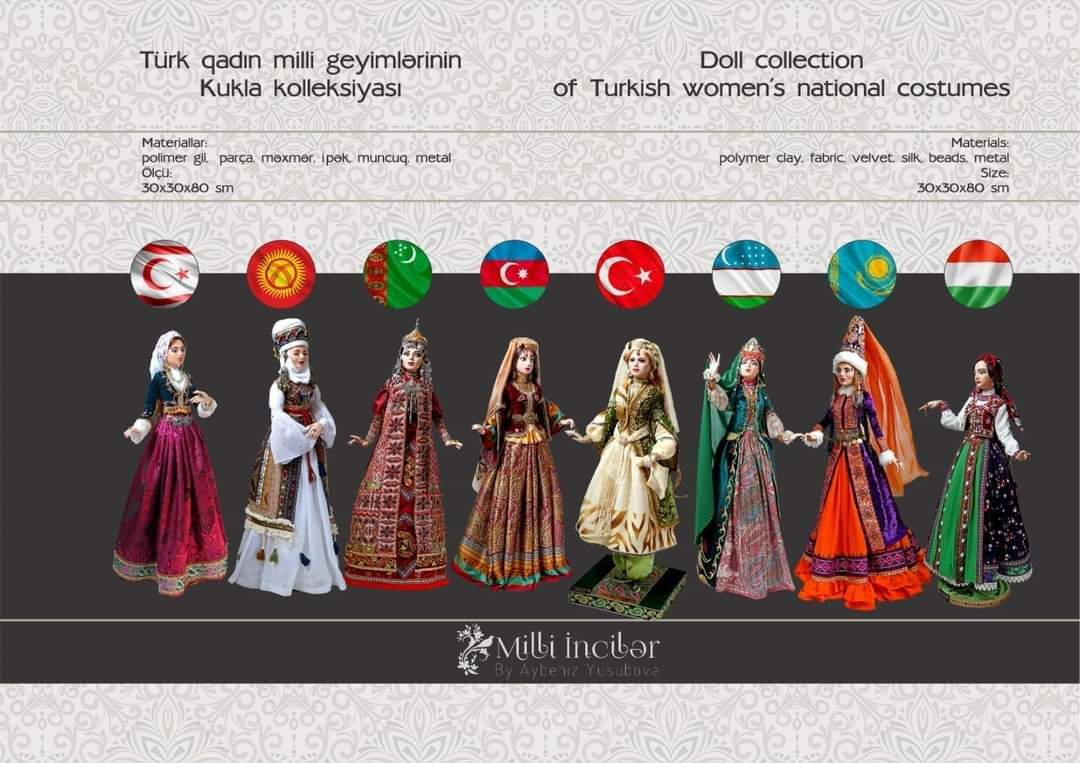
  • Turk women national costumes
    #NorthCyprus
    #Kyrgyzstan
    #Turkmenistan
    #Azerbaijan
    #Türkiye
    #Uzbekistan
    #Kazakhistan
    #Hungary
    Turk women national costumes ❤️ #NorthCyprus #Kyrgyzstan #Turkmenistan #Azerbaijan #Türkiye #Uzbekistan #Kazakhistan #Hungary
    0 Σχόλια 0 Μοιράστηκε
  • Azerbaijani girls’ aesthetic
    Azerbaijani girls’ aesthetic
    0 Σχόλια 0 Μοιράστηκε
  • Tunzale Memmedzade from Azerbaijan was the first person to write the Holy Quran on silk. She completed this huge task in 3 years.

    Life in Saudi Arabia
    Tunzale Memmedzade from Azerbaijan was the first person to write the Holy Quran on silk. She completed this huge task in 3 years. 📷 Life in Saudi Arabia
    0 Σχόλια 0 Μοιράστηκε
Αναζήτηση αποτελεσμάτων