𝐎𝐧 𝐒𝐞𝐩𝐭𝐞𝐦𝐛𝐞𝐫 𝟐𝟖, 𝟏𝟓𝟑𝟖, 𝐎𝐭𝐭𝐨𝐦𝐚𝐧𝐬 𝐭𝐫𝐢𝐮𝐦𝐩𝐡 𝐢𝐧 𝐧𝐚𝐯𝐚𝐥 𝐛𝐚𝐭𝐭𝐥𝐞 𝐨𝐟 𝐏𝐫𝐞𝐯𝐞𝐳𝐚 𝐚𝐠𝐚𝐢𝐧𝐬𝐭 𝐭𝐡𝐞 𝐄𝐮𝐫𝐨𝐩𝐞𝐚𝐧 𝐇𝐨𝐥𝐲 𝐀𝐥𝐥𝐢𝐚𝐧𝐜𝐞 !
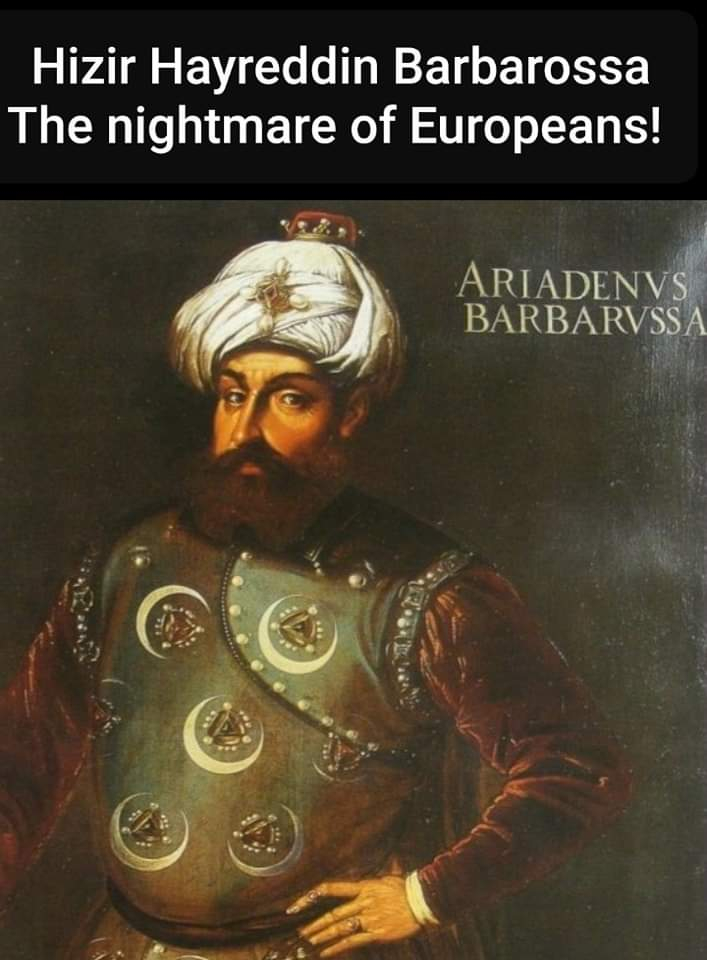
In 1537, commanding a large Ottoman fleet, Hizir Hayreddin (Khizar Khayr ud Din) Barbarossa captured a number of Aegean and Ionian islands belonging to Republic of Venice, namely Syros, Aegina, Los, Paros, Tinos, Karpathos, Kasos, and Naxos, thus annexing the Duchy of Naxos to the Ottoman Empire. He then unsuccessfully besieged the Venetian stronghold of Corfu and ravaged Spanish-held Calabrian coast in Southern Italy.[1]
Khayr ud Din (literally: "Good for Faith") was a sobriquet given to Hizir for his glorious service to Islam owing to his naval Jihad against infidels. But prior to becoming the Ottoman naval admiral, he was a Berber pirate who was famous for his raids on the merchant ships of European states which he began as a response to Christian pirates. He later paid allegiance to Yavuz Selim 1 the first Ottoman Caliph and became a governor.
The contemporary Pope Paul III in February 1538 in assembled a ’’Holy League’’, comprising the Papal States, Hapsburg Spain, the Republic of Genoa, the Republic of Venice, and the Knights of Malta, to confront Ottoman fleet under Kapudan Pasha Hizir Hayreddin Barbarossa (red haired). [2]
Barbarossa's fleet that summer numbered 122 galleys and galliots. That of the Holy League comprised of 300 galleys more than double than that of Ottomans and galleons (55 Venetian galleys, 61 Genoese-Papal, 10 sent by the Knights Hospitaller, and 50 by Spanish). Andrea Doria, the Genoese admiral in the service of Emperor Charles V was in overall command. [3]
At the end of the battle day, Ottomans came out victorious as they sunk,destroyed or captured 128 ships and had taken about 3,000 prisoners. Ottomans did not lose any ships but suffered 400 dead and 800 wounded. [4]
A peace treaty was signed between Venice and the Ottoman Caliphate in October 1540, under which Ottomans took control of the Venetian possessions in the Morea and in Dalmatia and of the formerly Venetian islands in the Aegean, Ionian, and eastern Adriatic Seas. Venice also had to pay a war indemnification of 300,000 ducats of gold to the Ottoman Caliphate.
With the victory at Preveza and the subsequent victory in the Battle of Djerba in 1560, the Ottomans succeeded in repulsing the efforts of Venice and Spain, the two principal rival powers in the Mediterranean, to stop their drive for controlling the sea. The Ottoman supremacy in large-scale fleet battles in the Mediterranean Sea remained unchallenged until the Battle of Lepanto in 1571. Hizir Hayreddin's fame in Istanbul reached to unprecedented heights as he became the favorite Pasha of Ottoman Caliph Kanuni Suleyman 1 who used to personally receive Hizir in Topkapi Palace after naval conquests. Also, Hizir was the only Pasha who was offered a seat to sit in the Imperial Divaan of Caliph Suleyman. This was a indication of how much Suleyman loved and valued Hizir Reis for his services to Islam and the Ottoman state since he had broken the back of the European infidels.
A Turkish poet Yahya Kemal Beyatlı praised Hizir Hayreddin:
"Whence on the sea's horizon comes that roar?Can it be Barbarossa now returning
From Tunis or Algiers or from the Isles?
Two hundred vessels ride upon the waves,
Coming from lands the rising Crescent lights: O blessed ships, from what seas are ye come?"
Outside Turkey, or the wider Islamic world, the prolific British historian of naval military history, Edward Keble Chatterton, considered him "the greatest pirate that has ever lived, and one of the cleverest naval tacticians and strategists the Mediterranean ever bore on its waters"; noting that "his death was received by Christian Europe with a sigh of the greatest relief." [5]
May Allah pour his Nur on the grave of Hizir Hayreddin Pasha and grant him Jannah.
Fun fact:It should also be noted that name of Hector Barbossa, a fictional character in the Pirates of the Caribbean film series, is a derivative of Hayreddin Barbarossa's.
References:
[1] Roger Crowley, Empires of the Sea, faber and faber 2008 pp.67-69
[2] Partridge, Loren (14 March 2015). Art of Renaissance Venice, 1400-1600
[3]projectavalon.net
[4] Denizcilerin piri: Barbaros Hayrettin Paşa (The master of the sailors: Barbaros Hayrettin Pasha)".
[5] E. Keble Chatterton, Pirates and Piracy, Courier Corporation, 2012, pp. 68-69
#Preveze #Preveza #Doria #ottoman #osmanli #Hizir #Barbarossa #Berber #Yavuz #Europe𝐎𝐧 𝐒𝐞𝐩𝐭𝐞𝐦𝐛𝐞𝐫 𝟐𝟖, 𝟏𝟓𝟑𝟖, 𝐎𝐭𝐭𝐨𝐦𝐚𝐧𝐬 𝐭𝐫𝐢𝐮𝐦𝐩𝐡 𝐢𝐧 𝐧𝐚𝐯𝐚𝐥 𝐛𝐚𝐭𝐭𝐥𝐞 𝐨𝐟 𝐏𝐫𝐞𝐯𝐞𝐳𝐚 𝐚𝐠𝐚𝐢𝐧𝐬𝐭 𝐭𝐡𝐞 𝐄𝐮𝐫𝐨𝐩𝐞𝐚𝐧 𝐇𝐨𝐥𝐲 𝐀𝐥𝐥𝐢𝐚𝐧𝐜𝐞 !
In 1537, commanding a large Ottoman fleet, Hizir Hayreddin (Khizar Khayr ud Din) Barbarossa captured a number of Aegean and Ionian islands belonging to Republic of Venice, namely Syros, Aegina, Los, Paros, Tinos, Karpathos, Kasos, and Naxos, thus annexing the Duchy of Naxos to the Ottoman Empire. He then unsuccessfully besieged the Venetian stronghold of Corfu and ravaged Spanish-held Calabrian coast in Southern Italy.[1]
Khayr ud Din (literally: "Good for Faith") was a sobriquet given to Hizir for his glorious service to Islam owing to his naval Jihad against infidels. But prior to becoming the Ottoman naval admiral, he was a Berber pirate who was famous for his raids on the merchant ships of European states which he began as a response to Christian pirates. He later paid allegiance to Yavuz Selim 1 the first Ottoman Caliph and became a governor.
The contemporary Pope Paul III in February 1538 in assembled a ’’Holy League’’, comprising the Papal States, Hapsburg Spain, the Republic of Genoa, the Republic of Venice, and the Knights of Malta, to confront Ottoman fleet under Kapudan Pasha Hizir Hayreddin Barbarossa (red haired). [2]
Barbarossa's fleet that summer numbered 122 galleys and galliots. That of the Holy League comprised of 300 galleys more than double than that of Ottomans and galleons (55 Venetian galleys, 61 Genoese-Papal, 10 sent by the Knights Hospitaller, and 50 by Spanish). Andrea Doria, the Genoese admiral in the service of Emperor Charles V was in overall command. [3]
At the end of the battle day, Ottomans came out victorious as they sunk,destroyed or captured 128 ships and had taken about 3,000 prisoners. Ottomans did not lose any ships but suffered 400 dead and 800 wounded. [4]
A peace treaty was signed between Venice and the Ottoman Caliphate in October 1540, under which Ottomans took control of the Venetian possessions in the Morea and in Dalmatia and of the formerly Venetian islands in the Aegean, Ionian, and eastern Adriatic Seas. Venice also had to pay a war indemnification of 300,000 ducats of gold to the Ottoman Caliphate.
With the victory at Preveza and the subsequent victory in the Battle of Djerba in 1560, the Ottomans succeeded in repulsing the efforts of Venice and Spain, the two principal rival powers in the Mediterranean, to stop their drive for controlling the sea. The Ottoman supremacy in large-scale fleet battles in the Mediterranean Sea remained unchallenged until the Battle of Lepanto in 1571. Hizir Hayreddin's fame in Istanbul reached to unprecedented heights as he became the favorite Pasha of Ottoman Caliph Kanuni Suleyman 1 who used to personally receive Hizir in Topkapi Palace after naval conquests. Also, Hizir was the only Pasha who was offered a seat to sit in the Imperial Divaan of Caliph Suleyman. This was a indication of how much Suleyman loved and valued Hizir Reis for his services to Islam and the Ottoman state since he had broken the back of the European infidels.
A Turkish poet Yahya Kemal Beyatlı praised Hizir Hayreddin:
"Whence on the sea's horizon comes that roar?Can it be Barbarossa now returning
From Tunis or Algiers or from the Isles?
Two hundred vessels ride upon the waves,
Coming from lands the rising Crescent lights: O blessed ships, from what seas are ye come?"
Outside Turkey, or the wider Islamic world, the prolific British historian of naval military history, Edward Keble Chatterton, considered him "the greatest pirate that has ever lived, and one of the cleverest naval tacticians and strategists the Mediterranean ever bore on its waters"; noting that "his death was received by Christian Europe with a sigh of the greatest relief." [5]
May Allah pour his Nur on the grave of Hizir Hayreddin Pasha and grant him Jannah. 🤲
Fun fact:It should also be noted that name of Hector Barbossa, a fictional character in the Pirates of the Caribbean film series, is a derivative of Hayreddin Barbarossa's.
References:
[1] Roger Crowley, Empires of the Sea, faber and faber 2008 pp.67-69
[2] Partridge, Loren (14 March 2015). Art of Renaissance Venice, 1400-1600
[3]projectavalon.net
[4] Denizcilerin piri: Barbaros Hayrettin Paşa (The master of the sailors: Barbaros Hayrettin Pasha)".
[5] E. Keble Chatterton, Pirates and Piracy, Courier Corporation, 2012, pp. 68-69
#Preveze #Preveza #Doria #ottoman #osmanli
#Hizir #Barbarossa #Berber #Yavuz #Europe



 English
 French
 Spanish
 Portuguese
 Deutsch
 Turkish
 Dutch
Dutch
 Italiano
 Russian
 Romaian
 Portuguese (Brazil)
 Greek
Greek