• THE OTTOMAN EMPIRE

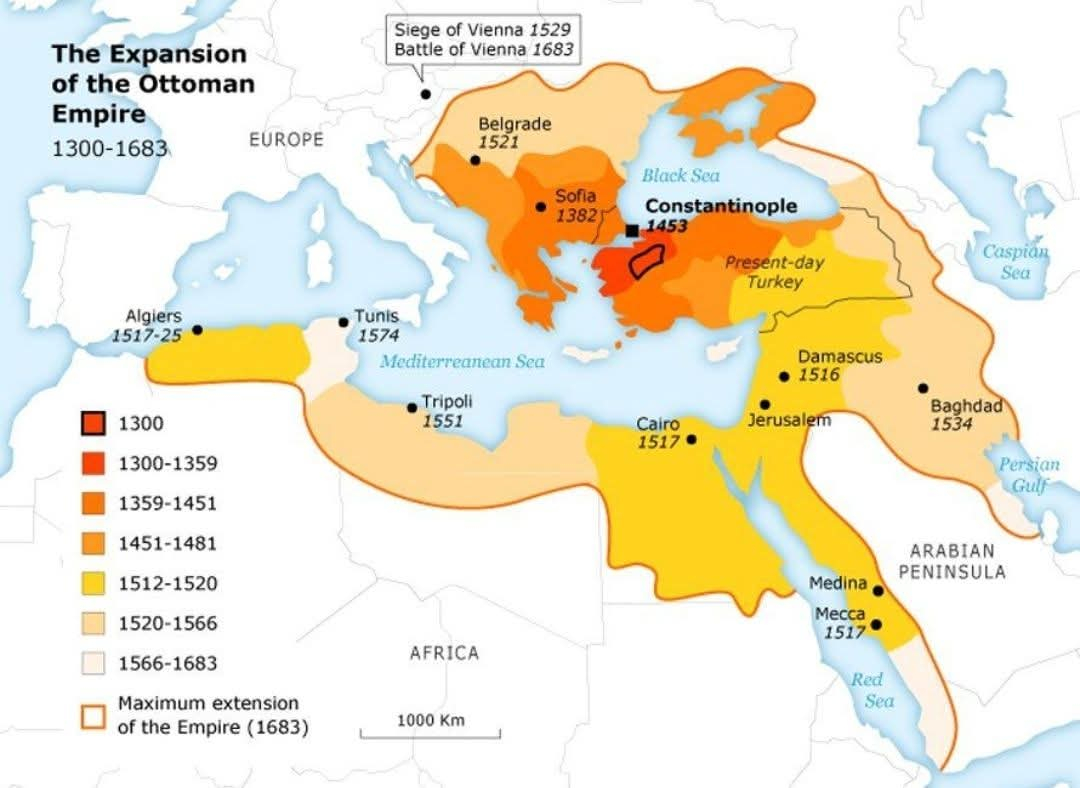
    The Ottoman Empire was one of the longest-lasting and most influential empires in world history, existing for more than 600 years, from 1299 to 1922.

    Origins: Founded by Osman I in the late 13th century, it began as a small principality in Anatolia and gradually expanded into a powerful empire.

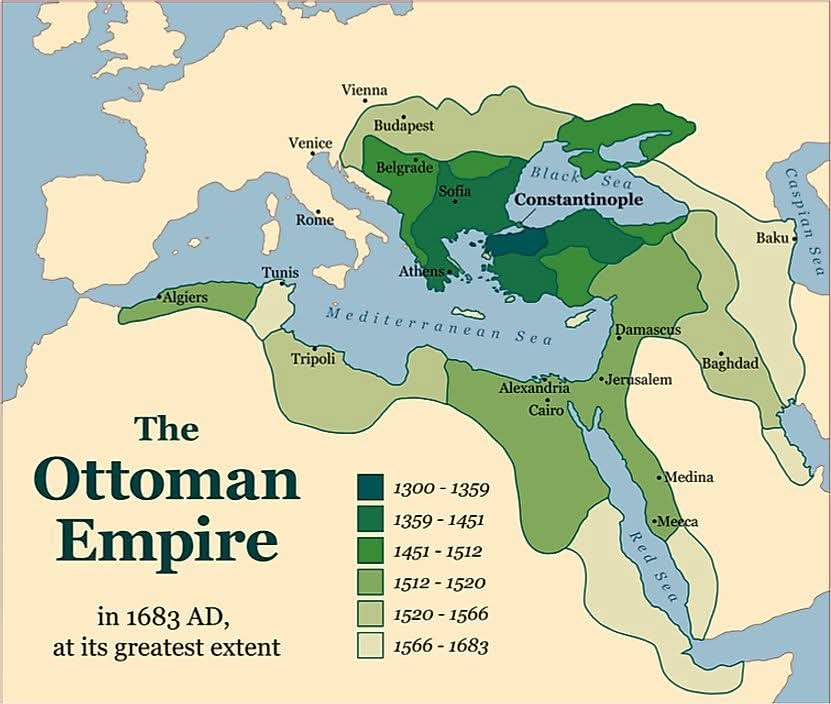
    Greatest Expansion: At its height, the empire controlled vast territories across Southeastern Europe, Western Asia, the Middle East and North Africa, connecting three continents.

    Capital: After the conquest of Constantinople in 1453, the city became the political and cultural center of the empire. It is known today as Istanbul.

    Strategic Position: Ottoman territories surrounded major waterways and trade routes, including the Mediterranean Sea, Black Sea and Red Sea, giving the empire enormous geopolitical importance.

    Legacy: The Ottoman Empire left a lasting impact on architecture, culture, cuisine, art, politics and the history of numerous countries across Europe, Asia and Africa.

    From a small Anatolian principality to a vast transcontinental empire, the Ottoman Empire played a major role in shaping the history of three continents.

    #OttomanEmpire #WorldHistory #HistoryFacts #HistoricalMaps #Geography #Empire #Istanbul #History
    🏛️ THE OTTOMAN EMPIRE The Ottoman Empire was one of the longest-lasting and most influential empires in world history, existing for more than 600 years, from 1299 to 1922. 🔹 Origins: Founded by Osman I in the late 13th century, it began as a small principality in Anatolia and gradually expanded into a powerful empire. 🔹 Greatest Expansion: At its height, the empire controlled vast territories across Southeastern Europe, Western Asia, the Middle East and North Africa, connecting three continents. 🔹 Capital: After the conquest of Constantinople in 1453, the city became the political and cultural center of the empire. It is known today as Istanbul. 🔹 Strategic Position: Ottoman territories surrounded major waterways and trade routes, including the Mediterranean Sea, Black Sea and Red Sea, giving the empire enormous geopolitical importance. 🔹 Legacy: The Ottoman Empire left a lasting impact on architecture, culture, cuisine, art, politics and the history of numerous countries across Europe, Asia and Africa. 🌍 From a small Anatolian principality to a vast transcontinental empire, the Ottoman Empire played a major role in shaping the history of three continents. #OttomanEmpire #WorldHistory #HistoryFacts #HistoricalMaps #Geography #Empire #Istanbul #History
    0 Comments 0 Shares
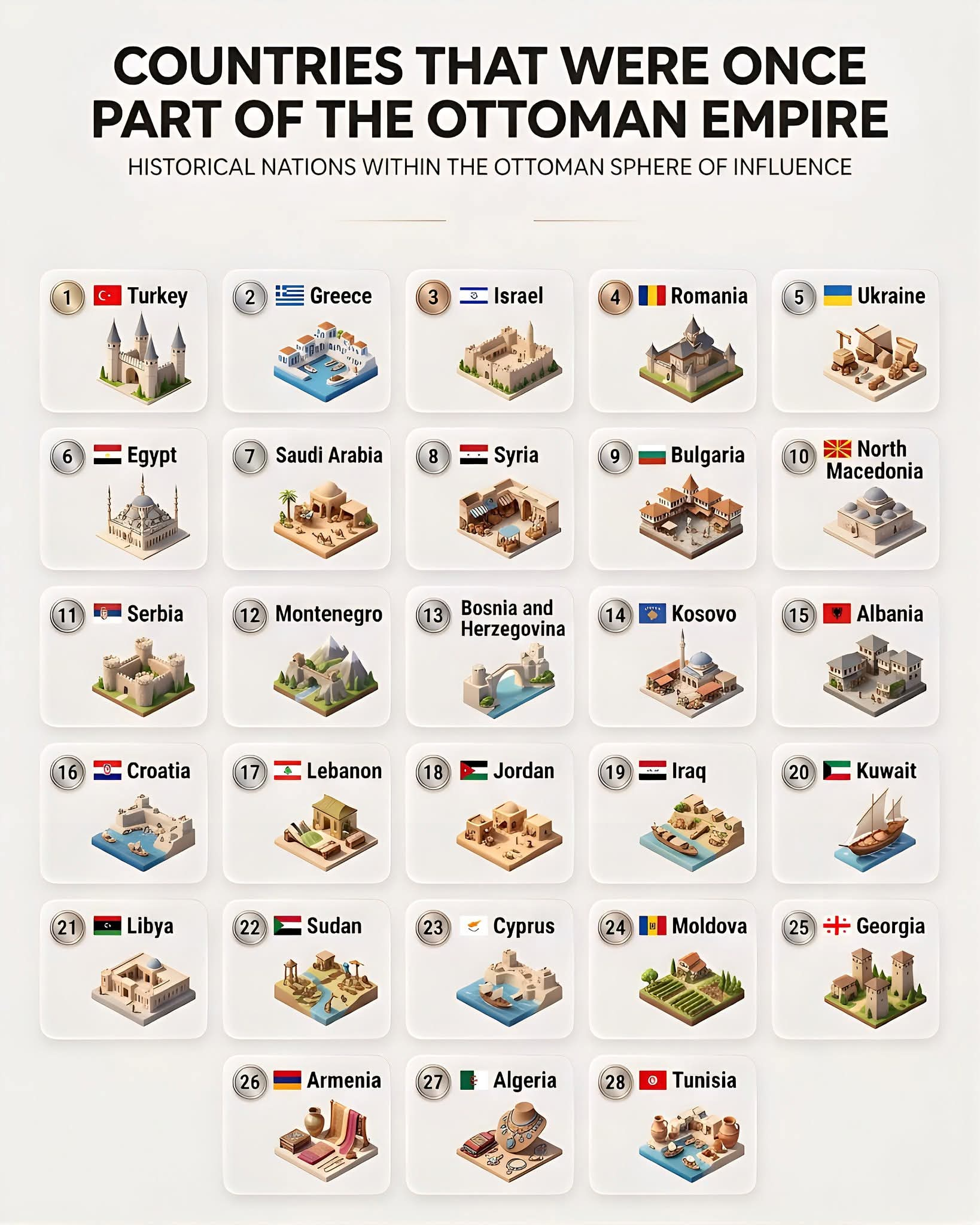
  • Countries That Were Once Part of the Ottoman Empire..
    🐺🦅🤘 Countries That Were Once Part of the Ottoman Empire..🇹🇷
    0 Comments 0 Shares
  • TURKEY
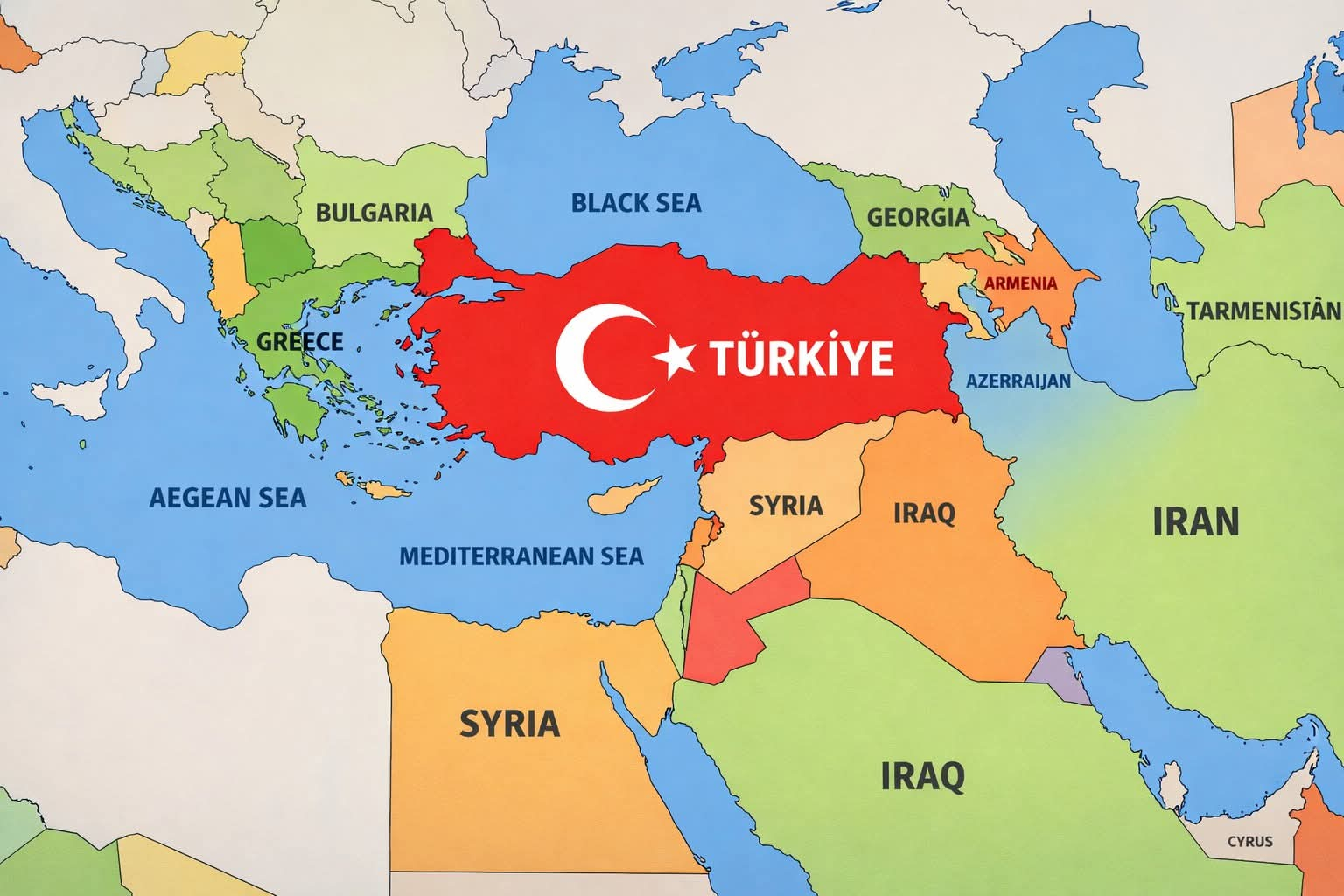
    Things you probably didn’t know about Türkiye (breaking common myths):

    A bridge between continents: One of the few countries in the world that spans both Europe and Asia — with Istanbul divided by the Bosphorus Strait.

    Not the capital you think: While Istanbul is the most famous city, the real capital is Ankara.

    Empire legacy: The heart of the Ottoman Empire for over 600 years, influencing Europe, Asia, and Africa.

    Hagia Sophia is unique: The iconic Hagia Sophia has served as a church, mosque, and museum throughout history.

    Cradle of civilizations: Home to ancient cultures like the Hittites, Greeks, and Romans — leaving behind incredible archaeological heritage.

    Tea > Coffee: Contrary to popular belief, tea is consumed more than coffee and is a daily essential.

    Turkish baths: The famous “hammam” is a centuries-old tradition of relaxation and cleansing from the Ottoman era.

    Unreal landscapes: Places like Cappadocia are known for fairy chimneys and breathtaking hot air balloon rides.

    Rich cuisine: From kebabs to baklava and Turkish delight, Turkish food is loved worldwide.

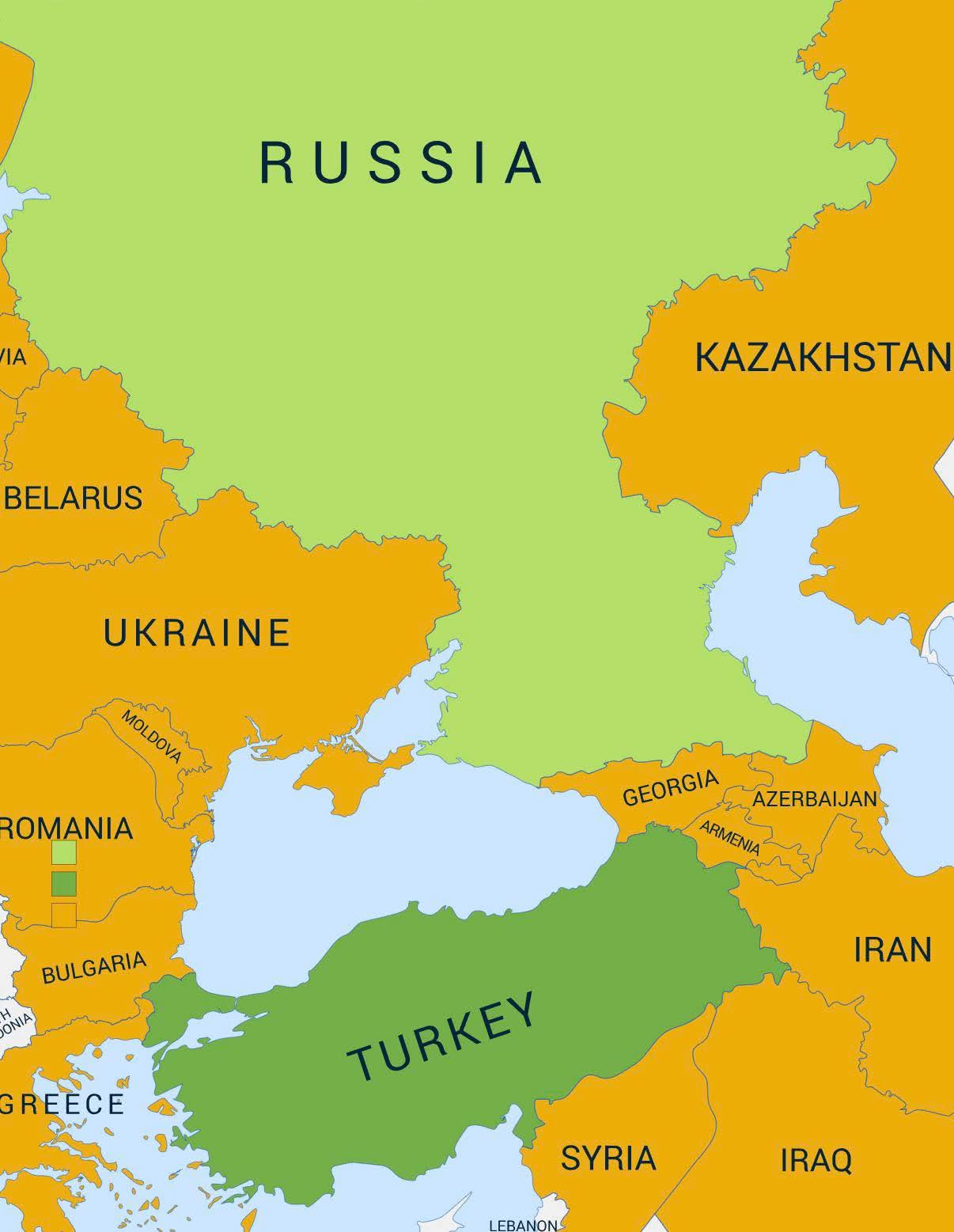
    Strategic location: Controls key routes between the Black Sea and the Mediterranean — making it geopolitically important.

    Historic bazaars: The Grand Bazaar in Istanbul is one of the oldest and largest covered markets in the world.

    Cultural diversity: A unique blend of European, Asian, and Middle Eastern influences in architecture, music, and traditions.

    Global TV hits: Turkish series and films are hugely popular in Latin America and beyond.

    Follow for more amazing facts!
    Like | Comment | Share

    #Turkey #Türkiye #Travel #History #Culture #Explore
    🇹🇷 TURKEY 🇹🇷 🧠😍 Things you probably didn’t know about Türkiye (breaking common myths): 👏👏 🌍 A bridge between continents: One of the few countries in the world that spans both Europe and Asia — with Istanbul divided by the Bosphorus Strait. 🏛️ Not the capital you think: While Istanbul is the most famous city, the real capital is Ankara. 👑 Empire legacy: The heart of the Ottoman Empire for over 600 years, influencing Europe, Asia, and Africa. 🕌 Hagia Sophia is unique: The iconic Hagia Sophia has served as a church, mosque, and museum throughout history. 🏺 Cradle of civilizations: Home to ancient cultures like the Hittites, Greeks, and Romans — leaving behind incredible archaeological heritage. 🍵 Tea > Coffee: Contrary to popular belief, tea is consumed more than coffee and is a daily essential. 🛁 Turkish baths: The famous “hammam” is a centuries-old tradition of relaxation and cleansing from the Ottoman era. 🎈 Unreal landscapes: Places like Cappadocia are known for fairy chimneys and breathtaking hot air balloon rides. 🍽️ Rich cuisine: From kebabs to baklava and Turkish delight, Turkish food is loved worldwide. 🌐 Strategic location: Controls key routes between the Black Sea and the Mediterranean — making it geopolitically important. 🛍️ Historic bazaars: The Grand Bazaar in Istanbul is one of the oldest and largest covered markets in the world. 🎶 Cultural diversity: A unique blend of European, Asian, and Middle Eastern influences in architecture, music, and traditions. 📺 Global TV hits: Turkish series and films are hugely popular in Latin America and beyond. 👉 Follow for more amazing facts! 🌍✨ ❤️ Like | 💬 Comment | 🔁 Share #Turkey #Türkiye #Travel #History #Culture #Explore
    1
    0 Comments 0 Shares
  • 15 Interesting Facts About Türkiye

    Top Tourist Destination
    Türkiye is consistently among the Top 10 most visited countries in the world, attracting 50+ million international tourists annually.

    Largest City
    The biggest city is Istanbul, with 16+ million people, making it one of the largest cities in Europe.

    Capital City
    The capital is Ankara, located in central Anatolia.

    Population Power
    Türkiye has a population of about 85 million people, making it one of the most populous countries in Europe and the Middle East.

    Unique Geographic Location
    Türkiye sits between Europe and Asia, connected by the Bosphorus strait.

    Large Economy
    Türkiye has one of the largest economies in the world, usually ranking around Top 20 globally by GDP.

    Major Tourist Cities
    Popular tourist destinations include:
    • Istanbul
    • Antalya
    • Izmir
    • Bodrum
    • Cappadocia region.

    Ancient Civilization Center
    Türkiye has hosted many civilizations including the Hittites, Greeks, Romans, Byzantines, and Ottoman Empire.

    World Heritage Sites
    Türkiye has 19 UNESCO World Heritage Sites, including Göbekli Tepe, one of the oldest temples in the world (11,000+ years old).

    Agricultural Power
    Türkiye is one of the world’s largest producers of hazelnuts, apricots, figs, and cherries.

    Strategic Straits
    The Dardanelles and Bosphorus connect the Black Sea to the Mediterranean Sea.

    Huge Airline Hub
    Turkish Airlines flies to more countries than any other airline in the world.

    Beautiful Coastline
    Türkiye has about 8,300 km of coastline along the Black Sea, Aegean Sea, and Mediterranean Sea.

    Famous Cuisine
    Turkish cuisine includes global favorites like Kebab, Baklava, and Turkish Delight.

    Historic Megacity
    Istanbul is the only city in the world located on two continents.


    Türkiye Facts
    Top 10 most visited country in the world
    Population: ~85 million
    Largest city: Istanbul (16M+)
    Bridge between Europe & Asia
    Top 20 global economy
    19 UNESCO World Heritage sites
    Major agricultural exporter
    Turkish Airlines flies to most countries worldwide
    8,000+ km coastline
    World-famous cuisine

    #turkiye #turkey #geography #worldfacts #europe #asia #travel #amazingworldgeography #fblifestyle
    🇹🇷 15 Interesting Facts About Türkiye 🌍 1️⃣ Top Tourist Destination Türkiye is consistently among the Top 10 most visited countries in the world, attracting 50+ million international tourists annually. 2️⃣ Largest City The biggest city is Istanbul, with 16+ million people, making it one of the largest cities in Europe. 3️⃣ Capital City The capital is Ankara, located in central Anatolia. 4️⃣ Population Power Türkiye has a population of about 85 million people, making it one of the most populous countries in Europe and the Middle East. 5️⃣ Unique Geographic Location Türkiye sits between Europe and Asia, connected by the Bosphorus strait. 6️⃣ Large Economy Türkiye has one of the largest economies in the world, usually ranking around Top 20 globally by GDP. 7️⃣ Major Tourist Cities Popular tourist destinations include: • Istanbul • Antalya • Izmir • Bodrum • Cappadocia region. 8️⃣ Ancient Civilization Center Türkiye has hosted many civilizations including the Hittites, Greeks, Romans, Byzantines, and Ottoman Empire. 9️⃣ World Heritage Sites Türkiye has 19 UNESCO World Heritage Sites, including Göbekli Tepe, one of the oldest temples in the world (11,000+ years old). 🔟 Agricultural Power Türkiye is one of the world’s largest producers of hazelnuts, apricots, figs, and cherries. 1️⃣1️⃣ Strategic Straits The Dardanelles and Bosphorus connect the Black Sea to the Mediterranean Sea. 1️⃣2️⃣ Huge Airline Hub Turkish Airlines flies to more countries than any other airline in the world. 1️⃣3️⃣ Beautiful Coastline Türkiye has about 8,300 km of coastline along the Black Sea, Aegean Sea, and Mediterranean Sea. 1️⃣4️⃣ Famous Cuisine Turkish cuisine includes global favorites like Kebab, Baklava, and Turkish Delight. 1️⃣5️⃣ Historic Megacity Istanbul is the only city in the world located on two continents. ⸻ 🌍 Türkiye Facts 🇹🇷 ✈️ Top 10 most visited country in the world 👥 Population: ~85 million 🏙️ Largest city: Istanbul (16M+) 🌉 Bridge between Europe & Asia 💰 Top 20 global economy 🏛️ 19 UNESCO World Heritage sites 🌾 Major agricultural exporter ✈️ Turkish Airlines flies to most countries worldwide 🏖️ 8,000+ km coastline 🍽️ World-famous cuisine #turkiye #turkey #geography #worldfacts #europe #asia #travel #amazingworldgeography #fblifestyle 🌍
    0 Comments 0 Shares
  • Osmanlı, Safevi ve Babür İmparatorlukları:
    1600’lerin Ekonomik Devleri

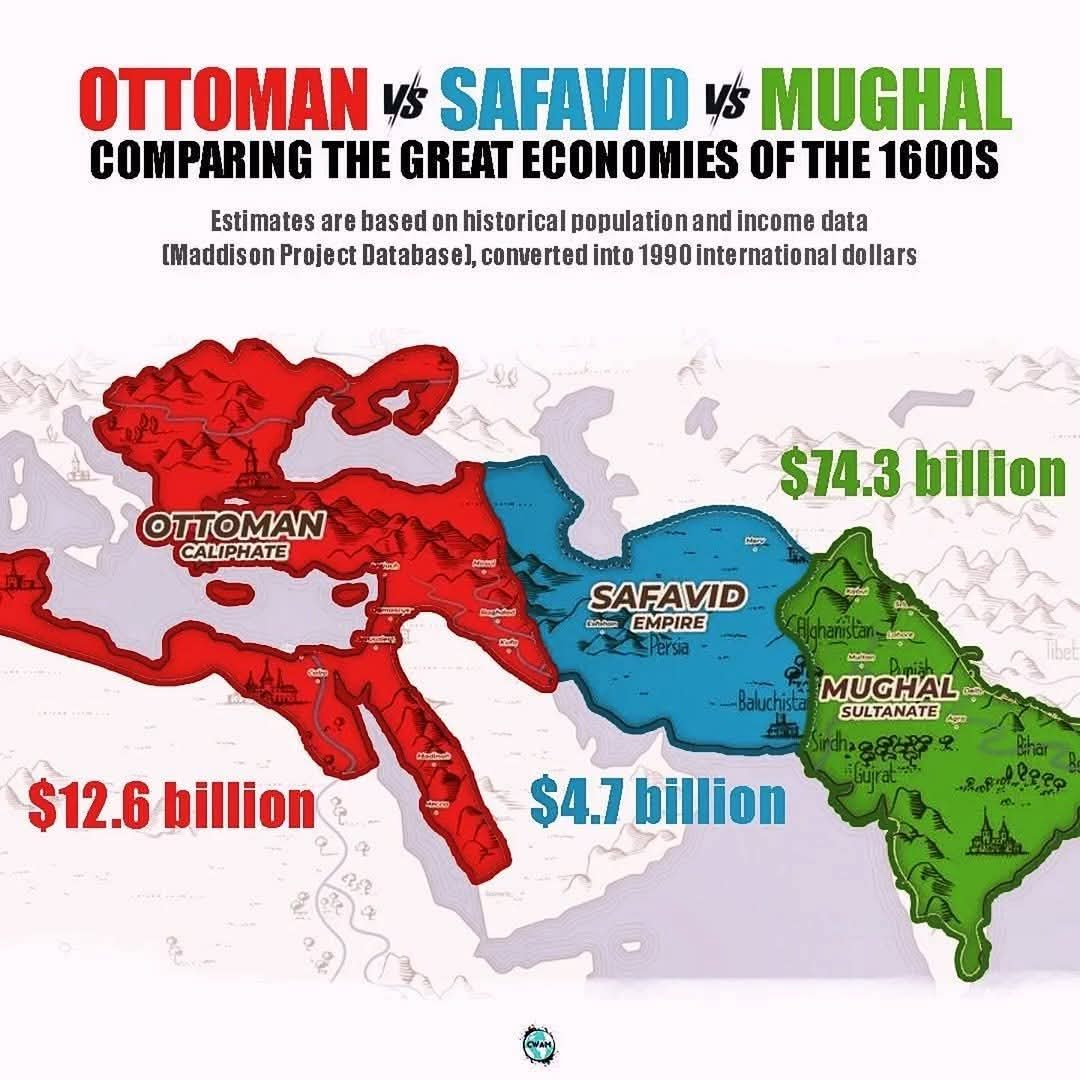
    17. yüzyılda, üç büyük Türkî imparatorluk — Osmanlı Halifeliği, Safevi İmparatorluğu ve Babür Sultanlığı — Orta Doğu ve Güney Asya’nın geniş bölgelerine hükmediyordu. Her biri kültür, siyaset ve ticaretin birer gücüydü. Ancak saf ekonomik güç bakımından Babür İmparatorluğu diğerlerinin üzerinde yer alıyordu; 1990 uluslararası dolar cinsinden tahmini 74,3 milyar dolarlık bir GSYİH’ya sahipti.

    Bu karşılaştırma, bu imparatorlukların yalnızca kendi bölgelerini değil, aynı zamanda erken modern dünyadaki küresel ticareti, güç dengelerini ve servet akışını nasıl şekillendirdiklerine de ışık tutmaktadır.

    Kaynak: @creative.wam

    Ottoman & Safavid & Mughal Empires :
    The Economic Titans of the 1600s

    In the 17th century, three great Turkic empires ruled vast regions across the Middle East and South Asia - the Ottoman Caliphate, the Safavid Empire, and the Mughal (Babur) Sultanate. Each was a powerhouse of culture, politics, and commerce. But when it came to sheer economic strength, the Mughal (Babur) Empire stood above the rest, boasting an estimated GDP of $74.3 billion (in 1990 international dollars).

    This comparison sheds light on how these empires not only defined their regions but also shaped global trade, power dynamics, and the flow of wealth in the early modern world.

    Credit: @creative.wam
    Osmanlı, Safevi ve Babür İmparatorlukları: 1600’lerin Ekonomik Devleri 17. yüzyılda, üç büyük Türkî imparatorluk — Osmanlı Halifeliği, Safevi İmparatorluğu ve Babür Sultanlığı — Orta Doğu ve Güney Asya’nın geniş bölgelerine hükmediyordu. Her biri kültür, siyaset ve ticaretin birer gücüydü. Ancak saf ekonomik güç bakımından Babür İmparatorluğu diğerlerinin üzerinde yer alıyordu; 1990 uluslararası dolar cinsinden tahmini 74,3 milyar dolarlık bir GSYİH’ya sahipti. Bu karşılaştırma, bu imparatorlukların yalnızca kendi bölgelerini değil, aynı zamanda erken modern dünyadaki küresel ticareti, güç dengelerini ve servet akışını nasıl şekillendirdiklerine de ışık tutmaktadır. Kaynak: @creative.wam Ottoman & Safavid & Mughal Empires : The Economic Titans of the 1600s In the 17th century, three great Turkic empires ruled vast regions across the Middle East and South Asia - the Ottoman Caliphate, the Safavid Empire, and the Mughal (Babur) Sultanate. Each was a powerhouse of culture, politics, and commerce. But when it came to sheer economic strength, the Mughal (Babur) Empire stood above the rest, boasting an estimated GDP of $74.3 billion (in 1990 international dollars). This comparison sheds light on how these empires not only defined their regions but also shaped global trade, power dynamics, and the flow of wealth in the early modern world. Credit: @creative.wam
    0 Comments 0 Shares
  • The Ottoman Empire
    🌿🌲🌴The Ottoman Empire
    0 Comments 0 Shares
  • A Historic Move After 125 Years!

    The Hejaz Railway, first launched by Sultan Abdul Hamid II in 1900 to connect Istanbul to Mecca and Medina, is being revived after 125 years!

    Türkiye, Jordan, and Syria have signed a protocol for reconstruction. A separate protocol with Saudi Arabia will follow soon.

    The new line will stretch from Istanbul → Damascus → Amman → Medina, aiming to provide safe, affordable travel for pilgrims and boost international trade.

    Originally completed in 1908, the railway was disrupted during World War I, but now it will return as a modern link of faith, history, and commerce.

    #HejazRailway #History #OttomanEmpire #AbdulHamidII #Pilgrimage #FaithAndTrade #Turkey #Jordan #Syria #SaudiArabia
    A Historic Move After 125 Years! 🚂✨ The Hejaz Railway, first launched by Sultan Abdul Hamid II in 1900 to connect Istanbul to Mecca and Medina, is being revived after 125 years! 🇹🇷 Türkiye, 🇯🇴 Jordan, and 🇸🇾 Syria have signed a protocol for reconstruction. A separate protocol with Saudi Arabia will follow soon. The new line will stretch from Istanbul → Damascus → Amman → Medina, aiming to provide safe, affordable travel for pilgrims and boost international trade. 🕌 Originally completed in 1908, the railway was disrupted during World War I, but now it will return as a modern link of faith, history, and commerce. #HejazRailway #History #OttomanEmpire #AbdulHamidII #Pilgrimage #FaithAndTrade #Turkey #Jordan #Syria #SaudiArabia
    1
    0 Comments 0 Shares
  • The Ottoman Empire at Its Peak – 1683

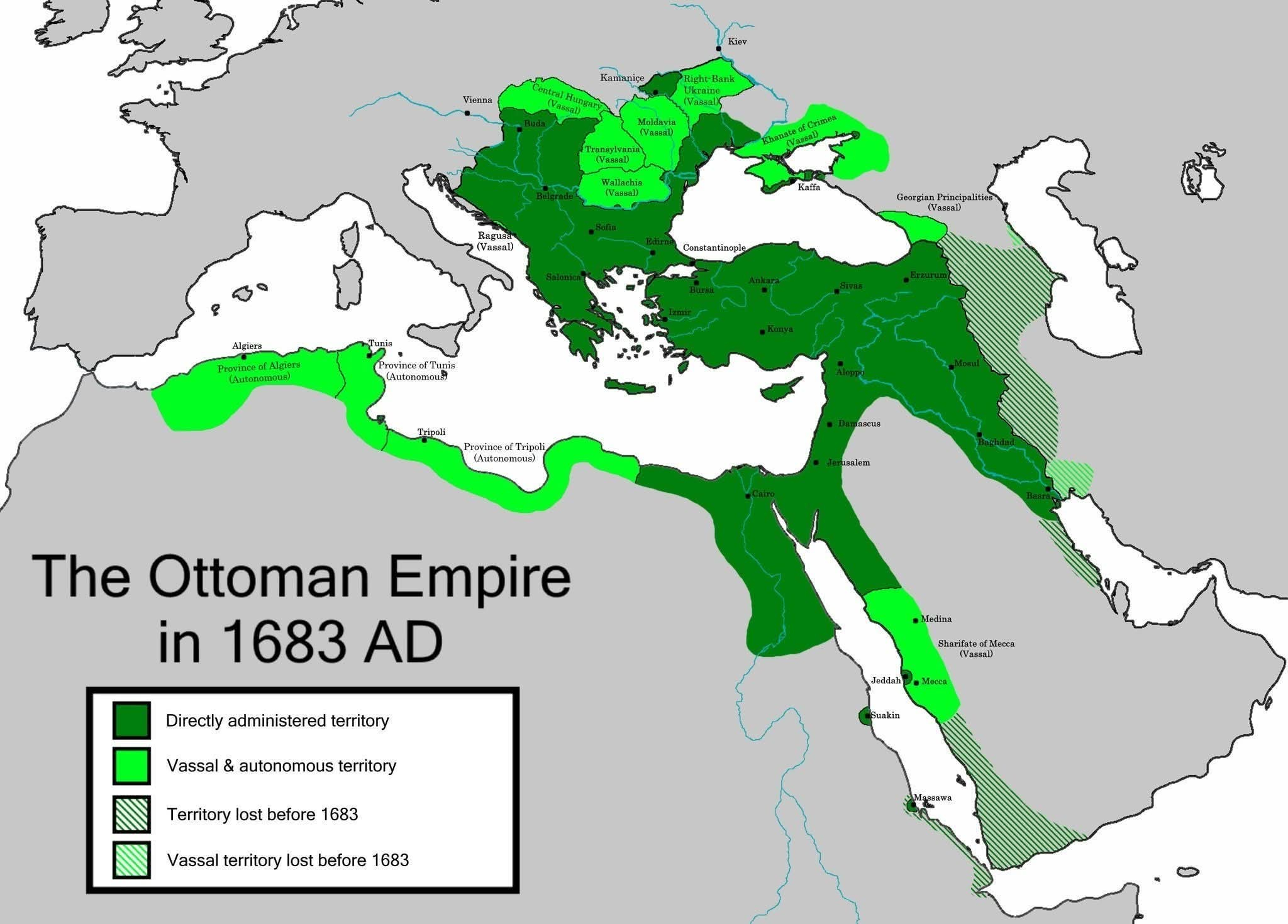
    In 1683, the Ottoman Empire stood as one of the world’s most powerful states, stretching across three continents.

    Territory – From Hungary in the heart of Europe to the Arabian deserts, from North Africa to the Caucasus, the empire spanned 6-7 million square kilometers.

    Capital – Istanbul, once Constantinople, was a global hub of trade, culture, and politics.

    Diversity – The empire united Turks, Arabs, Kurds, Greeks, Armenians, Slavs, Jews, and many more under a vast administrative system.

    Military Power – The Janissaries and navy projected influence across the Mediterranean, Red Sea, and beyond.

    1683 Vienna Campaign – Marked the high tide of Ottoman expansion into Europe, though the failed siege of Vienna also signaled the turning point of imperial fortunes.

    The Ottoman Empire in 1683 was not just a political force — it was a cultural mosaic and a major player in global history.

    A true ISLAMIC UNITY is not only the only solution to provide Peace, Tranquility, and Security today — just as the Ottoman State ensured for 600 years — but also the only path for the economic development of poor Islamic countries.
    The Ottoman Empire at Its Peak – 1683 In 1683, the Ottoman Empire stood as one of the world’s most powerful states, stretching across three continents. 🔹 Territory – From Hungary in the heart of Europe to the Arabian deserts, from North Africa to the Caucasus, the empire spanned 6-7 million square kilometers. 🔹 Capital – Istanbul, once Constantinople, was a global hub of trade, culture, and politics. 🔹 Diversity – The empire united Turks, Arabs, Kurds, Greeks, Armenians, Slavs, Jews, and many more under a vast administrative system. 🔹 Military Power – The Janissaries and navy projected influence across the Mediterranean, Red Sea, and beyond. 🔹 1683 Vienna Campaign – Marked the high tide of Ottoman expansion into Europe, though the failed siege of Vienna also signaled the turning point of imperial fortunes. The Ottoman Empire in 1683 was not just a political force — it was a cultural mosaic and a major player in global history. A true ISLAMIC UNITY is not only the only solution to provide Peace, Tranquility, and Security today — just as the Ottoman State ensured for 600 years — but also the only path for the economic development of poor Islamic countries.
    0 Comments 0 Shares
  • Istanbul, Turkey ...
    Did you know that Istanbul, located in Turkey, is one of the most important cities in the world due to its history, culture and geographical location. It is the only city that straddles two continents, Europe and Asia, divided by the Bosphorus Strait. Founded as Byzantium and later known as Constantinople, it was the capital of three great empires: the Roman, the Byzantine and the Ottoman.
    Istanbul is famous for its impressive architecture, such as the Hagia Sophia, the Blue Mosque and the Topkapi Palace, former residences of the Ottoman Sultans. The city is also known for its vibrant culture and diversity, reflected in its cuisine, bazaars and historical monuments.
    Today, Istanbul is the economic and cultural center of Turkey, combining the ancient and the modern. Its streets are filled with bustling markets, such as the Grand Bazaar, along with cosmopolitan neighborhoods and modern skyscrapers. It is a popular tourist destination for its unique mix of cultures, history and modernity.
    Istanbul's Old City reflects the cultural influences of the different empires that ruled the region.
    Istanbul, Turkey 🇹🇷... Did you know that Istanbul, located in Turkey, is one of the most important cities in the world due to its history, culture and geographical location. It is the only city that straddles two continents, Europe and Asia, divided by the Bosphorus Strait. Founded as Byzantium and later known as Constantinople, it was the capital of three great empires: the Roman, the Byzantine and the Ottoman. Istanbul is famous for its impressive architecture, such as the Hagia Sophia, the Blue Mosque and the Topkapi Palace, former residences of the Ottoman Sultans. The city is also known for its vibrant culture and diversity, reflected in its cuisine, bazaars and historical monuments. Today, Istanbul is the economic and cultural center of Turkey, combining the ancient and the modern. Its streets are filled with bustling markets, such as the Grand Bazaar, along with cosmopolitan neighborhoods and modern skyscrapers. It is a popular tourist destination for its unique mix of cultures, history and modernity. Istanbul's Old City reflects the cultural influences of the different empires that ruled the region.
    0 Comments 0 Shares
  • The Ottoman Empire 2
    🌍The Ottoman Empire 🌿🌴2
    0 Comments 0 Shares
More Results