• HARRAN: WHERE HISTORY LIVES BENEATH THE DOMES!

    Harran, Şanlıurfa, Türkiye… A timeless land of history and culture.

    With thousands of years of history, distinctive architecture, and a rich cultural heritage, Harran is one of the most remarkable historical settlements in Anatolia. Its iconic domed beehive houses are not only architectural wonders but also precious reminders of the region’s deep-rooted history and traditions.

    Where Earth, Stone, and History Come Together!

    With their distinctive cone-shaped domes, Harran’s traditional houses stand out as remarkable examples of vernacular architecture. Built using traditional materials such as brick and mudbrick, these unique structures were designed to adapt to the region’s climate. Their architectural features help keep interiors cooler during the hot summer months, reflecting the ingenuity of generations who learned to live in harmony with nature.

    Every Dome Tells a Story, Every Wall Preserves a Memory…

    Harran’s historic houses are much more than places to live. They represent the region’s traditional lifestyle, cultural identity, and architectural heritage, carrying the traces of the past into the present. With their timeless character, these extraordinary structures connect generations and offer visitors a glimpse into another era.

    An Unforgettable Destination for History and Culture Lovers!

    With its historic streets, earthy textures, and distinctive domes rising toward the sky, Harran offers a truly unique atmosphere for photographers, travelers, and cultural explorers. Every corner reveals a different perspective, showcasing the remarkable cultural richness of Şanlıurfa.

    Harran’s beehive houses are a legacy of the past, a treasure of the present, and a heritage worth preserving for future generations.

    Discovering our history, protecting our cultural heritage, and passing it on to future generations is a shared responsibility. Because some structures are far more than bricks and earth; they are the memory of a civilization, the identity of a region, and a living story connecting the past to the future.

    Harran | Şanlıurfa, Türkiye
    Following the footsteps of history, discovering the heart of culture.

    #Şanlıurfa #Harran #HarranHouses #BeehiveHouses #HistoricHeritage #CulturalHeritage #AnatolianArchitecture #DiscoverTürkiye #HistoryAndCulture #TravelTürkiye #ExploreTheWorld #HiddenGems
    🏛️ HARRAN: WHERE HISTORY LIVES BENEATH THE DOMES! 🌍✨ 📍 Harran, Şanlıurfa, Türkiye… A timeless land of history and culture. With thousands of years of history, distinctive architecture, and a rich cultural heritage, Harran is one of the most remarkable historical settlements in Anatolia. Its iconic domed beehive houses are not only architectural wonders but also precious reminders of the region’s deep-rooted history and traditions. 🏺🏡 🧱 Where Earth, Stone, and History Come Together! With their distinctive cone-shaped domes, Harran’s traditional houses stand out as remarkable examples of vernacular architecture. Built using traditional materials such as brick and mudbrick, these unique structures were designed to adapt to the region’s climate. Their architectural features help keep interiors cooler during the hot summer months, reflecting the ingenuity of generations who learned to live in harmony with nature. 🌿 Every Dome Tells a Story, Every Wall Preserves a Memory… Harran’s historic houses are much more than places to live. They represent the region’s traditional lifestyle, cultural identity, and architectural heritage, carrying the traces of the past into the present. With their timeless character, these extraordinary structures connect generations and offer visitors a glimpse into another era. 📸 An Unforgettable Destination for History and Culture Lovers! With its historic streets, earthy textures, and distinctive domes rising toward the sky, Harran offers a truly unique atmosphere for photographers, travelers, and cultural explorers. Every corner reveals a different perspective, showcasing the remarkable cultural richness of Şanlıurfa. ✨ Harran’s beehive houses are a legacy of the past, a treasure of the present, and a heritage worth preserving for future generations. Discovering our history, protecting our cultural heritage, and passing it on to future generations is a shared responsibility. Because some structures are far more than bricks and earth; they are the memory of a civilization, the identity of a region, and a living story connecting the past to the future. ❤️🌍 📍 Harran | Şanlıurfa, Türkiye 🏛️ Following the footsteps of history, discovering the heart of culture. #Şanlıurfa #Harran #HarranHouses #BeehiveHouses #HistoricHeritage #CulturalHeritage #AnatolianArchitecture #DiscoverTürkiye #HistoryAndCulture #TravelTürkiye #ExploreTheWorld #HiddenGems
    0 Commentaires 0 parts
  • Top 10 Greatest Sultans in History

    Explore 10 of the most powerful and influential Muslim sultans in history, their empires, reigns, and lasting historical legacy.

    History • Muslim Empires • Great Sultans

    #History #MuslimHistory #Sultans #IslamicHistory
    👑 Top 10 Greatest Sultans in History Explore 10 of the most powerful and influential Muslim sultans in history, their empires, reigns, and lasting historical legacy. 📚 History • Muslim Empires • Great Sultans #History #MuslimHistory #Sultans #IslamicHistory
    0 Commentaires 0 parts
  • Did you know… Bosnia and Herzegovina has a coastline of only about 21 km?

    At first glance, Bosnia and Herzegovina may look like a landlocked country on the map. But it actually has a small stretch of coastline along the Adriatic Sea, centered around the coastal town of Neum. According to the Council of Ministers of Bosnia and Herzegovina, the country’s coastline is approximately 21.2 km (13.2 miles) long.

    Neum is the country’s only coastal town and its only access to the Adriatic Sea. This narrow coastal corridor is surrounded almost entirely by Croatian territory, making Bosnia and Herzegovina’s coastline one of the most unusual geographic features in Europe.

    Just to the north and south, Croatia surrounds the Bosnian coastal strip. Croatia has an enormous and highly indented Adriatic coastline of about 6,278 km, including its mainland coast and islands, along with 1,244 islands, islets, rocks and reefs.

    The unusual border is a legacy of the region’s complex history. Today, Neum effectively creates a small interruption in Croatia’s otherwise continuous mainland coastline.

    A tiny coastline, but a huge geographic story!
    Bosnia and Herzegovina may have only about 21 km of coast, but that short stretch gives the country direct access to the Adriatic Sea.

    Fun fact: The Pelješac Bridge, opened in 2022, allows traffic between northern and southern Croatia to bypass the Neum corridor rather than crossing Bosnian territory.
    🌊 Did you know… Bosnia and Herzegovina has a coastline of only about 21 km? At first glance, Bosnia and Herzegovina may look like a landlocked country on the map. But it actually has a small stretch of coastline along the Adriatic Sea, centered around the coastal town of Neum. According to the Council of Ministers of Bosnia and Herzegovina, the country’s coastline is approximately 21.2 km (13.2 miles) long. 📍 Neum is the country’s only coastal town and its only access to the Adriatic Sea. This narrow coastal corridor is surrounded almost entirely by Croatian territory, making Bosnia and Herzegovina’s coastline one of the most unusual geographic features in Europe. 🇭🇷 Just to the north and south, Croatia surrounds the Bosnian coastal strip. Croatia has an enormous and highly indented Adriatic coastline of about 6,278 km, including its mainland coast and islands, along with 1,244 islands, islets, rocks and reefs. 🗺️ The unusual border is a legacy of the region’s complex history. Today, Neum effectively creates a small interruption in Croatia’s otherwise continuous mainland coastline. 🌍 A tiny coastline, but a huge geographic story! Bosnia and Herzegovina may have only about 21 km of coast, but that short stretch gives the country direct access to the Adriatic Sea. Fun fact: The Pelješac Bridge, opened in 2022, allows traffic between northern and southern Croatia to bypass the Neum corridor rather than crossing Bosnian territory.
    0 Commentaires 0 parts
  • THE OTTOMAN EMPIRE

    The Ottoman Empire was one of the longest-lasting and most influential empires in world history, existing for more than 600 years, from 1299 to 1922.

    Origins: Founded by Osman I in the late 13th century, it began as a small principality in Anatolia and gradually expanded into a powerful empire.

    Greatest Expansion: At its height, the empire controlled vast territories across Southeastern Europe, Western Asia, the Middle East and North Africa, connecting three continents.

    Capital: After the conquest of Constantinople in 1453, the city became the political and cultural center of the empire. It is known today as Istanbul.

    Strategic Position: Ottoman territories surrounded major waterways and trade routes, including the Mediterranean Sea, Black Sea and Red Sea, giving the empire enormous geopolitical importance.

    Legacy: The Ottoman Empire left a lasting impact on architecture, culture, cuisine, art, politics and the history of numerous countries across Europe, Asia and Africa.

    From a small Anatolian principality to a vast transcontinental empire, the Ottoman Empire played a major role in shaping the history of three continents.

    #OttomanEmpire #WorldHistory #HistoryFacts #HistoricalMaps #Geography #Empire #Istanbul #History
    🏛️ THE OTTOMAN EMPIRE The Ottoman Empire was one of the longest-lasting and most influential empires in world history, existing for more than 600 years, from 1299 to 1922. 🔹 Origins: Founded by Osman I in the late 13th century, it began as a small principality in Anatolia and gradually expanded into a powerful empire. 🔹 Greatest Expansion: At its height, the empire controlled vast territories across Southeastern Europe, Western Asia, the Middle East and North Africa, connecting three continents. 🔹 Capital: After the conquest of Constantinople in 1453, the city became the political and cultural center of the empire. It is known today as Istanbul. 🔹 Strategic Position: Ottoman territories surrounded major waterways and trade routes, including the Mediterranean Sea, Black Sea and Red Sea, giving the empire enormous geopolitical importance. 🔹 Legacy: The Ottoman Empire left a lasting impact on architecture, culture, cuisine, art, politics and the history of numerous countries across Europe, Asia and Africa. 🌍 From a small Anatolian principality to a vast transcontinental empire, the Ottoman Empire played a major role in shaping the history of three continents. #OttomanEmpire #WorldHistory #HistoryFacts #HistoricalMaps #Geography #Empire #Istanbul #History
    0 Commentaires 0 parts
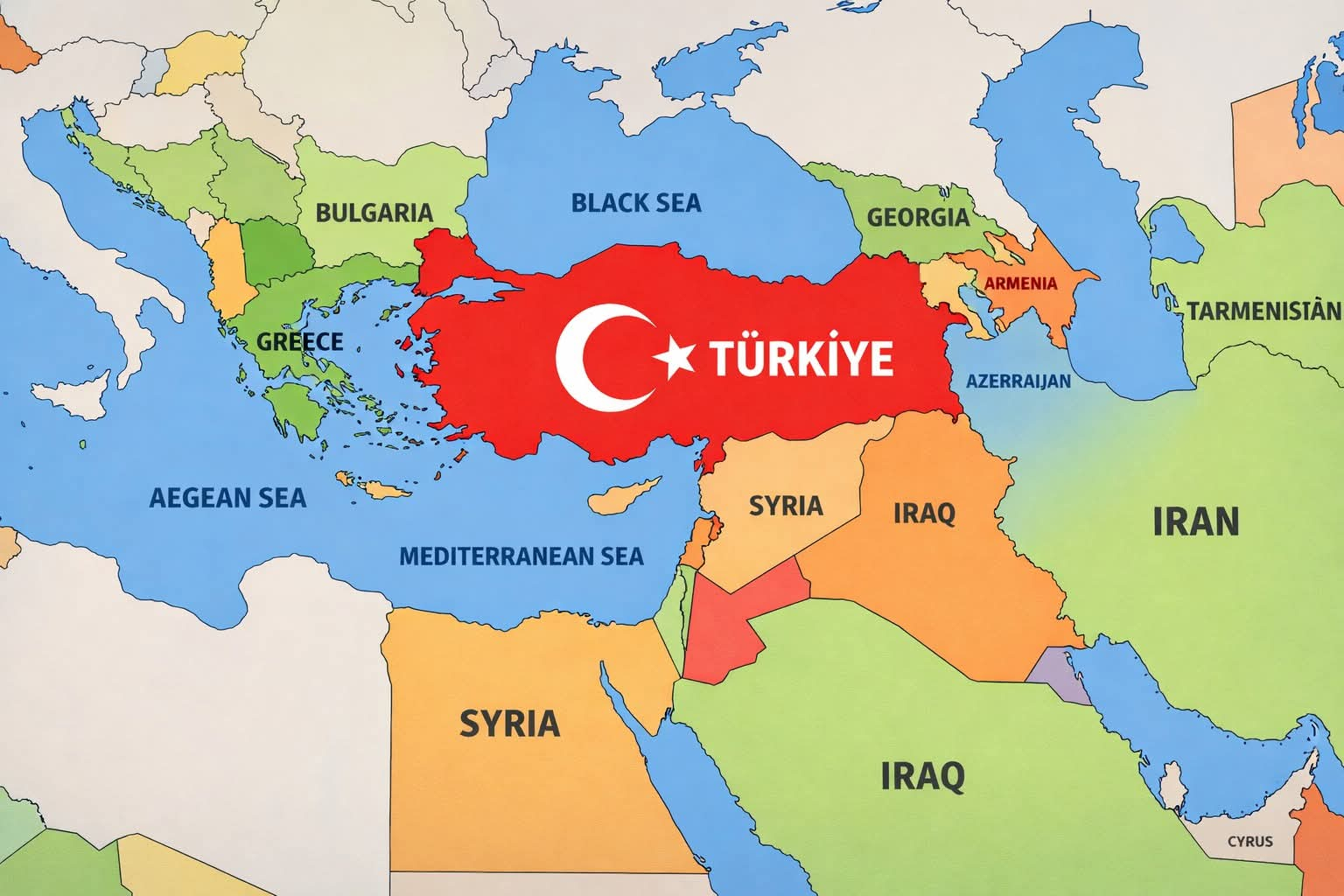
  • TURKEY
    Things you probably didn’t know about Türkiye (breaking common myths):

    A bridge between continents: One of the few countries in the world that spans both Europe and Asia — with Istanbul divided by the Bosphorus Strait.

    Not the capital you think: While Istanbul is the most famous city, the real capital is Ankara.

    Empire legacy: The heart of the Ottoman Empire for over 600 years, influencing Europe, Asia, and Africa.

    Hagia Sophia is unique: The iconic Hagia Sophia has served as a church, mosque, and museum throughout history.

    Cradle of civilizations: Home to ancient cultures like the Hittites, Greeks, and Romans — leaving behind incredible archaeological heritage.

    Tea > Coffee: Contrary to popular belief, tea is consumed more than coffee and is a daily essential.

    Turkish baths: The famous “hammam” is a centuries-old tradition of relaxation and cleansing from the Ottoman era.

    Unreal landscapes: Places like Cappadocia are known for fairy chimneys and breathtaking hot air balloon rides.

    Rich cuisine: From kebabs to baklava and Turkish delight, Turkish food is loved worldwide.

    Strategic location: Controls key routes between the Black Sea and the Mediterranean — making it geopolitically important.

    Historic bazaars: The Grand Bazaar in Istanbul is one of the oldest and largest covered markets in the world.

    Cultural diversity: A unique blend of European, Asian, and Middle Eastern influences in architecture, music, and traditions.

    Global TV hits: Turkish series and films are hugely popular in Latin America and beyond.

    Follow for more amazing facts!
    Like | Comment | Share

    #Turkey #Türkiye #Travel #History #Culture #Explore
    🇹🇷 TURKEY 🇹🇷 🧠😍 Things you probably didn’t know about Türkiye (breaking common myths): 👏👏 🌍 A bridge between continents: One of the few countries in the world that spans both Europe and Asia — with Istanbul divided by the Bosphorus Strait. 🏛️ Not the capital you think: While Istanbul is the most famous city, the real capital is Ankara. 👑 Empire legacy: The heart of the Ottoman Empire for over 600 years, influencing Europe, Asia, and Africa. 🕌 Hagia Sophia is unique: The iconic Hagia Sophia has served as a church, mosque, and museum throughout history. 🏺 Cradle of civilizations: Home to ancient cultures like the Hittites, Greeks, and Romans — leaving behind incredible archaeological heritage. 🍵 Tea > Coffee: Contrary to popular belief, tea is consumed more than coffee and is a daily essential. 🛁 Turkish baths: The famous “hammam” is a centuries-old tradition of relaxation and cleansing from the Ottoman era. 🎈 Unreal landscapes: Places like Cappadocia are known for fairy chimneys and breathtaking hot air balloon rides. 🍽️ Rich cuisine: From kebabs to baklava and Turkish delight, Turkish food is loved worldwide. 🌐 Strategic location: Controls key routes between the Black Sea and the Mediterranean — making it geopolitically important. 🛍️ Historic bazaars: The Grand Bazaar in Istanbul is one of the oldest and largest covered markets in the world. 🎶 Cultural diversity: A unique blend of European, Asian, and Middle Eastern influences in architecture, music, and traditions. 📺 Global TV hits: Turkish series and films are hugely popular in Latin America and beyond. 👉 Follow for more amazing facts! 🌍✨ ❤️ Like | 💬 Comment | 🔁 Share #Turkey #Türkiye #Travel #History #Culture #Explore
    1
    0 Commentaires 0 parts
  • KIICHIRO TOYODA
    Toyota Founder

    Kiichiro Toyoda, born in 1894, was the visionary who transformed Toyota into one of the world's largest automakers.

    In 1937, he founded Toyota Motor Corporation, driven by his passion for engineering and innovation. Its first major success came with the launch of the Toyota AA, which marked the beginning of a new era in automotive.

    From its early models to today's hybrid technology, Toyota's evolution reflects Toyoda's commitment to quality and efficiency. His legacy continues to inspire the automotive industry and all who believe in the power of innovation.
    KIICHIRO TOYODA Toyota Founder Kiichiro Toyoda, born in 1894, was the visionary who transformed Toyota into one of the world's largest automakers. In 1937, he founded Toyota Motor Corporation, driven by his passion for engineering and innovation. Its first major success came with the launch of the Toyota AA, which marked the beginning of a new era in automotive. From its early models to today's hybrid technology, Toyota's evolution reflects Toyoda's commitment to quality and efficiency. His legacy continues to inspire the automotive industry and all who believe in the power of innovation.
    0 Commentaires 0 parts
  • Ottoman soldiers stationed at Al Aqsa mosque. Ottoman Caliphate leaves a legacy of 402 years of peaceful rule in the Pal*stine heartland.

    When will the nation of Mohammed ﷺ rise?
    Ottoman soldiers stationed at Al Aqsa mosque. Ottoman Caliphate leaves a legacy of 402 years of peaceful rule in the Pal*stine heartland. When will the nation of Mohammed ﷺ rise?
    0 Commentaires 0 parts
  • December 17 marks the 750th death anniversary of Mevlana Jalaladdin Rumi, the 13th-century Islamic scholar and poet.

    On a night referred to as the ‘night of the union,’ the life and legacy of Mevlana is celebrated across the world in a ceremony known as ‘Shab-e-Urs.’

    It is said that during Mevlana Jalaladdin Rumi’s last hours, his wife pleaded with him not to leave and prayed to God to keep him alive, to which Rumi responded:

    “Am I a thief?
    Have I stolen someone’s goods?
    Is this why you would confine me here and keep me from being rejoined with my Love?”

    Meaning ‘the wedding night,’ Shab-e-Urs is especially prominent in the mystic’s death and burial place in the Turkish city of Konya, where the celebration often extends to 10 days.
    December 17 marks the 750th death anniversary of Mevlana Jalaladdin Rumi, the 13th-century Islamic scholar and poet. On a night referred to as the ‘night of the union,’ the life and legacy of Mevlana is celebrated across the world in a ceremony known as ‘Shab-e-Urs.’ It is said that during Mevlana Jalaladdin Rumi’s last hours, his wife pleaded with him not to leave and prayed to God to keep him alive, to which Rumi responded: “Am I a thief? Have I stolen someone’s goods? Is this why you would confine me here and keep me from being rejoined with my Love?” Meaning ‘the wedding night,’ Shab-e-Urs is especially prominent in the mystic’s death and burial place in the Turkish city of Konya, where the celebration often extends to 10 days.
    0 Commentaires 0 parts
  • Honouring the legacy of the beloved Islamic poet and scholar, Mevlana Jelaluddin Rumi, people in Türkiye and across the globe come together in Konya to commemorate the 750th anniversary of his passing.
    Honouring the legacy of the beloved Islamic poet and scholar, Mevlana Jelaluddin Rumi, people in Türkiye and across the globe come together in Konya to commemorate the 750th anniversary of his passing.
    0 Commentaires 0 parts
  • Ottoman soldiers stationed at Al Aqsa mosque. Ottoman Caliphate leaves a legacy of 402 years of peaceful rule in Palestine.

    Today, besieged Al-Aqsa and oppressed Muslims of Palestine call upon the Islamic world to liberate them from oppression!

    When will this Mohammeden nation arise?

    #Alquds #Palestine #tarih #AlAqsa
    Ottoman soldiers stationed at Al Aqsa mosque. Ottoman Caliphate leaves a legacy of 402 years of peaceful rule in Palestine. Today, besieged Al-Aqsa and oppressed Muslims of Palestine call upon the Islamic world to liberate them from oppression! When will this Mohammeden nation arise? #Alquds #Palestine #tarih #AlAqsa
    0 Commentaires 0 parts
Résultats de Recherche