• Turkey–Saudi Arabia … Expanding Trade & Investment Partnership Toward New Economic Opportunities

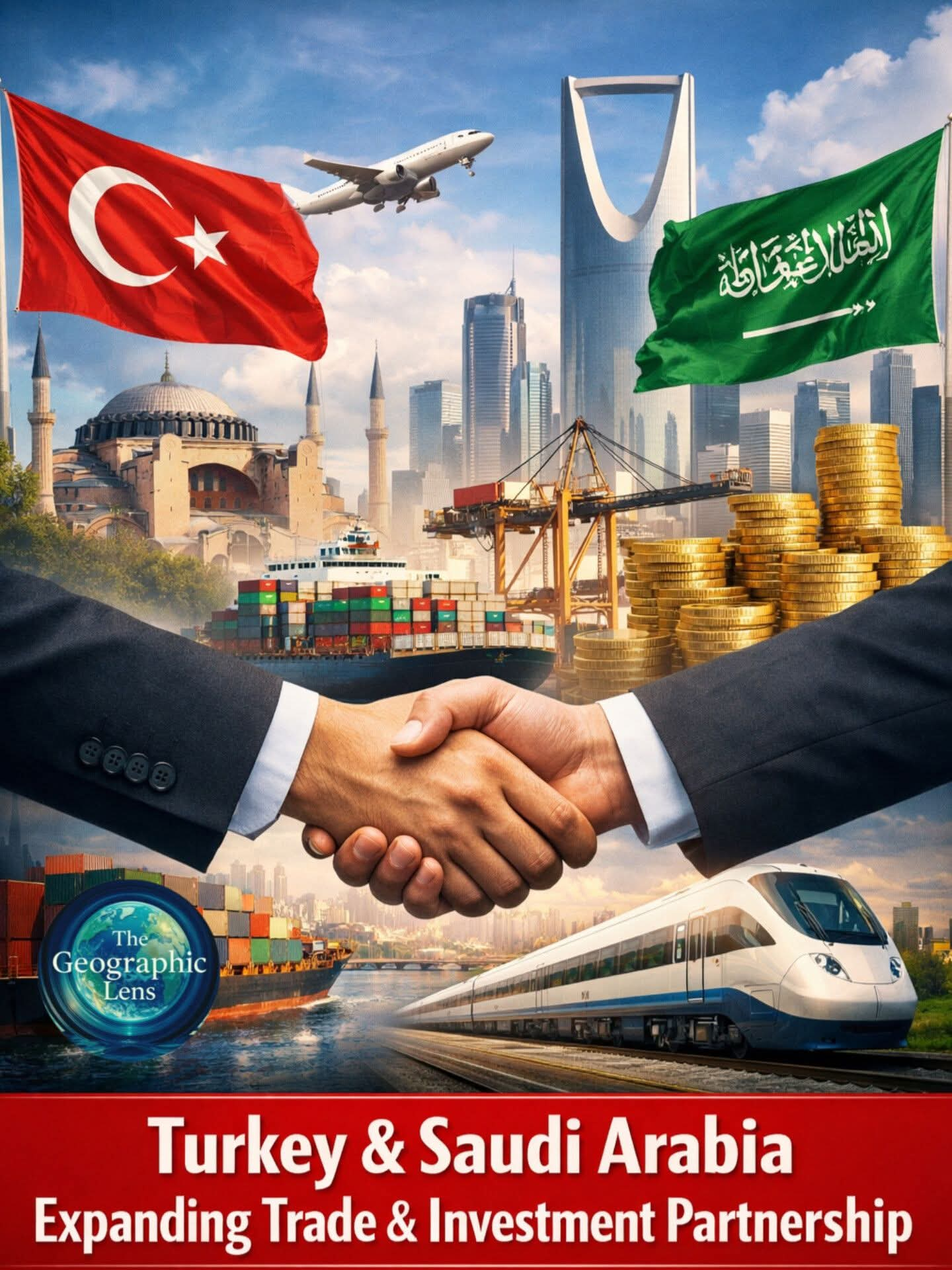
    Reports indicate that Türkiye and Saudi Arabia have signed a new protocol aimed at strengthening trade and investment relations between the two countries during the conclusion of the third meeting of the Turkish–Saudi Coordination Council.

    Context: The agreement reflects growing economic cooperation between Ankara and Riyadh as both countries seek to expand regional partnerships, diversify investments, and increase bilateral trade opportunities.

    Key dynamics:
    Expanding bilateral trade and investment cooperation
    Strengthening economic coordination between Türkiye and Saudi Arabia
    Supporting joint projects and regional economic partnerships
    Enhancing connectivity between Middle Eastern markets

    Source: Statements from the Turkish Ministry of Trade regarding the Turkish–Saudi Coordination Council meeting

    #Turkey #SaudiArabia #Trade #Investment #Economy #MiddleEast #Diplomacy #Business #BreakingNews
    Turkey–Saudi Arabia 🇹🇷🤝🇸🇦… Expanding Trade & Investment Partnership Toward New Economic Opportunities 🌍💼 Reports indicate that Türkiye and Saudi Arabia have signed a new protocol aimed at strengthening trade and investment relations between the two countries during the conclusion of the third meeting of the Turkish–Saudi Coordination Council. 📊 Context: The agreement reflects growing economic cooperation between Ankara and Riyadh as both countries seek to expand regional partnerships, diversify investments, and increase bilateral trade opportunities. 🌐 Key dynamics: 📈 Expanding bilateral trade and investment cooperation 🤝 Strengthening economic coordination between Türkiye and Saudi Arabia 🏗️ Supporting joint projects and regional economic partnerships 🌍 Enhancing connectivity between Middle Eastern markets 📌 Source: Statements from the Turkish Ministry of Trade regarding the Turkish–Saudi Coordination Council meeting #Turkey #SaudiArabia #Trade #Investment #Economy #MiddleEast #Diplomacy #Business #BreakingNews
    0 Comments 0 Shares
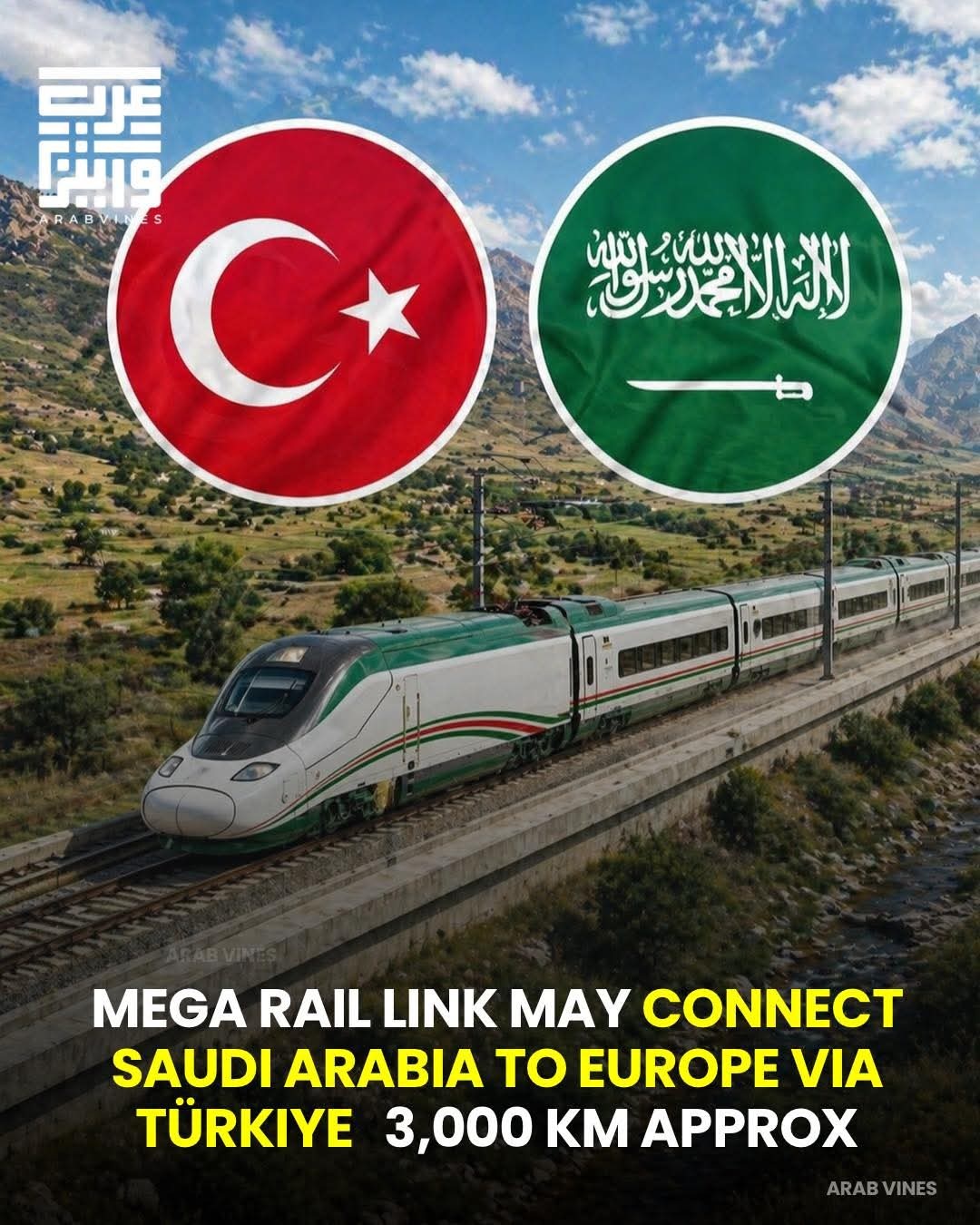
  • A powerful new railway route is being explored linking Saudi Arabia to Türkiye through Jordan and Syria.

    Why it matters:
    • Faster travel across the region
    • Stronger trade connections
    • A major boost to regional cooperation

    If approved, this could become one of the Middle East’s most important transport corridors.
    A powerful new railway route is being explored linking Saudi Arabia to Türkiye through Jordan and Syria. Why it matters: • Faster travel across the region • Stronger trade connections • A major boost to regional cooperation If approved, this could become one of the Middle East’s most important transport corridors.
    0 Comments 0 Shares
  • Turkey’s Economic Journey: From Crisis to Trillion-Dollar Growth

    From $256B in 1999 to over $1.4T in 2025, Turkey’s GDP story reflects resilience, reform, global challenges, and strong post-pandemic momentum.
    A dynamic transformation shaped by industry, trade, infrastructure, and a young workforce.

    Swipe through the infographic to see how the numbers evolved over 25+ years.

    #fblifestyle
    #Turkey #EconomicGrowth #GDP #GlobalEconomy #EmergingMarkets #Finance #DataVisual #Infographic #EconomicTrends
    Turkey’s Economic📈🇹🇷 Journey: From Crisis to Trillion-Dollar Growth🌍 From $256B in 1999 to over $1.4T in 2025, Turkey’s GDP story reflects resilience, reform, global challenges, and strong post-pandemic momentum. A dynamic transformation shaped by industry, trade, infrastructure, and a young workforce. Swipe through the infographic to see how the numbers evolved over 25+ years. 📊✨ #fblifestyle #Turkey #EconomicGrowth #GDP #GlobalEconomy #EmergingMarkets #Finance #DataVisual #Infographic #EconomicTrends
    0 Comments 0 Shares
  • Osmanlı, Safevi ve Babür İmparatorlukları:
    1600’lerin Ekonomik Devleri

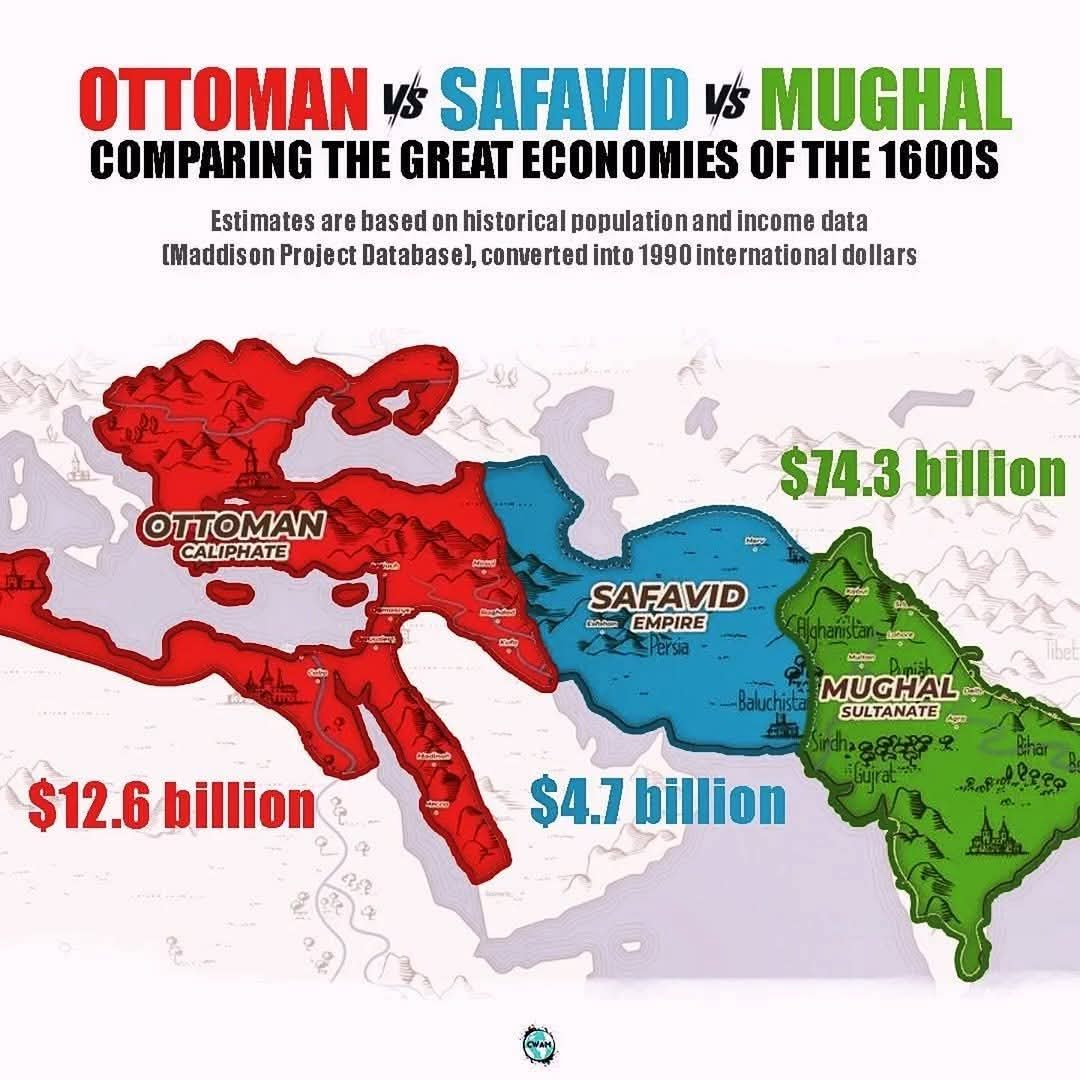
    17. yüzyılda, üç büyük Türkî imparatorluk — Osmanlı Halifeliği, Safevi İmparatorluğu ve Babür Sultanlığı — Orta Doğu ve Güney Asya’nın geniş bölgelerine hükmediyordu. Her biri kültür, siyaset ve ticaretin birer gücüydü. Ancak saf ekonomik güç bakımından Babür İmparatorluğu diğerlerinin üzerinde yer alıyordu; 1990 uluslararası dolar cinsinden tahmini 74,3 milyar dolarlık bir GSYİH’ya sahipti.

    Bu karşılaştırma, bu imparatorlukların yalnızca kendi bölgelerini değil, aynı zamanda erken modern dünyadaki küresel ticareti, güç dengelerini ve servet akışını nasıl şekillendirdiklerine de ışık tutmaktadır.

    Kaynak: @creative.wam

    Ottoman & Safavid & Mughal Empires :
    The Economic Titans of the 1600s

    In the 17th century, three great Turkic empires ruled vast regions across the Middle East and South Asia - the Ottoman Caliphate, the Safavid Empire, and the Mughal (Babur) Sultanate. Each was a powerhouse of culture, politics, and commerce. But when it came to sheer economic strength, the Mughal (Babur) Empire stood above the rest, boasting an estimated GDP of $74.3 billion (in 1990 international dollars).

    This comparison sheds light on how these empires not only defined their regions but also shaped global trade, power dynamics, and the flow of wealth in the early modern world.

    Credit: @creative.wam
    Osmanlı, Safevi ve Babür İmparatorlukları: 1600’lerin Ekonomik Devleri 17. yüzyılda, üç büyük Türkî imparatorluk — Osmanlı Halifeliği, Safevi İmparatorluğu ve Babür Sultanlığı — Orta Doğu ve Güney Asya’nın geniş bölgelerine hükmediyordu. Her biri kültür, siyaset ve ticaretin birer gücüydü. Ancak saf ekonomik güç bakımından Babür İmparatorluğu diğerlerinin üzerinde yer alıyordu; 1990 uluslararası dolar cinsinden tahmini 74,3 milyar dolarlık bir GSYİH’ya sahipti. Bu karşılaştırma, bu imparatorlukların yalnızca kendi bölgelerini değil, aynı zamanda erken modern dünyadaki küresel ticareti, güç dengelerini ve servet akışını nasıl şekillendirdiklerine de ışık tutmaktadır. Kaynak: @creative.wam Ottoman & Safavid & Mughal Empires : The Economic Titans of the 1600s In the 17th century, three great Turkic empires ruled vast regions across the Middle East and South Asia - the Ottoman Caliphate, the Safavid Empire, and the Mughal (Babur) Sultanate. Each was a powerhouse of culture, politics, and commerce. But when it came to sheer economic strength, the Mughal (Babur) Empire stood above the rest, boasting an estimated GDP of $74.3 billion (in 1990 international dollars). This comparison sheds light on how these empires not only defined their regions but also shaped global trade, power dynamics, and the flow of wealth in the early modern world. Credit: @creative.wam
    0 Comments 0 Shares
  • A Historic Move After 125 Years!

    The Hejaz Railway, first launched by Sultan Abdul Hamid II in 1900 to connect Istanbul to Mecca and Medina, is being revived after 125 years!

    Türkiye, Jordan, and Syria have signed a protocol for reconstruction. A separate protocol with Saudi Arabia will follow soon.

    The new line will stretch from Istanbul → Damascus → Amman → Medina, aiming to provide safe, affordable travel for pilgrims and boost international trade.

    Originally completed in 1908, the railway was disrupted during World War I, but now it will return as a modern link of faith, history, and commerce.

    #HejazRailway #History #OttomanEmpire #AbdulHamidII #Pilgrimage #FaithAndTrade #Turkey #Jordan #Syria #SaudiArabia
    A Historic Move After 125 Years! 🚂✨ The Hejaz Railway, first launched by Sultan Abdul Hamid II in 1900 to connect Istanbul to Mecca and Medina, is being revived after 125 years! 🇹🇷 Türkiye, 🇯🇴 Jordan, and 🇸🇾 Syria have signed a protocol for reconstruction. A separate protocol with Saudi Arabia will follow soon. The new line will stretch from Istanbul → Damascus → Amman → Medina, aiming to provide safe, affordable travel for pilgrims and boost international trade. 🕌 Originally completed in 1908, the railway was disrupted during World War I, but now it will return as a modern link of faith, history, and commerce. #HejazRailway #History #OttomanEmpire #AbdulHamidII #Pilgrimage #FaithAndTrade #Turkey #Jordan #Syria #SaudiArabia
    1
    0 Comments 0 Shares
  • The Ottoman Empire at Its Peak – 1683

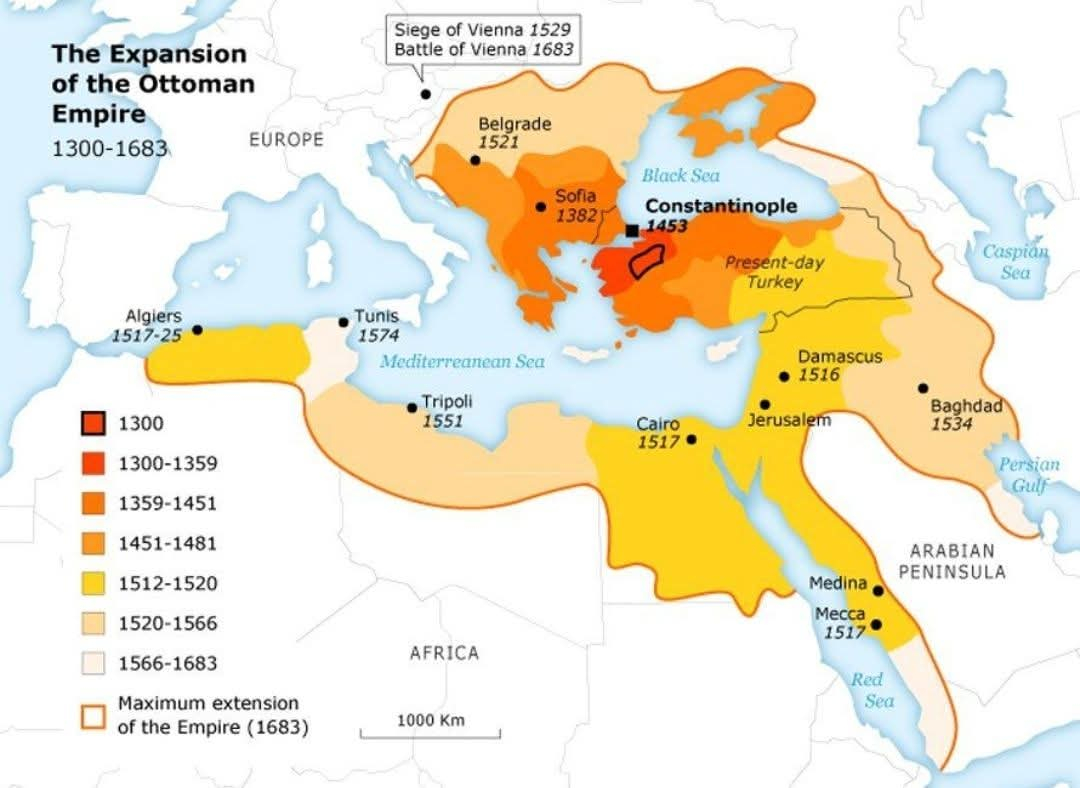
    In 1683, the Ottoman Empire stood as one of the world’s most powerful states, stretching across three continents.

    Territory – From Hungary in the heart of Europe to the Arabian deserts, from North Africa to the Caucasus, the empire spanned 6-7 million square kilometers.

    Capital – Istanbul, once Constantinople, was a global hub of trade, culture, and politics.

    Diversity – The empire united Turks, Arabs, Kurds, Greeks, Armenians, Slavs, Jews, and many more under a vast administrative system.

    Military Power – The Janissaries and navy projected influence across the Mediterranean, Red Sea, and beyond.

    1683 Vienna Campaign – Marked the high tide of Ottoman expansion into Europe, though the failed siege of Vienna also signaled the turning point of imperial fortunes.

    The Ottoman Empire in 1683 was not just a political force — it was a cultural mosaic and a major player in global history.

    A true ISLAMIC UNITY is not only the only solution to provide Peace, Tranquility, and Security today — just as the Ottoman State ensured for 600 years — but also the only path for the economic development of poor Islamic countries.
    The Ottoman Empire at Its Peak – 1683 In 1683, the Ottoman Empire stood as one of the world’s most powerful states, stretching across three continents. 🔹 Territory – From Hungary in the heart of Europe to the Arabian deserts, from North Africa to the Caucasus, the empire spanned 6-7 million square kilometers. 🔹 Capital – Istanbul, once Constantinople, was a global hub of trade, culture, and politics. 🔹 Diversity – The empire united Turks, Arabs, Kurds, Greeks, Armenians, Slavs, Jews, and many more under a vast administrative system. 🔹 Military Power – The Janissaries and navy projected influence across the Mediterranean, Red Sea, and beyond. 🔹 1683 Vienna Campaign – Marked the high tide of Ottoman expansion into Europe, though the failed siege of Vienna also signaled the turning point of imperial fortunes. The Ottoman Empire in 1683 was not just a political force — it was a cultural mosaic and a major player in global history. A true ISLAMIC UNITY is not only the only solution to provide Peace, Tranquility, and Security today — just as the Ottoman State ensured for 600 years — but also the only path for the economic development of poor Islamic countries.
    0 Comments 0 Shares
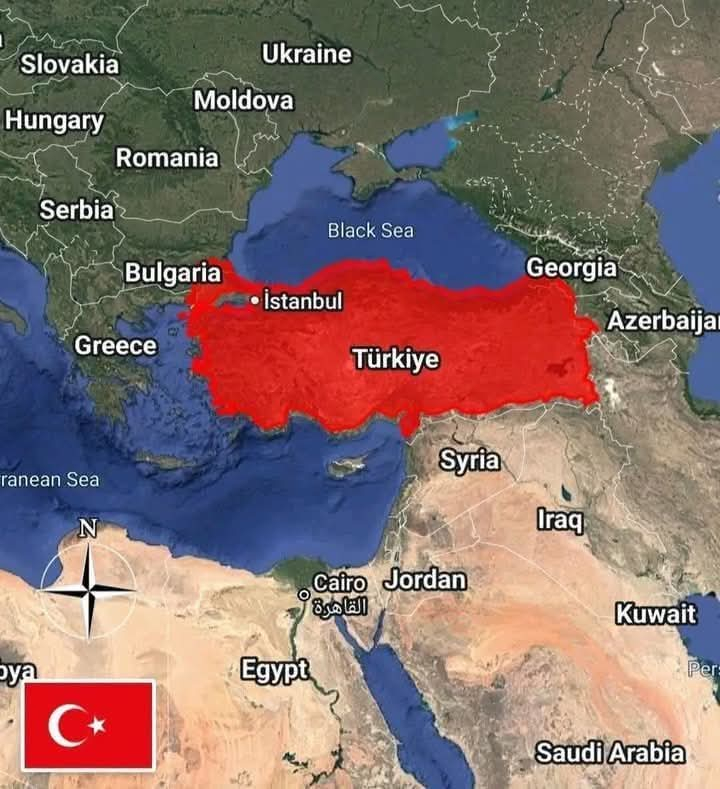
  • #Turkey is a country located at the crossroads of *two continents*, *Asia* and *Europe*, giving it a unique strategic position. Turkey is rich in culture and history, being home to many ancient civilizations, including the *Ottoman Empire* and the *Byzantine Empire*. It is known for its diverse geography, including beautiful *beaches*, towering *mountains*, and amazing archaeological sites. Turkey is also one of the world's major tourist destinations.

    25 Facts About Turkey:

    *1. Geographic Location*
    Turkey is located at the crossroads of *Asia* and *Europe*.

    *2. Capital*
    The capital is *Ankara*, while *Istanbul* is the largest and most famous city.

    *3. Area*
    Turkey covers an area of about *783,356 km²*, making it one of the largest countries in the world.

    *4. Population*
    Turkey's population is approximately *85 million people* in 2024.

    *5. Official Language*
    The official language is *Turkish*.

    *6. Religion*
    The primary religion in Turkey is *Islam*, with the majority being *Sunni Muslims*.

    *7. Government*
    Turkey is a *democratic republic* with a *presidential system*.

    *8. Currency*
    The official currency is the *Turkish Lira (TRY)*.

    *9. Climate*Turkey has a diverse climate: a *Mediterranean climate* on the coast and a *continental climate* in the inland areas.

    *10. Terrain*
    Turkey has varied terrain, including *mountains*, *plains*, and *rivers*.

    *11. Highest Peak*
    The highest peak in Turkey is *Mount Ararat* (Ağrı Dağı), with an elevation of *5,137 meters*.

    *12. Tourism*
    Turkey is one of the most popular tourist destinations, attracting about *40 million tourists annually*.

    *13. Tourist Attractions*
    Turkey has many famous tourist sites, such as *Hagia Sophia* in *Istanbul*, the *Bodrum Mausoleum*, and *Cappadocia*.

    *14. Long History*
    Turkey is home to ancient civilizations such as the *Ottoman Empire*, the *Byzantine Empire*, the *Greeks*, and the *Romans*.

    *15. Historical Significance*
    The city of *Istanbul* was the capital of both the *Byzantine Empire* and the *Ottoman Empire*.

    *16. Turkish Cuisine*
    Turkish cuisine is world-famous, with dishes like *kebab*, *hummus*, *baklava*, and *meze*.

    *17. Sports*
    *Football* is the most popular sport in Turkey, along with *basketball* and *water sports*.

    *18. Turkish Culture*
    Turkey is a blend of *Eastern and Western* influences, reflecting its rich cultural heritage.

    *19. Education*Turkey has a strong educational system, with well-known universities like *Boğaziçi University* and *Istanbul University*.

    *20. Renewable Energy*
    Turkey is investing in *renewable energy*, particularly in *solar* and *wind power*.

    *21. Trade and Industry*
    Turkey is a major commercial hub, exporting products such as *textiles*, *machinery*, and *agricultural products*.

    *22. Islamic Culture*
    Turkey has a rich Islamic history, with many famous *mosques* like the *Sultan Ahmed Mosque (Blue Mosque)*.

    *23. Turkish Arts*
    Turkey is known for its arts, including *calligraphy*, *Islamic decoration*, and *traditional dances*.

    *24. Space and Astronomy*
    Turkey is developing its own space program and aims to reach space in the coming years.

    *25. Politics*
    Turkey is a member of *NATO* and the *G20*, playing a key role in global politics.

    Turkey is a country with a *long history* and *rich culture*, blending *ancient traditions* with modern developments, making it an exciting destination for tourists and investors alike.
    C: Geographic
    #Turkey 🇹🇷 is a country located at the crossroads of *two continents*, *Asia* and *Europe*, giving it a unique strategic position. Turkey is rich in culture and history, being home to many ancient civilizations, including the *Ottoman Empire* and the *Byzantine Empire*. It is known for its diverse geography, including beautiful *beaches*, towering *mountains*, and amazing archaeological sites. Turkey is also one of the world's major tourist destinations. 25 Facts About Turkey: 🌐 *1. Geographic Location* Turkey is located at the crossroads of *Asia* and *Europe*. 🌐 *2. Capital* The capital is *Ankara*, while *Istanbul* is the largest and most famous city. 🌐 *3. Area* Turkey covers an area of about *783,356 km²*, making it one of the largest countries in the world. 🌐 *4. Population* Turkey's population is approximately *85 million people* in 2024. 🌐 *5. Official Language* The official language is *Turkish*. 🌐 *6. Religion* The primary religion in Turkey is *Islam*, with the majority being *Sunni Muslims*. 🌐 *7. Government* Turkey is a *democratic republic* with a *presidential system*. 🌐 *8. Currency* The official currency is the *Turkish Lira (TRY)*. 🌐 *9. Climate*Turkey has a diverse climate: a *Mediterranean climate* on the coast and a *continental climate* in the inland areas. 🌐 *10. Terrain* Turkey has varied terrain, including *mountains*, *plains*, and *rivers*. 🌐 *11. Highest Peak* The highest peak in Turkey is *Mount Ararat* (Ağrı Dağı), with an elevation of *5,137 meters*. 🌐 *12. Tourism* Turkey is one of the most popular tourist destinations, attracting about *40 million tourists annually*. 🌐 *13. Tourist Attractions* Turkey has many famous tourist sites, such as *Hagia Sophia* in *Istanbul*, the *Bodrum Mausoleum*, and *Cappadocia*. 🌐 *14. Long History* Turkey is home to ancient civilizations such as the *Ottoman Empire*, the *Byzantine Empire*, the *Greeks*, and the *Romans*. 🌐 *15. Historical Significance* The city of *Istanbul* was the capital of both the *Byzantine Empire* and the *Ottoman Empire*. 🌐 *16. Turkish Cuisine* Turkish cuisine is world-famous, with dishes like *kebab*, *hummus*, *baklava*, and *meze*. 🌐 *17. Sports* *Football* is the most popular sport in Turkey, along with *basketball* and *water sports*. 🌐 *18. Turkish Culture* Turkey is a blend of *Eastern and Western* influences, reflecting its rich cultural heritage. 🌐 *19. Education*Turkey has a strong educational system, with well-known universities like *Boğaziçi University* and *Istanbul University*. 🌐 *20. Renewable Energy* Turkey is investing in *renewable energy*, particularly in *solar* and *wind power*. 🌐 *21. Trade and Industry* Turkey is a major commercial hub, exporting products such as *textiles*, *machinery*, and *agricultural products*. 🌐 *22. Islamic Culture* Turkey has a rich Islamic history, with many famous *mosques* like the *Sultan Ahmed Mosque (Blue Mosque)*. 🌐 *23. Turkish Arts* Turkey is known for its arts, including *calligraphy*, *Islamic decoration*, and *traditional dances*. 🌐 *24. Space and Astronomy* Turkey is developing its own space program and aims to reach space in the coming years. 🌐 *25. Politics* Turkey is a member of *NATO* and the *G20*, playing a key role in global politics. Turkey is a country with a *long history* and *rich culture*, blending *ancient traditions* with modern developments, making it an exciting destination for tourists and investors alike. C: Geographic
    0 Comments 0 Shares
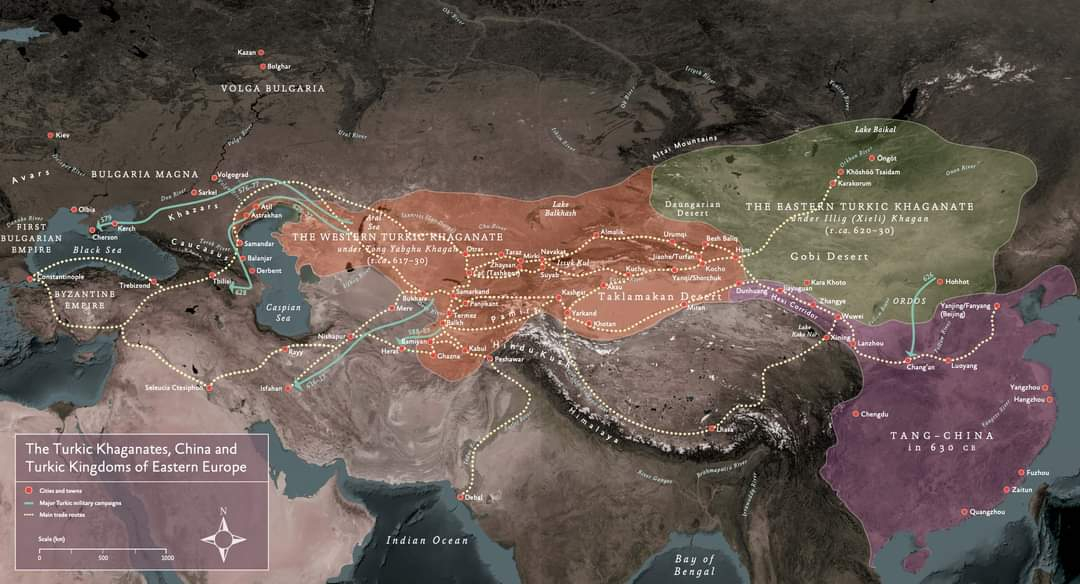
  • The Turkic Khaganates, Uyghurs, China, and Turkic Kingdoms of Eastern Europe in the 7th Century

    In the 7th century, the Turkic Khaganates were powerful confederations across Central Asia. Among these groups were the Uyghurs, a significant Turkic people who would later rise to establish their own Khaganate. The Uyghurs, along with other Turkic groups, played a vital role in the power dynamics of the time, interacting with the Tang Dynasty in China through alliances and conflicts. Meanwhile, Turkic kingdoms such as the Khazars and Bulgars expanded into Eastern Europe, creating lasting political and cultural legacies. This era marked the increasing influence of Turkic peoples across a vast region, shaping trade, warfare, and political landscapes from China to Europe.

    #TurkicKhaganates #UyghurHistory #7thCenturyHistory #TangDynasty #EasternEurope #TurkicKingdoms #CentralAsiaHistory
    The Turkic Khaganates, Uyghurs, China, and Turkic Kingdoms of Eastern Europe in the 7th Century In the 7th century, the Turkic Khaganates were powerful confederations across Central Asia. Among these groups were the Uyghurs, a significant Turkic people who would later rise to establish their own Khaganate. The Uyghurs, along with other Turkic groups, played a vital role in the power dynamics of the time, interacting with the Tang Dynasty in China through alliances and conflicts. Meanwhile, Turkic kingdoms such as the Khazars and Bulgars expanded into Eastern Europe, creating lasting political and cultural legacies. This era marked the increasing influence of Turkic peoples across a vast region, shaping trade, warfare, and political landscapes from China to Europe. #TurkicKhaganates #UyghurHistory #7thCenturyHistory #TangDynasty #EasternEurope #TurkicKingdoms #CentralAsiaHistory
    0 Comments 0 Shares
  • “We are keen to further develop our economic and trade relations with Spain”

    https://www.tccb.gov.tr/en/news/542/152744/-we-are-keen-to-further-develop-our-economic-and-trade-relations-with-spain-
    “We are keen to further develop our economic and trade relations with Spain” https://www.tccb.gov.tr/en/news/542/152744/-we-are-keen-to-further-develop-our-economic-and-trade-relations-with-spain-
    0 Comments 0 Shares
  • Happy International Tea Day!

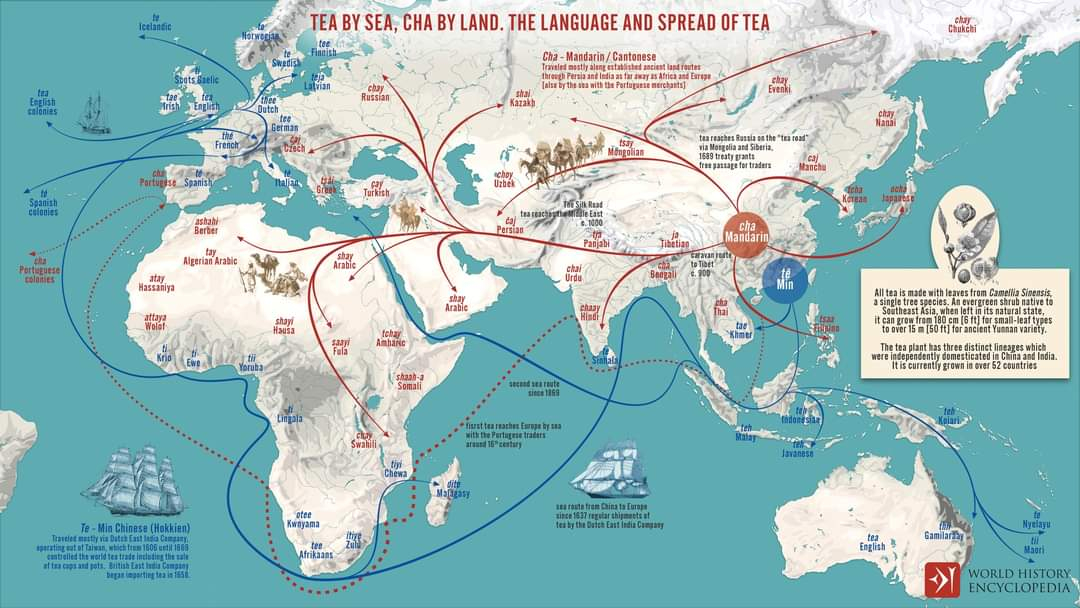
    This map shows the phenomena of the movement of tea, and what it's called around the globe. Around the world, there are mainly 2 root words for tea, 'te' and 'cha', and both of these come from China.

    Where the use of ‘cha’ occurred through land trade, primarily along the Silk Road, the name ‘te’ spread through sea trade primarily by the Dutch traders who were bringing tea to Europe. Regions in the world where tea grows naturally often have their own word for tea, which has not derived from the Chinese.

    #Tea #InternationalTeaDay
    Happy International Tea Day! 🫖 This map shows the phenomena of the movement of tea, and what it's called around the globe. Around the world, there are mainly 2 root words for tea, 'te' and 'cha', and both of these come from China. Where the use of ‘cha’ occurred through land trade, primarily along the Silk Road, the name ‘te’ spread through sea trade primarily by the Dutch traders who were bringing tea to Europe. Regions in the world where tea grows naturally often have their own word for tea, which has not derived from the Chinese. #Tea #InternationalTeaDay
    0 Comments 0 Shares
More Results