• 15 Interesting Facts About Türkiye

    Top Tourist Destination
    Türkiye is consistently among the Top 10 most visited countries in the world, attracting 50+ million international tourists annually.

    Largest City
    The biggest city is Istanbul, with 16+ million people, making it one of the largest cities in Europe.

    Capital City
    The capital is Ankara, located in central Anatolia.

    Population Power
    Türkiye has a population of about 85 million people, making it one of the most populous countries in Europe and the Middle East.

    Unique Geographic Location
    Türkiye sits between Europe and Asia, connected by the Bosphorus strait.

    Large Economy
    Türkiye has one of the largest economies in the world, usually ranking around Top 20 globally by GDP.

    Major Tourist Cities
    Popular tourist destinations include:
    • Istanbul
    • Antalya
    • Izmir
    • Bodrum
    • Cappadocia region.

    Ancient Civilization Center
    Türkiye has hosted many civilizations including the Hittites, Greeks, Romans, Byzantines, and Ottoman Empire.

    World Heritage Sites
    Türkiye has 19 UNESCO World Heritage Sites, including Göbekli Tepe, one of the oldest temples in the world (11,000+ years old).

    Agricultural Power
    Türkiye is one of the world’s largest producers of hazelnuts, apricots, figs, and cherries.

    Strategic Straits
    The Dardanelles and Bosphorus connect the Black Sea to the Mediterranean Sea.

    Huge Airline Hub
    Turkish Airlines flies to more countries than any other airline in the world.

    Beautiful Coastline
    Türkiye has about 8,300 km of coastline along the Black Sea, Aegean Sea, and Mediterranean Sea.

    Famous Cuisine
    Turkish cuisine includes global favorites like Kebab, Baklava, and Turkish Delight.

    Historic Megacity
    Istanbul is the only city in the world located on two continents.


    Türkiye Facts
    Top 10 most visited country in the world
    Population: ~85 million
    Largest city: Istanbul (16M+)
    Bridge between Europe & Asia
    Top 20 global economy
    19 UNESCO World Heritage sites
    Major agricultural exporter
    Turkish Airlines flies to most countries worldwide
    8,000+ km coastline
    World-famous cuisine

    #turkiye #turkey #geography #worldfacts #europe #asia #travel #amazingworldgeography #fblifestyle
    🇹🇷 15 Interesting Facts About Türkiye 🌍 1️⃣ Top Tourist Destination Türkiye is consistently among the Top 10 most visited countries in the world, attracting 50+ million international tourists annually. 2️⃣ Largest City The biggest city is Istanbul, with 16+ million people, making it one of the largest cities in Europe. 3️⃣ Capital City The capital is Ankara, located in central Anatolia. 4️⃣ Population Power Türkiye has a population of about 85 million people, making it one of the most populous countries in Europe and the Middle East. 5️⃣ Unique Geographic Location Türkiye sits between Europe and Asia, connected by the Bosphorus strait. 6️⃣ Large Economy Türkiye has one of the largest economies in the world, usually ranking around Top 20 globally by GDP. 7️⃣ Major Tourist Cities Popular tourist destinations include: • Istanbul • Antalya • Izmir • Bodrum • Cappadocia region. 8️⃣ Ancient Civilization Center Türkiye has hosted many civilizations including the Hittites, Greeks, Romans, Byzantines, and Ottoman Empire. 9️⃣ World Heritage Sites Türkiye has 19 UNESCO World Heritage Sites, including Göbekli Tepe, one of the oldest temples in the world (11,000+ years old). 🔟 Agricultural Power Türkiye is one of the world’s largest producers of hazelnuts, apricots, figs, and cherries. 1️⃣1️⃣ Strategic Straits The Dardanelles and Bosphorus connect the Black Sea to the Mediterranean Sea. 1️⃣2️⃣ Huge Airline Hub Turkish Airlines flies to more countries than any other airline in the world. 1️⃣3️⃣ Beautiful Coastline Türkiye has about 8,300 km of coastline along the Black Sea, Aegean Sea, and Mediterranean Sea. 1️⃣4️⃣ Famous Cuisine Turkish cuisine includes global favorites like Kebab, Baklava, and Turkish Delight. 1️⃣5️⃣ Historic Megacity Istanbul is the only city in the world located on two continents. ⸻ 🌍 Türkiye Facts 🇹🇷 ✈️ Top 10 most visited country in the world 👥 Population: ~85 million 🏙️ Largest city: Istanbul (16M+) 🌉 Bridge between Europe & Asia 💰 Top 20 global economy 🏛️ 19 UNESCO World Heritage sites 🌾 Major agricultural exporter ✈️ Turkish Airlines flies to most countries worldwide 🏖️ 8,000+ km coastline 🍽️ World-famous cuisine #turkiye #turkey #geography #worldfacts #europe #asia #travel #amazingworldgeography #fblifestyle 🌍
    0 Kommentare 0 Anteile
  • Turkey’s Economic Journey: From Crisis to Trillion-Dollar Growth

    From $256B in 1999 to over $1.4T in 2025, Turkey’s GDP story reflects resilience, reform, global challenges, and strong post-pandemic momentum.
    A dynamic transformation shaped by industry, trade, infrastructure, and a young workforce.

    Swipe through the infographic to see how the numbers evolved over 25+ years.

    #fblifestyle
    #Turkey #EconomicGrowth #GDP #GlobalEconomy #EmergingMarkets #Finance #DataVisual #Infographic #EconomicTrends
    Turkey’s Economic📈🇹🇷 Journey: From Crisis to Trillion-Dollar Growth🌍 From $256B in 1999 to over $1.4T in 2025, Turkey’s GDP story reflects resilience, reform, global challenges, and strong post-pandemic momentum. A dynamic transformation shaped by industry, trade, infrastructure, and a young workforce. Swipe through the infographic to see how the numbers evolved over 25+ years. 📊✨ #fblifestyle #Turkey #EconomicGrowth #GDP #GlobalEconomy #EmergingMarkets #Finance #DataVisual #Infographic #EconomicTrends
    0 Kommentare 0 Anteile
  • Osmanlı, Safevi ve Babür İmparatorlukları:
    1600’lerin Ekonomik Devleri

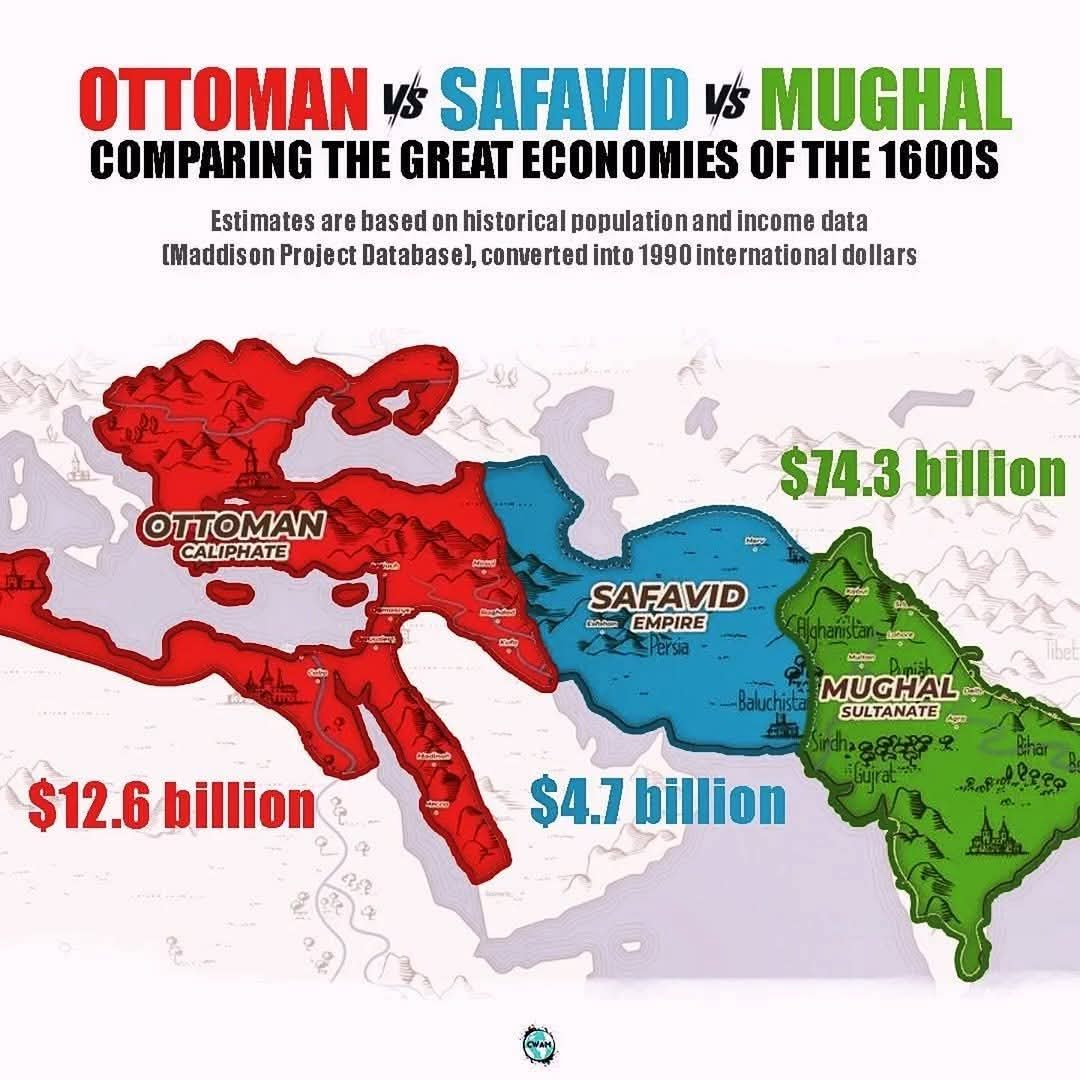
    17. yüzyılda, üç büyük Türkî imparatorluk — Osmanlı Halifeliği, Safevi İmparatorluğu ve Babür Sultanlığı — Orta Doğu ve Güney Asya’nın geniş bölgelerine hükmediyordu. Her biri kültür, siyaset ve ticaretin birer gücüydü. Ancak saf ekonomik güç bakımından Babür İmparatorluğu diğerlerinin üzerinde yer alıyordu; 1990 uluslararası dolar cinsinden tahmini 74,3 milyar dolarlık bir GSYİH’ya sahipti.

    Bu karşılaştırma, bu imparatorlukların yalnızca kendi bölgelerini değil, aynı zamanda erken modern dünyadaki küresel ticareti, güç dengelerini ve servet akışını nasıl şekillendirdiklerine de ışık tutmaktadır.

    Kaynak: @creative.wam

    Ottoman & Safavid & Mughal Empires :
    The Economic Titans of the 1600s

    In the 17th century, three great Turkic empires ruled vast regions across the Middle East and South Asia - the Ottoman Caliphate, the Safavid Empire, and the Mughal (Babur) Sultanate. Each was a powerhouse of culture, politics, and commerce. But when it came to sheer economic strength, the Mughal (Babur) Empire stood above the rest, boasting an estimated GDP of $74.3 billion (in 1990 international dollars).

    This comparison sheds light on how these empires not only defined their regions but also shaped global trade, power dynamics, and the flow of wealth in the early modern world.

    Credit: @creative.wam
    Osmanlı, Safevi ve Babür İmparatorlukları: 1600’lerin Ekonomik Devleri 17. yüzyılda, üç büyük Türkî imparatorluk — Osmanlı Halifeliği, Safevi İmparatorluğu ve Babür Sultanlığı — Orta Doğu ve Güney Asya’nın geniş bölgelerine hükmediyordu. Her biri kültür, siyaset ve ticaretin birer gücüydü. Ancak saf ekonomik güç bakımından Babür İmparatorluğu diğerlerinin üzerinde yer alıyordu; 1990 uluslararası dolar cinsinden tahmini 74,3 milyar dolarlık bir GSYİH’ya sahipti. Bu karşılaştırma, bu imparatorlukların yalnızca kendi bölgelerini değil, aynı zamanda erken modern dünyadaki küresel ticareti, güç dengelerini ve servet akışını nasıl şekillendirdiklerine de ışık tutmaktadır. Kaynak: @creative.wam Ottoman & Safavid & Mughal Empires : The Economic Titans of the 1600s In the 17th century, three great Turkic empires ruled vast regions across the Middle East and South Asia - the Ottoman Caliphate, the Safavid Empire, and the Mughal (Babur) Sultanate. Each was a powerhouse of culture, politics, and commerce. But when it came to sheer economic strength, the Mughal (Babur) Empire stood above the rest, boasting an estimated GDP of $74.3 billion (in 1990 international dollars). This comparison sheds light on how these empires not only defined their regions but also shaped global trade, power dynamics, and the flow of wealth in the early modern world. Credit: @creative.wam
    0 Kommentare 0 Anteile
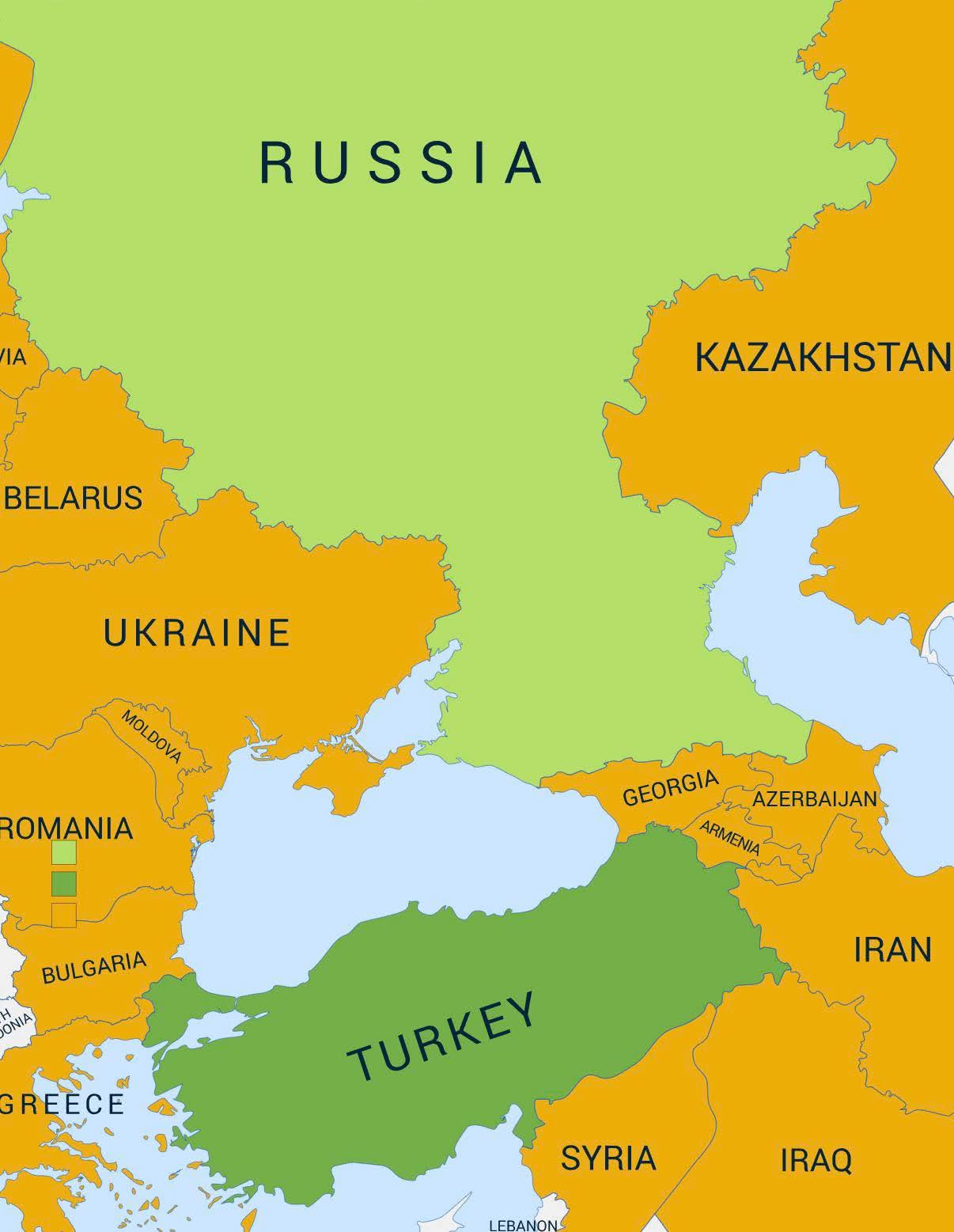
  • #Turkey is located at the crossroads of Asia and Europe. It is bordered by Greece and Bulgaria to the northwest, the Black Sea to the north, Georgia to the northeast, Armenia, the Azerbaijani exclave of Nakhchivan, and Iran to the east, Iraq to the southeast, Syria and the Mediterranean Sea to the south, and the Aegean Sea to the west.
    Area: 783,562 square kilometers.
    Topography: Includes the Taurus Mountains in the south, the Pontic Mountains in the north, fertile plains like the Anatolian Plain, and the Central Anatolian Plateau, along with lakes such as Lake Van.
    Water Bodies: Borders four major seas: the Black Sea, the Sea of Marmara, the Aegean Sea, and the Mediterranean Sea.
    2. Climate:
    Coastal Areas:
    Mediterranean and Aegean Coasts: Mediterranean climate with hot, dry summers and mild, wet winters.
    Black Sea Coast: Moderate and humid climate year-round.
    Inland Regions: Continental climate with hot, dry summers and very cold, snowy winters.
    Climate Change: Turkey faces challenges like drought and rising temperatures due to climate change.
    3. Population:
    Population Size: Approximately 84.5 million (2021).
    Population Distribution: Istanbul is the largest city with over 15.5 million residents. Ankara is the second largest, followed by Izmir, Bursa, and Antalya.
    Ethnic Diversity: Predominantly Turks, with a significant Kurdish minority, and smaller Armenian, Arab, and Greek communities.
    Population Growth: About 1.2% annually.
    4. Economy:
    GDP: Approximately $7.209 trillion in 2021.
    Exports: Includes agricultural products, automobiles, textiles, and electronics, valued at $225 billion.
    Imports: Mainly energy and raw materials, totaling $271 billion.
    Unemployment Rate: Around 10.3%.
    Agriculture and Industry: Notable for wheat, hazelnuts, and olives, as well as being a leading producer of automobiles and steel.
    5. Currency:
    The official currency is the Turkish Lira (TRY), which experiences fluctuations in value against foreign currencies.
    6. Tourism:
    Visitor Numbers: Turkey welcomed around 30 million tourists in 2021.
    Revenue: Approximately $24.5 billion.
    Top Destinations:
    Istanbul: Iconic landmarks like Hagia Sophia, the Blue Mosque, and Topkapi Palace.
    Antalya: A hub for coastal tourism.
    Cappadocia: Known for its unique landscapes and hot air balloons.
    Historical Sites: Ephesus and Troy.
    7. History:
    Civilizations: Turkey has been home to various civilizations, including the Hittites, Persians, Romans, and Byzantines.
    Ottoman Era: Spanned from the 14th century to the early 20th century.
    Modern Republic: Established in 1923 under Mustafa Kemal Atatürk, who moved the capital to Ankara and initiated widespread reforms.
    8. Education:
    Education System: Mandatory for 12 years (6 years primary, 3 years middle, 3 years secondary).
    Higher Education: Home to numerous universities, including Istanbul University and Middle East Technical University.
    Literacy Rate: Approximately 96%.
    9. Healthcare:
    Healthcare System: Turkey has a well-developed healthcare system encompassing public and private sectors.
    Medical Tourism: A popular destination for medical and cosmetic treatments, attracting thousands of patients annually.
    Hospitals: Equipped with state-of-the-art medical technology.
    10. Culture:
    Official Language: Turkish.
    Religion: Islam is the predominant religion, with Christian and Jewish minorities.
    Traditions: A blend of Eastern and Western cultural influences.
    Turkey serves as a bridge between East and West, with a rich history and modern development.
    #Turkey is located at the crossroads of Asia and Europe. It is bordered by Greece and Bulgaria to the northwest, the Black Sea to the north, Georgia to the northeast, Armenia, the Azerbaijani exclave of Nakhchivan, and Iran to the east, Iraq to the southeast, Syria and the Mediterranean Sea to the south, and the Aegean Sea to the west. Area: 783,562 square kilometers. Topography: Includes the Taurus Mountains in the south, the Pontic Mountains in the north, fertile plains like the Anatolian Plain, and the Central Anatolian Plateau, along with lakes such as Lake Van. Water Bodies: Borders four major seas: the Black Sea, the Sea of Marmara, the Aegean Sea, and the Mediterranean Sea. 🌐 2. Climate: Coastal Areas: Mediterranean and Aegean Coasts: Mediterranean climate with hot, dry summers and mild, wet winters. Black Sea Coast: Moderate and humid climate year-round. Inland Regions: Continental climate with hot, dry summers and very cold, snowy winters. Climate Change: Turkey faces challenges like drought and rising temperatures due to climate change. 🌐 3. Population: Population Size: Approximately 84.5 million (2021). Population Distribution: Istanbul is the largest city with over 15.5 million residents. Ankara is the second largest, followed by Izmir, Bursa, and Antalya. Ethnic Diversity: Predominantly Turks, with a significant Kurdish minority, and smaller Armenian, Arab, and Greek communities. Population Growth: About 1.2% annually. 🌐 4. Economy: GDP: Approximately $7.209 trillion in 2021. Exports: Includes agricultural products, automobiles, textiles, and electronics, valued at $225 billion. Imports: Mainly energy and raw materials, totaling $271 billion. Unemployment Rate: Around 10.3%. Agriculture and Industry: Notable for wheat, hazelnuts, and olives, as well as being a leading producer of automobiles and steel. 🌐 5. Currency: The official currency is the Turkish Lira (TRY), which experiences fluctuations in value against foreign currencies. 🌐 6. Tourism: Visitor Numbers: Turkey welcomed around 30 million tourists in 2021. Revenue: Approximately $24.5 billion. Top Destinations: Istanbul: Iconic landmarks like Hagia Sophia, the Blue Mosque, and Topkapi Palace. Antalya: A hub for coastal tourism. Cappadocia: Known for its unique landscapes and hot air balloons. Historical Sites: Ephesus and Troy. 🌐 7. History: Civilizations: Turkey has been home to various civilizations, including the Hittites, Persians, Romans, and Byzantines. Ottoman Era: Spanned from the 14th century to the early 20th century. Modern Republic: Established in 1923 under Mustafa Kemal Atatürk, who moved the capital to Ankara and initiated widespread reforms. 🌐 8. Education: Education System: Mandatory for 12 years (6 years primary, 3 years middle, 3 years secondary). Higher Education: Home to numerous universities, including Istanbul University and Middle East Technical University. Literacy Rate: Approximately 96%. 🌐 9. Healthcare: Healthcare System: Turkey has a well-developed healthcare system encompassing public and private sectors. Medical Tourism: A popular destination for medical and cosmetic treatments, attracting thousands of patients annually. Hospitals: Equipped with state-of-the-art medical technology. 🌐 10. Culture: Official Language: Turkish. Religion: Islam is the predominant religion, with Christian and Jewish minorities. Traditions: A blend of Eastern and Western cultural influences. Turkey serves as a bridge between East and West, with a rich history and modern development.
    0 Kommentare 0 Anteile
  • Top countries with the largest GDP in 2024:

    1. 🇺🇲 USA: $28.9 trillion
    2. China: 18.1 trillion
    3. Germany: $4.59 trillion
    4. Japan: $4.11 trillion
    5. India: $3.93 trillion
    6. UK: $3.49 trillion
    7. France: $3.13 trillion
    8. Brazil: $2.33 trillion
    9. Italy: $2.32 trillion
    10. Canada: $2.24 trillion
    11. Mexico: $2.2 trillion
    12. Australia: $1.9 trillion
    13. South Korea: $1.86 trillion
    🌍 Top countries with the largest GDP in 2024: 1. 🇺🇲 USA: $28.9 trillion 2. 🇨🇳 China: 18.1 trillion 3. 🇩🇪 Germany: $4.59 trillion 4. 🇯🇵 Japan: $4.11 trillion 5. 🇮🇳 India: $3.93 trillion 6. 🇬🇧 UK: $3.49 trillion 7. 🇫🇷 France: $3.13 trillion 8. 🇧🇷 Brazil: $2.33 trillion 9. 🇮🇹 Italy: $2.32 trillion 10. 🇨🇦 Canada: $2.24 trillion 11. 🇲🇽 Mexico: $2.2 trillion 12. 🇦🇺 Australia: $1.9 trillion 13. 🇰🇷 South Korea: $1.86 trillion
    0 Kommentare 0 Anteile
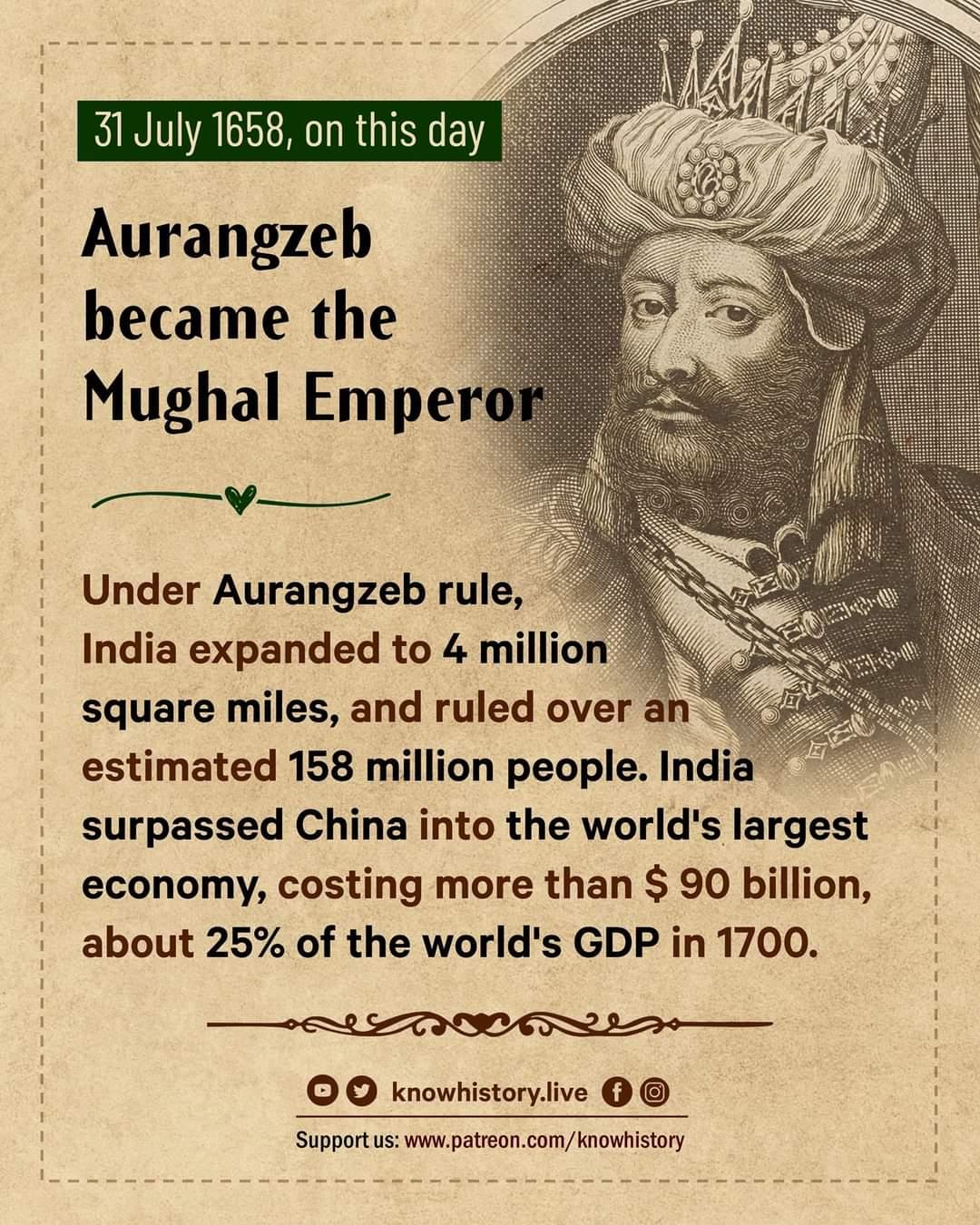
  • During his lifetime, the conquest of south India expanded the Mughal Empire to 4 million square miles, and ruled over an estimated 158 million people, with annual revenue of $ 450 million (more than ten times that of his modern Louis XIV of France), or £ 38,624,680 (2,879,469,894 rupees) for 1690. Under his rule, the Mughal Empire surpassed China into the world's largest economy, costing more than $ 90 billion, about a quarter (25%) of the world's GDP in 1700.

    Sultan Aurangzeb Alamgir was born at Dahod, is a city in the Indian district of Gujrat, on the 4 November 1618. From childhood, Aurangzeb showed signs of glory and nobility. He was a bold cavalryman.

    He was brought up, that he loved knowledge and religion. Even as a child, he was trying to stay away from a life of luxury. He rapidly gained knowledge and experience of administering the affairs of his Wilayah -The Deccan state, in the middle of India.

    He spent 52 years of age, in the Jihad, to the Indian sub-continent, until the sub-continent (Indian) during his reign (1658-1707) expanded significantly. During his reign, the Mughal fought more than 30 battles out of which 11 were fought under Aurangzeb's personal command.

    Aurangzeb succeeded in transforming the Indian subcontinent into Muslim Mughal Wilayah under one leadership. Aurangzeb established Islamic justice during its reign, Now Delhi became one of the modern cities on the globe. Aurangzeb cancelled 80 taxes and imposed jizya on non-Muslims cancelled by his ancestors.

    He has established monasteries, schools, mosques, baths, and hospitals. He built gardens and repaired roads. He ordered the construction of the magnificent Badshahi Mosque, located in the city of Lahore "Pakistan."

    Aurangzeb used to fast regularly, pray in the regular Mosque, and recite the Qur'an himself.

    He appointed staff members who researched human resources and presented them to him. He used to sit three times a day and listen directly to the complaints/issues of the people, without any guard. He was the first king to record Islamic orders in manuscripts for use as a source of law.

    When his death was imminent, he ordered that the price of his coffin should not be more than 5 Rupees. The Sultan was ninety years old and even in those years he commanded the army himself and studied the Qur'an.

    On February 20, 1797, Aurangzeb died, after ruling for 52 years. After his death, the magnificent Islamic empire of India also came to an end. Next came the weak rulers, followed by the British.
    During his lifetime, the conquest of south India expanded the Mughal Empire to 4 million square miles, and ruled over an estimated 158 million people, with annual revenue of $ 450 million (more than ten times that of his modern Louis XIV of France), or £ 38,624,680 (2,879,469,894 rupees) for 1690. Under his rule, the Mughal Empire surpassed China into the world's largest economy, costing more than $ 90 billion, about a quarter (25%) of the world's GDP in 1700. Sultan Aurangzeb Alamgir was born at Dahod, is a city in the Indian district of Gujrat, on the 4 November 1618. From childhood, Aurangzeb showed signs of glory and nobility. He was a bold cavalryman. He was brought up, that he loved knowledge and religion. Even as a child, he was trying to stay away from a life of luxury. He rapidly gained knowledge and experience of administering the affairs of his Wilayah -The Deccan state, in the middle of India. He spent 52 years of age, in the Jihad, to the Indian sub-continent, until the sub-continent (Indian) during his reign (1658-1707) expanded significantly. During his reign, the Mughal fought more than 30 battles out of which 11 were fought under Aurangzeb's personal command. Aurangzeb succeeded in transforming the Indian subcontinent into Muslim Mughal Wilayah under one leadership. Aurangzeb established Islamic justice during its reign, Now Delhi became one of the modern cities on the globe. Aurangzeb cancelled 80 taxes and imposed jizya on non-Muslims cancelled by his ancestors. He has established monasteries, schools, mosques, baths, and hospitals. He built gardens and repaired roads. He ordered the construction of the magnificent Badshahi Mosque, located in the city of Lahore "Pakistan." Aurangzeb used to fast regularly, pray in the regular Mosque, and recite the Qur'an himself. He appointed staff members who researched human resources and presented them to him. He used to sit three times a day and listen directly to the complaints/issues of the people, without any guard. He was the first king to record Islamic orders in manuscripts for use as a source of law. When his death was imminent, he ordered that the price of his coffin should not be more than 5 Rupees. The Sultan was ninety years old and even in those years he commanded the army himself and studied the Qur'an. On February 20, 1797, Aurangzeb died, after ruling for 52 years. After his death, the magnificent Islamic empire of India also came to an end. Next came the weak rulers, followed by the British.
    1
    0 Kommentare 0 Anteile