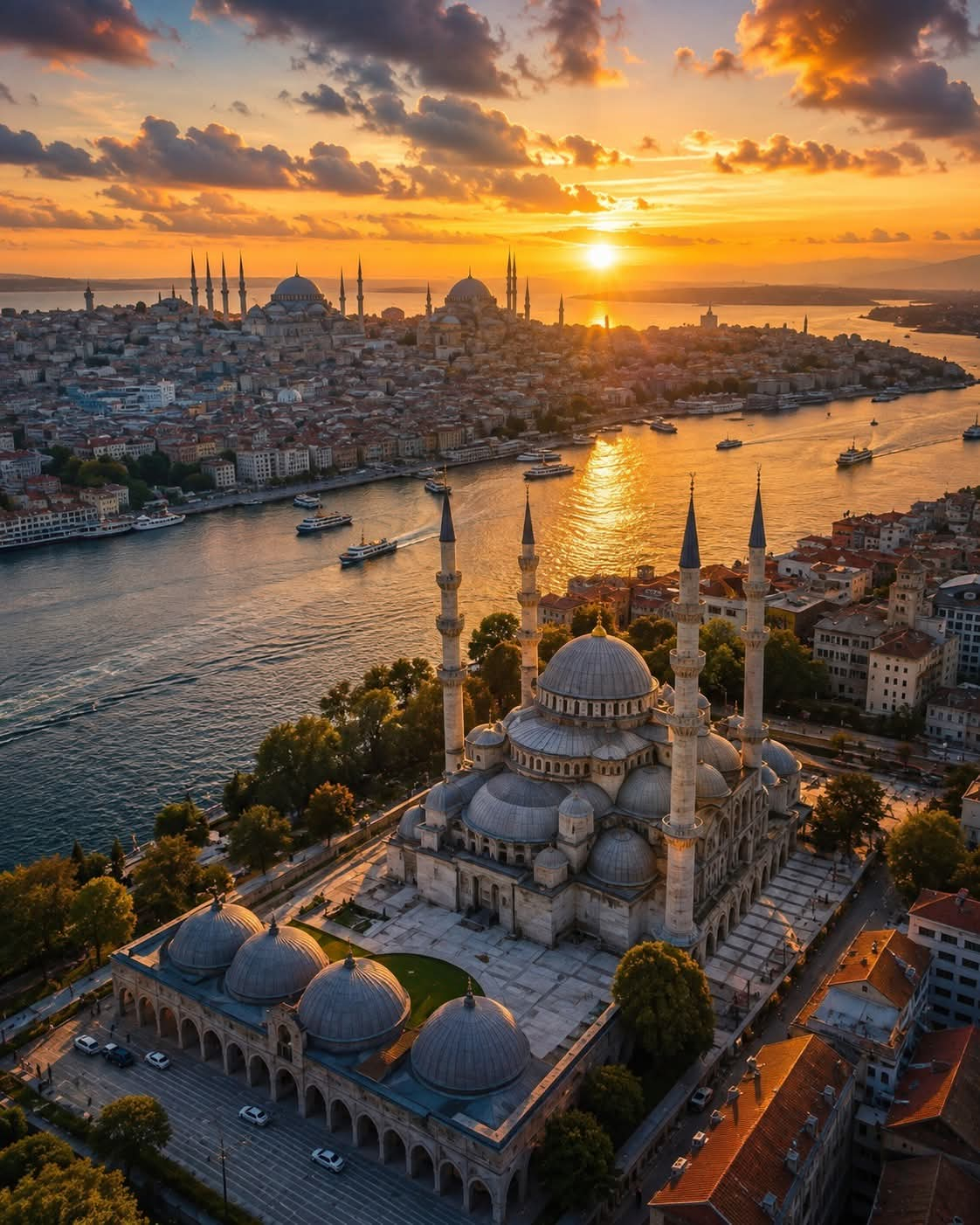
• Sunset over Istanbul, where domes, minarets, and the Bosphorus create one of Turkey’s most iconic city views.

    For centuries, this skyline has reflected Istanbul’s unique place between Europe and Asia.

    Istanbul, Turkey
    #Istanbul #Turkey #Bosphorus #TurkishArchitecture
    Sunset over Istanbul, where domes, minarets, and the Bosphorus create one of Turkey’s most iconic city views. 🇹🇷✨ For centuries, this skyline has reflected Istanbul’s unique place between Europe and Asia. 📍 Istanbul, Turkey 🇹🇷 #Istanbul #Turkey #Bosphorus #TurkishArchitecture
    0 التعليقات 0 نشر
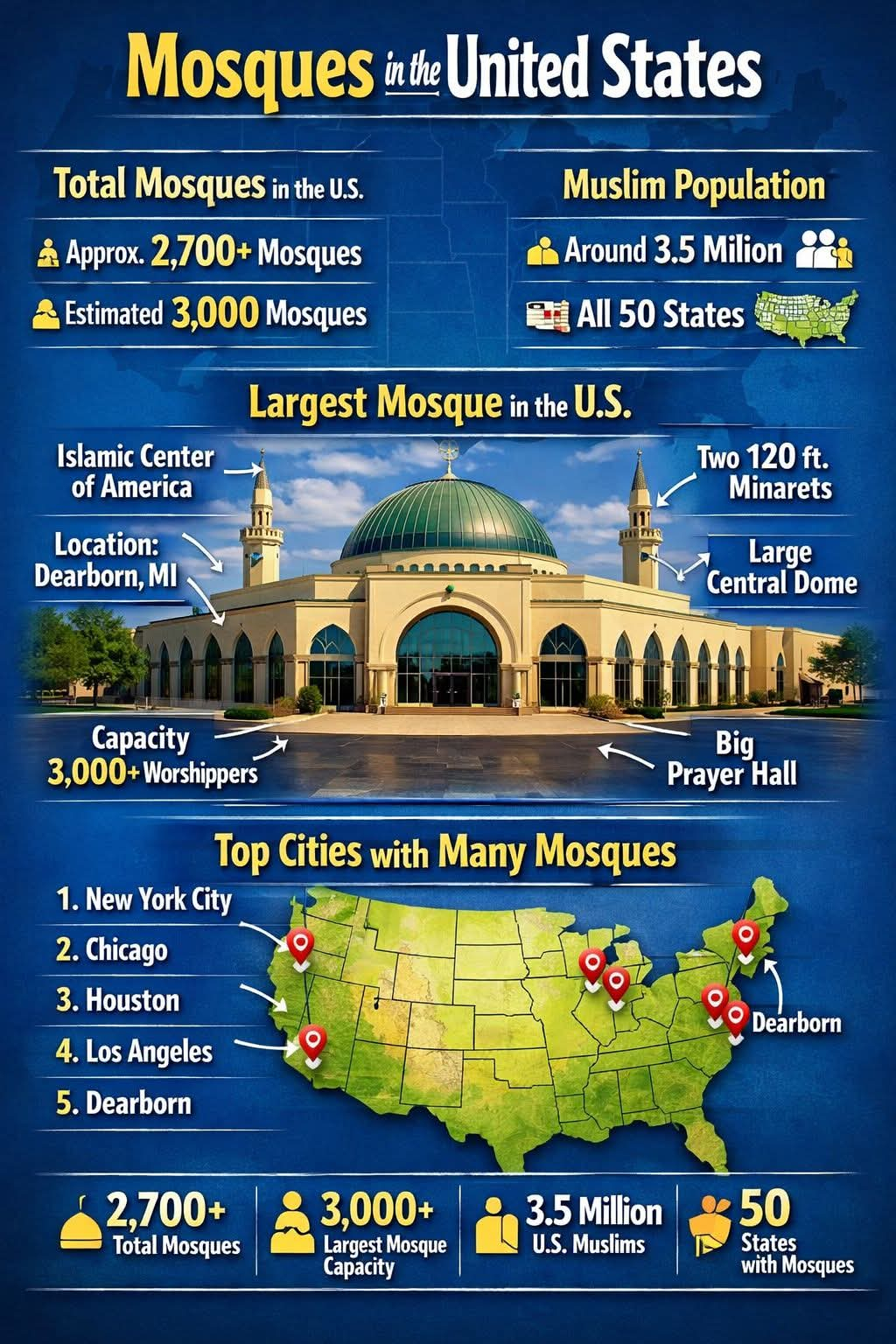
  • The United States has a growing Muslim community and thousands of mosques spread across the country. According to research by the Institute for Social Policy and Understanding, there are approximately 2,700 to 3,000 mosques in America today. These mosques serve as places for daily prayers, Friday congregational prayers, Islamic education, and community activities. Over the past few decades, the number of mosques has increased significantly due to the rising Muslim population and immigration from different parts of the world.
    The Muslim population in the United States is estimated to be around 3.5 million people. Muslims in America come from diverse ethnic backgrounds including Arabs, South Asians, African Americans, Turks, and Africans. Because of this diversity, many mosques also function as cultural and community centers where people gather for religious learning, charity work, and social support.
    One of the largest and most well-known mosques in the country is the Islamic Center of America, located in Dearborn, Michigan. This mosque is famous for its beautiful architecture, large central dome, and tall minarets. It can accommodate more than 3,000 worshippers at a time and is considered one of the biggest Islamic centers in North America.
    Major cities such as New York City, Chicago, Houston, and Los Angeles have many mosques because they have large Muslim populations. These mosques play an important role in maintaining religious identity, promoting community unity, and supporting charitable and educational activities throughout the United States.
    The United States has a growing Muslim community and thousands of mosques spread across the country. According to research by the Institute for Social Policy and Understanding, there are approximately 2,700 to 3,000 mosques in America today. These mosques serve as places for daily prayers, Friday congregational prayers, Islamic education, and community activities. Over the past few decades, the number of mosques has increased significantly due to the rising Muslim population and immigration from different parts of the world. The Muslim population in the United States is estimated to be around 3.5 million people. Muslims in America come from diverse ethnic backgrounds including Arabs, South Asians, African Americans, Turks, and Africans. Because of this diversity, many mosques also function as cultural and community centers where people gather for religious learning, charity work, and social support. One of the largest and most well-known mosques in the country is the Islamic Center of America, located in Dearborn, Michigan. This mosque is famous for its beautiful architecture, large central dome, and tall minarets. It can accommodate more than 3,000 worshippers at a time and is considered one of the biggest Islamic centers in North America. Major cities such as New York City, Chicago, Houston, and Los Angeles have many mosques because they have large Muslim populations. These mosques play an important role in maintaining religious identity, promoting community unity, and supporting charitable and educational activities throughout the United States.
    0 التعليقات 0 نشر
  • Many people notice the Green Dome in Masjid al-Nabawi, but fewer understand the silver domes around it, especially the large one beside it.

    The Green Dome marks the chamber where the Prophet ﷺ is buried, along with Abu Bakr and Umar RA.

    The silver and grey domes nearby are part of the Ottoman prayer hall roof. They do not mark graves and they are not places of special ritual. They are architectural elements built to cover and organise the prayer space.

    One of these domes is larger and more prominent. It is known as Qubbat al-Maharib (the Dome of the Mihrabs). It sits above the mihrab area, including the Mihrab Uthmani, and serves as a visual marker for the qiblah and the place where the imam leads prayer.

    In simple terms:
    Green Dome → burial chamber of the Prophet ﷺ
    Silver domes → roof domes of the prayer hall
    Qubbat al-Maḥārīb → dome marking the mihrab area

    None of these domes are objects of worship. The honour of Masjid al-Nabawi comes from the Prophet ﷺ and the worship performed inside, not from structures or colours.

    Knowing this helps you appreciate the masjid for what it truly is: a place of prayer, remembrance, and connection to Allah.
    Many people notice the Green Dome in Masjid al-Nabawi, but fewer understand the silver domes around it, especially the large one beside it. The Green Dome marks the chamber where the Prophet ﷺ is buried, along with Abu Bakr and Umar RA. The silver and grey domes nearby are part of the Ottoman prayer hall roof. They do not mark graves and they are not places of special ritual. They are architectural elements built to cover and organise the prayer space. One of these domes is larger and more prominent. It is known as Qubbat al-Maharib (the Dome of the Mihrabs). It sits above the mihrab area, including the Mihrab Uthmani, and serves as a visual marker for the qiblah and the place where the imam leads prayer. In simple terms: • 🟢 Green Dome → burial chamber of the Prophet ﷺ • ⚪ Silver domes → roof domes of the prayer hall • 🕌 Qubbat al-Maḥārīb → dome marking the mihrab area None of these domes are objects of worship. The honour of Masjid al-Nabawi comes from the Prophet ﷺ and the worship performed inside, not from structures or colours. Knowing this helps you appreciate the masjid for what it truly is: a place of prayer, remembrance, and connection to Allah.
    0 التعليقات 0 نشر
  • Baitul Khairaat Grand Mosque is an architectural landmark of Palu City, Central Sulawesi, Indonesia . A beautiful mosque with a majestic dome and elegant design, standing as a cultural icon of the area and featuring Indonesia's largest mosque dome and tallest mosque clock tower.
    Baitul Khairaat Grand Mosque is an architectural landmark of Palu City, Central Sulawesi, Indonesia 🇮🇩. A beautiful mosque with a majestic dome and elegant design, standing as a cultural icon of the area and featuring Indonesia's largest mosque dome and tallest mosque clock tower.
    0 التعليقات 0 نشر
  • The Mosque of the Faculty of Theology at Marmara University
    #Türkiye
    Looking for a unique place to visit? The Marmara University Faculty of Theology Mosque fascinates visitors with its architectural details.

    The new-gen mosque is in fact a complex, composed of study rooms, exhibition areas, a book cafe, a conference hall, and more.

    The star of the show is the mosque’s marvellous dome, representing the rotating movement essential to our universe.

    Explore more on our official İstanbul page:

    #GoTürkiye #Goİstanbul #İstanbul #Mosque #FaithTürkiye #Faith #Architecture
    The Mosque of the Faculty of Theology at Marmara University 📍#Türkiye Looking for a unique place to visit? The Marmara University Faculty of Theology Mosque fascinates visitors with its architectural details. The new-gen mosque is in fact a complex, composed of study rooms, exhibition areas, a book cafe, a conference hall, and more. The star of the show is the mosque’s marvellous dome, representing the rotating movement essential to our universe. Explore more on our official İstanbul page: #GoTürkiye #Goİstanbul #İstanbul #Mosque #FaithTürkiye #Faith #Architecture
    0 التعليقات 0 نشر
  • Istanbul Airport (IST) has achieved an impressive milestone: it is now the most connected airport in the world, with direct flights to 310 international destinations. This vast air network makes it a true global hub, connecting Europe, Asia, Africa and even parts of the Americas quickly and efficiently.

    Despite this, IST only ranks 7th in the world ranking for passenger movement. In other words, although it is the absolute leader in connectivity, there are still other airports with a higher volume of travelers, such as Atlanta (USA), Dubai and London-Heathrow.

    This difference shows that connectivity is not the same as volume. While airports like Atlanta concentrate domestic flights and local passengers, Istanbul focuses on connecting between continents, serving as a strategic point for international stopovers.

    The airport's success is also linked to the growth of Turkish Airlines, one of the companies that flies the most to different countries in the world.
    Istanbul Airport (IST) has achieved an impressive milestone: it is now the most connected airport in the world, with direct flights to 310 international destinations. This vast air network makes it a true global hub, connecting Europe, Asia, Africa and even parts of the Americas quickly and efficiently. Despite this, IST only ranks 7th in the world ranking for passenger movement. In other words, although it is the absolute leader in connectivity, there are still other airports with a higher volume of travelers, such as Atlanta (USA), Dubai and London-Heathrow. This difference shows that connectivity is not the same as volume. While airports like Atlanta concentrate domestic flights and local passengers, Istanbul focuses on connecting between continents, serving as a strategic point for international stopovers. The airport's success is also linked to the growth of Turkish Airlines, one of the companies that flies the most to different countries in the world.
    0 التعليقات 0 نشر
  • Islamic World

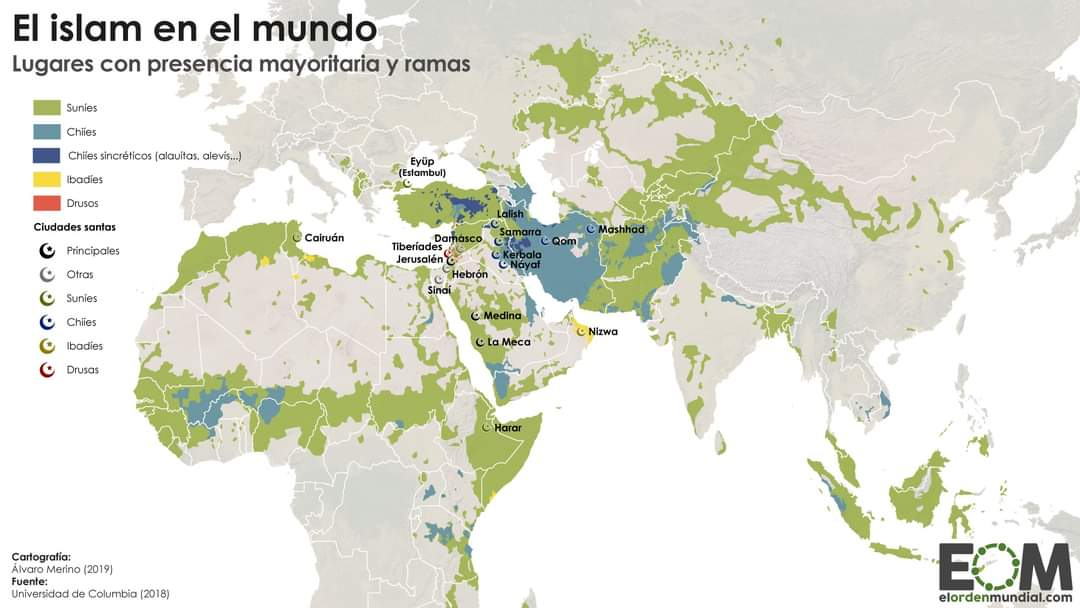
    The Islamic world refers to countries and regions where Islam is dominant, influencing various aspects of life, including culture, politics, law, and education. It is not just limited to the Middle East; it spans Africa, Asia, and Europe.
    Critical Aspects of the Islamic World:
    1. Geographical Spread:
    Middle East and North Africa (MENA): The heartland of Islam, including countries like Saudi Arabia, Egypt, Iran, and Turkey.
    South Asia: Countries like Pakistan, Bangladesh, and Afghanistan, where Islam plays a central role.
    Southeast Asia: Indonesia, the world's most populous Muslim-majority country, Malaysia, and Brunei.
    Sub-Saharan Africa: Countries like Nigeria, Sudan, and Somalia have significant Muslim populations.
    Europe: There are significant Muslim communities in Bosnia and Herzegovina, Albania, and growing populations in Western Europe due to migration.
    2. Cultural and Religious Practices:
    Religious Practices: The Five Pillars of Islam (Shahada, Salah, Zakat, Sawm, Hajj) are central to Islamic life.
    Islamic Law (Sharia): In many Muslim-majority countries, Sharia law influences or directly governs legal systems, covering everything from criminal law to personal status issues like marriage and inheritance.
    Language: Arabic is the liturgical language of Islam, but other languages, such as Persian, Turkish, Urdu, and Malay, are widely spoken in the Islamic world.
    3. Historical Contributions:
    The Golden Age of Islam (8th to 14th century) was a period of significant advancements in science, medicine, mathematics, and philosophy, with learning centres in cities like Baghdad, Cairo, and Cordoba.
    Architecture: Islamic architecture is renowned for its mosques, madrasas (schools), and palaces, featuring minarets, domes, and intricate geometric designs.
    4. Modern-Day Dynamics:
    Political Landscape: The Islamic world includes various governance systems, from monarchies in the Gulf States to republics in Iran and Turkey. Political Islam and movements like the Muslim Brotherhood have had significant influence in some regions.
    Economic Power: The Islamic world includes some of the world's largest oil producers, like Saudi Arabia and Iran, which play a critical role in global energy markets.
    Social Issues: The Islamic world faces diverse social challenges, from modernisation and globalisation to debates over women's rights, democracy, and the role of religion in the state.
    5. Global Influence:
    Diaspora: Significant Muslim communities in Europe, North America, and other parts of the world contribute to the global influence of Islam.
    Interfaith Relations: Islam is one of the world's major religions, with interfaith dialogue becoming increasingly important in promoting understanding and cooperation between different religious communities.
    The Islamic world is diverse and complex, with a rich history and significant impact on global culture, politics, and economics.
    Islamic World The Islamic world refers to countries and regions where Islam is dominant, influencing various aspects of life, including culture, politics, law, and education. It is not just limited to the Middle East; it spans Africa, Asia, and Europe. Critical Aspects of the Islamic World: 1. Geographical Spread: Middle East and North Africa (MENA): The heartland of Islam, including countries like Saudi Arabia, Egypt, Iran, and Turkey. South Asia: Countries like Pakistan, Bangladesh, and Afghanistan, where Islam plays a central role. Southeast Asia: Indonesia, the world's most populous Muslim-majority country, Malaysia, and Brunei. Sub-Saharan Africa: Countries like Nigeria, Sudan, and Somalia have significant Muslim populations. Europe: There are significant Muslim communities in Bosnia and Herzegovina, Albania, and growing populations in Western Europe due to migration. 2. Cultural and Religious Practices: Religious Practices: The Five Pillars of Islam (Shahada, Salah, Zakat, Sawm, Hajj) are central to Islamic life. Islamic Law (Sharia): In many Muslim-majority countries, Sharia law influences or directly governs legal systems, covering everything from criminal law to personal status issues like marriage and inheritance. Language: Arabic is the liturgical language of Islam, but other languages, such as Persian, Turkish, Urdu, and Malay, are widely spoken in the Islamic world. 3. Historical Contributions: The Golden Age of Islam (8th to 14th century) was a period of significant advancements in science, medicine, mathematics, and philosophy, with learning centres in cities like Baghdad, Cairo, and Cordoba. Architecture: Islamic architecture is renowned for its mosques, madrasas (schools), and palaces, featuring minarets, domes, and intricate geometric designs. 4. Modern-Day Dynamics: Political Landscape: The Islamic world includes various governance systems, from monarchies in the Gulf States to republics in Iran and Turkey. Political Islam and movements like the Muslim Brotherhood have had significant influence in some regions. Economic Power: The Islamic world includes some of the world's largest oil producers, like Saudi Arabia and Iran, which play a critical role in global energy markets. Social Issues: The Islamic world faces diverse social challenges, from modernisation and globalisation to debates over women's rights, democracy, and the role of religion in the state. 5. Global Influence: Diaspora: Significant Muslim communities in Europe, North America, and other parts of the world contribute to the global influence of Islam. Interfaith Relations: Islam is one of the world's major religions, with interfaith dialogue becoming increasingly important in promoting understanding and cooperation between different religious communities. The Islamic world is diverse and complex, with a rich history and significant impact on global culture, politics, and economics.
    0 التعليقات 0 نشر
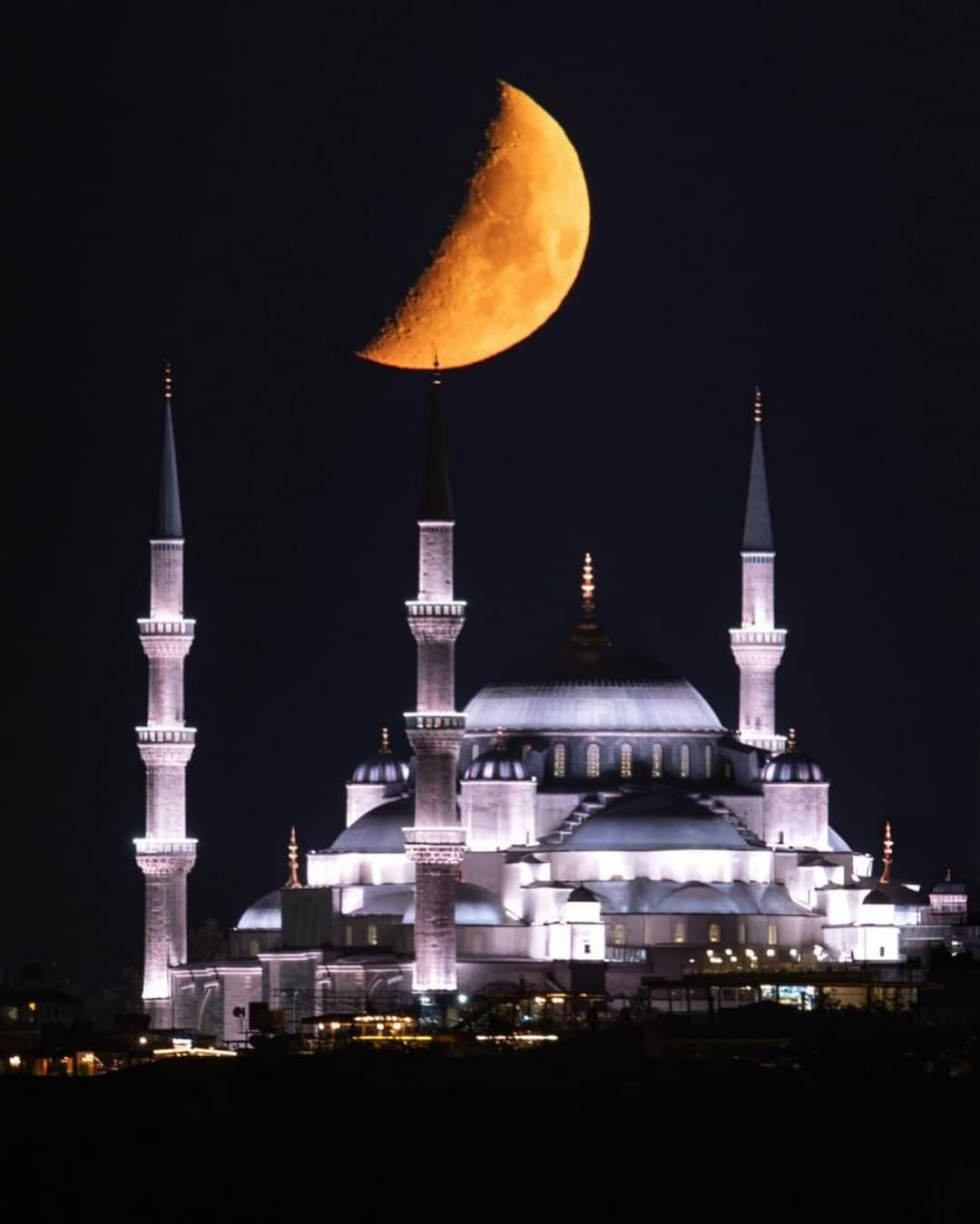
  • Crescent Moon Graces Istanbul’s Sky, Captured Alongside Sultanahmet Mosque

    Istanbul, Turkey – In a breathtaking moment that epitomizes the city’s timeless beauty, a crescent moon was captured shining in the sky above Istanbul, forming a stunning backdrop to the historic Sultanahmet Mosque. The delicate sliver of moonlight seemed to hover directly over the mosque, enhancing the elegance of its minarets and domes. This serene scene, blending natural beauty with architectural grandeur, reflects the rich cultural and spiritual heritage of Istanbul.

    The image of the crescent moon, a symbol deeply intertwined with Turkish identity and Islamic tradition, alongside one of the most iconic mosques in the world, has captivated the hearts of locals and visitors alike. This fleeting yet powerful visual encapsulates the essence of Istanbul, a city where the past and present coexist in perfect harmony.

    Photo by: Hakan Sarı
    .
    .
    #istexpats #istanbulexpatcommunity #istanbul #expat #news
    Crescent Moon Graces Istanbul’s Sky, Captured Alongside Sultanahmet Mosque Istanbul, Turkey – In a breathtaking moment that epitomizes the city’s timeless beauty, a crescent moon was captured shining in the sky above Istanbul, forming a stunning backdrop to the historic Sultanahmet Mosque. The delicate sliver of moonlight seemed to hover directly over the mosque, enhancing the elegance of its minarets and domes. This serene scene, blending natural beauty with architectural grandeur, reflects the rich cultural and spiritual heritage of Istanbul. The image of the crescent moon, a symbol deeply intertwined with Turkish identity and Islamic tradition, alongside one of the most iconic mosques in the world, has captivated the hearts of locals and visitors alike. This fleeting yet powerful visual encapsulates the essence of Istanbul, a city where the past and present coexist in perfect harmony. Photo by: Hakan Sarı . . #istexpats #istanbulexpatcommunity #istanbul #expat #news
    0 التعليقات 0 نشر
  • In 2023, more than 1.8 million people performed Hajj, with nearly 90% of pilgrims, or 1,660,915 pilgrims, coming from outside Saudi Arabia through various ports, while the number of domestic pilgrims – including both citizens and residents – reached 184,130.

    The majority of the pilgrims were male, numbering 969,694 (52.6%), while female pilgrims totalled 875,351(47.4%).

    Saudi officials have said they expect the number of pilgrims this year to exceed 2023 numbers and approach pre-pandemic levels.

    One of the world’s largest religious gatherings, the Hajj is one of the Five Pillars of Islam. All Muslims are required to undertake it at least once in their lives if they are physically and financially able to do so.

    Here is a look at the geographic representation of pilgrims who undertook the Hajj pilgrimage in 2023.
    In 2023, more than 1.8 million people performed Hajj, with nearly 90% of pilgrims, or 1,660,915 pilgrims, coming from outside Saudi Arabia through various ports, while the number of domestic pilgrims – including both citizens and residents – reached 184,130. The majority of the pilgrims were male, numbering 969,694 (52.6%), while female pilgrims totalled 875,351(47.4%). Saudi officials have said they expect the number of pilgrims this year to exceed 2023 numbers and approach pre-pandemic levels. One of the world’s largest religious gatherings, the Hajj is one of the Five Pillars of Islam. All Muslims are required to undertake it at least once in their lives if they are physically and financially able to do so. Here is a look at the geographic representation of pilgrims who undertook the Hajj pilgrimage in 2023.
    0 التعليقات 0 نشر
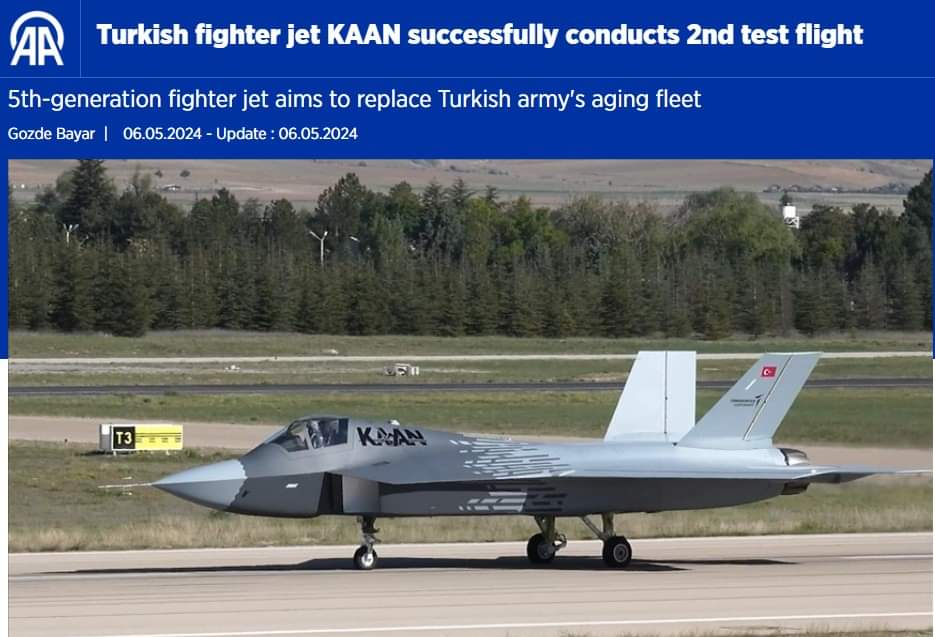
  • Turkish homegrown fighter jet KAAN on Monday successfully conducted its second successful test flight, said the head of the nation’s Defense Industry Agency.

    “Our national combat aircraft, which successfully made its first flight on Feb. 21, took off from the runway at 08.46 this morning, remained in the air for 14 minutes, and reached an altitude of 10,000 feet,” Haluk Gorgun, the agency head, said on X.

    KAAN, the first fifth-generation fighter jet manufactured domestically, aims to replace the Turkish army's aging fleet.
    KAAN will be capable of air-to-air combat with next-generation weapons and precision strikes from internal weapon mounts at supersonic speed, and will provide increased combat power with AI and neural network support.

    The latest development makes Türkiye one of the few countries to own this technology.

    It is part of Türkiye’s continuing efforts to shift most of its defense vehicles, weapons, and supplies from foreign sources to domestic ones.
    Turkish homegrown fighter jet KAAN on Monday successfully conducted its second successful test flight, said the head of the nation’s Defense Industry Agency. “Our national combat aircraft, which successfully made its first flight on Feb. 21, took off from the runway at 08.46 this morning, remained in the air for 14 minutes, and reached an altitude of 10,000 feet,” Haluk Gorgun, the agency head, said on X. KAAN, the first fifth-generation fighter jet manufactured domestically, aims to replace the Turkish army's aging fleet. KAAN will be capable of air-to-air combat with next-generation weapons and precision strikes from internal weapon mounts at supersonic speed, and will provide increased combat power with AI and neural network support. The latest development makes Türkiye one of the few countries to own this technology. It is part of Türkiye’s continuing efforts to shift most of its defense vehicles, weapons, and supplies from foreign sources to domestic ones.
    0 التعليقات 0 نشر
الصفحات المعززة