• HARRAN: WHERE HISTORY LIVES BENEATH THE DOMES!

    Harran, Şanlıurfa, Türkiye… A timeless land of history and culture.

    With thousands of years of history, distinctive architecture, and a rich cultural heritage, Harran is one of the most remarkable historical settlements in Anatolia. Its iconic domed beehive houses are not only architectural wonders but also precious reminders of the region’s deep-rooted history and traditions.

    Where Earth, Stone, and History Come Together!

    With their distinctive cone-shaped domes, Harran’s traditional houses stand out as remarkable examples of vernacular architecture. Built using traditional materials such as brick and mudbrick, these unique structures were designed to adapt to the region’s climate. Their architectural features help keep interiors cooler during the hot summer months, reflecting the ingenuity of generations who learned to live in harmony with nature.

    Every Dome Tells a Story, Every Wall Preserves a Memory…

    Harran’s historic houses are much more than places to live. They represent the region’s traditional lifestyle, cultural identity, and architectural heritage, carrying the traces of the past into the present. With their timeless character, these extraordinary structures connect generations and offer visitors a glimpse into another era.

    An Unforgettable Destination for History and Culture Lovers!

    With its historic streets, earthy textures, and distinctive domes rising toward the sky, Harran offers a truly unique atmosphere for photographers, travelers, and cultural explorers. Every corner reveals a different perspective, showcasing the remarkable cultural richness of Şanlıurfa.

    Harran’s beehive houses are a legacy of the past, a treasure of the present, and a heritage worth preserving for future generations.

    Discovering our history, protecting our cultural heritage, and passing it on to future generations is a shared responsibility. Because some structures are far more than bricks and earth; they are the memory of a civilization, the identity of a region, and a living story connecting the past to the future.

    Harran | Şanlıurfa, Türkiye
    Following the footsteps of history, discovering the heart of culture.

    #Şanlıurfa #Harran #HarranHouses #BeehiveHouses #HistoricHeritage #CulturalHeritage #AnatolianArchitecture #DiscoverTürkiye #HistoryAndCulture #TravelTürkiye #ExploreTheWorld #HiddenGems
    🏛️ HARRAN: WHERE HISTORY LIVES BENEATH THE DOMES! 🌍✨ 📍 Harran, Şanlıurfa, Türkiye… A timeless land of history and culture. With thousands of years of history, distinctive architecture, and a rich cultural heritage, Harran is one of the most remarkable historical settlements in Anatolia. Its iconic domed beehive houses are not only architectural wonders but also precious reminders of the region’s deep-rooted history and traditions. 🏺🏡 🧱 Where Earth, Stone, and History Come Together! With their distinctive cone-shaped domes, Harran’s traditional houses stand out as remarkable examples of vernacular architecture. Built using traditional materials such as brick and mudbrick, these unique structures were designed to adapt to the region’s climate. Their architectural features help keep interiors cooler during the hot summer months, reflecting the ingenuity of generations who learned to live in harmony with nature. 🌿 Every Dome Tells a Story, Every Wall Preserves a Memory… Harran’s historic houses are much more than places to live. They represent the region’s traditional lifestyle, cultural identity, and architectural heritage, carrying the traces of the past into the present. With their timeless character, these extraordinary structures connect generations and offer visitors a glimpse into another era. 📸 An Unforgettable Destination for History and Culture Lovers! With its historic streets, earthy textures, and distinctive domes rising toward the sky, Harran offers a truly unique atmosphere for photographers, travelers, and cultural explorers. Every corner reveals a different perspective, showcasing the remarkable cultural richness of Şanlıurfa. ✨ Harran’s beehive houses are a legacy of the past, a treasure of the present, and a heritage worth preserving for future generations. Discovering our history, protecting our cultural heritage, and passing it on to future generations is a shared responsibility. Because some structures are far more than bricks and earth; they are the memory of a civilization, the identity of a region, and a living story connecting the past to the future. ❤️🌍 📍 Harran | Şanlıurfa, Türkiye 🏛️ Following the footsteps of history, discovering the heart of culture. #Şanlıurfa #Harran #HarranHouses #BeehiveHouses #HistoricHeritage #CulturalHeritage #AnatolianArchitecture #DiscoverTürkiye #HistoryAndCulture #TravelTürkiye #ExploreTheWorld #HiddenGems
    0 Comments 0 Shares
  • In 1890, Sirkeci Station opened its doors — and Istanbul became the grand finale of Europe’s most legendary train journey.

    The Orient Express had already become a symbol of luxury travel.

    By 1889, trains could finally reach Constantinople directly from Europe.

    Then, in 1890, a new terminal opened at Sirkeci.

    Designed by Prussian architect August Jasmund, the station combined European railway architecture with Orientalist details and quickly became one of the great gateways into Istanbul.

    Imagine arriving here at the end of the 19th century.

    Porters carrying trunks.

    Horse-drawn carriages waiting outside.

    Travellers stepping into Istanbul after crossing Europe by rail.

    For us, Sirkeci is historic.

    For them, it was the beginning of a new age of travel.

    Would you have wanted to arrive in Istanbul here in 1890?

    AI historical reconstruction inspired by the period
    In 1890, Sirkeci Station opened its doors — and Istanbul became the grand finale of Europe’s most legendary train journey. The Orient Express had already become a symbol of luxury travel. By 1889, trains could finally reach Constantinople directly from Europe. Then, in 1890, a new terminal opened at Sirkeci. Designed by Prussian architect August Jasmund, the station combined European railway architecture with Orientalist details and quickly became one of the great gateways into Istanbul. Imagine arriving here at the end of the 19th century. Porters carrying trunks. Horse-drawn carriages waiting outside. Travellers stepping into Istanbul after crossing Europe by rail. For us, Sirkeci is historic. For them, it was the beginning of a new age of travel. Would you have wanted to arrive in Istanbul here in 1890? AI historical reconstruction inspired by the period
    0 Comments 0 Shares
  • The Malwiya Tower, a 52-meter-high spiral minaret with an anticlockwise ramp, is a notable architectural feature of the Great Mosque of Samarra, which was commissioned by Abbasid Caliph Al-Mutawakkil in 848 CE and completed in 852 CE.

    It was once the largest mosque in the world, spanning 17 hectares. It is primarily made of baked and sun-dried brick, with its design inspired by ancient ziggurats.

    The mosque was significantly damaged during the 1278 invasion by Hulagu Khan, with only the outer walls and the Malwiya Tower remaining unharmed. It is currently a component of the Samarra Archaeological City, a UNESCO World Heritage site.

    Recommended Readings:
    - The Monuments of Samarra: Historical Studies and Archaeological Writings by Alastair Northedge.
    - Early Islamic Art and Architecture by Jonathan M. Bloom.
    - The Art and Architecture of Islam 650–1250 by Richard Ettinghausen, Oleg Grabar, and Marilyn Jenkins-Madina (Yale University Press Pelican History of Art).
    The Malwiya Tower, a 52-meter-high spiral minaret with an anticlockwise ramp, is a notable architectural feature of the Great Mosque of Samarra, which was commissioned by Abbasid Caliph Al-Mutawakkil in 848 CE and completed in 852 CE. It was once the largest mosque in the world, spanning 17 hectares. It is primarily made of baked and sun-dried brick, with its design inspired by ancient ziggurats. The mosque was significantly damaged during the 1278 invasion by Hulagu Khan, with only the outer walls and the Malwiya Tower remaining unharmed. It is currently a component of the Samarra Archaeological City, a UNESCO World Heritage site. Recommended Readings: - The Monuments of Samarra: Historical Studies and Archaeological Writings by Alastair Northedge. - Early Islamic Art and Architecture by Jonathan M. Bloom. - The Art and Architecture of Islam 650–1250 by Richard Ettinghausen, Oleg Grabar, and Marilyn Jenkins-Madina (Yale University Press Pelican History of Art).
    0 Comments 0 Shares
  • İstanbul’un ve Boğaz’ın en zarif simgelerinden biri olan Ortaköy Camii (Büyük Mecidiye Camii), gün batımının altın ve kızıl tonlarıyla birleşerek büyüleyici bir manzara sunuyor. 1853 yılında Sultan Abdülmecid tarafından Nigoğos Balyan’a yaptırılan bu zarif eser, Barok mimarisinin Osmanlı estetiğiyle buluştuğu en görkemli örneklerden biridir. Geniş pencerelerinden süzülen ışıkla Boğaz’ın sularına yansıyan silueti, hemen arkasında uzanan 15 Temmuz Şehitler Köprüsü ile kentin tarihi ve modern yüzünü aynı karede birleştirir. Ortaköy sahilinde yürüyüş yapmak, Boğaz esintisi eşliğinde çay yudumlamak ve bu eşsiz gün batımı manzarasını seyretmek, İstanbul’da yaşanacak en unutulmaz deneyimlerden biridir.

    Standing as one of the most elegant landmarks of Istanbul and the Bosphorus, the historic Ortaköy Mosque (Grand Mecidiye Mosque) presents a breathtaking view beneath the golden hues of sunset. Built in 1853 by Sultan Abdülmecid and designed by architect Nigoğos Balyan, this masterpiece is one of the finest examples of Ottoman Baroque architecture. Its ornate facade and tall windows reflect beautifully upon the waters of the Bosphorus, perfectly framed alongside the iconic Bosphorus Bridge. Strolling along the Ortaköy pier, enjoying a warm cup of tea by the waterfront, and watching the sunset over the strait remain among the most unforgettable experiences to enjoy in Istanbul.
    İstanbul’un ve Boğaz’ın en zarif simgelerinden biri olan Ortaköy Camii (Büyük Mecidiye Camii), gün batımının altın ve kızıl tonlarıyla birleşerek büyüleyici bir manzara sunuyor. 1853 yılında Sultan Abdülmecid tarafından Nigoğos Balyan’a yaptırılan bu zarif eser, Barok mimarisinin Osmanlı estetiğiyle buluştuğu en görkemli örneklerden biridir. Geniş pencerelerinden süzülen ışıkla Boğaz’ın sularına yansıyan silueti, hemen arkasında uzanan 15 Temmuz Şehitler Köprüsü ile kentin tarihi ve modern yüzünü aynı karede birleştirir. Ortaköy sahilinde yürüyüş yapmak, Boğaz esintisi eşliğinde çay yudumlamak ve bu eşsiz gün batımı manzarasını seyretmek, İstanbul’da yaşanacak en unutulmaz deneyimlerden biridir. 🇹🇷 🇬🇧 Standing as one of the most elegant landmarks of Istanbul and the Bosphorus, the historic Ortaköy Mosque (Grand Mecidiye Mosque) presents a breathtaking view beneath the golden hues of sunset. Built in 1853 by Sultan Abdülmecid and designed by architect Nigoğos Balyan, this masterpiece is one of the finest examples of Ottoman Baroque architecture. Its ornate facade and tall windows reflect beautifully upon the waters of the Bosphorus, perfectly framed alongside the iconic Bosphorus Bridge. Strolling along the Ortaköy pier, enjoying a warm cup of tea by the waterfront, and watching the sunset over the strait remain among the most unforgettable experiences to enjoy in Istanbul.
    0 Comments 0 Shares
  • THE OTTOMAN EMPIRE

    The Ottoman Empire was one of the longest-lasting and most influential empires in world history, existing for more than 600 years, from 1299 to 1922.

    Origins: Founded by Osman I in the late 13th century, it began as a small principality in Anatolia and gradually expanded into a powerful empire.

    Greatest Expansion: At its height, the empire controlled vast territories across Southeastern Europe, Western Asia, the Middle East and North Africa, connecting three continents.

    Capital: After the conquest of Constantinople in 1453, the city became the political and cultural center of the empire. It is known today as Istanbul.

    Strategic Position: Ottoman territories surrounded major waterways and trade routes, including the Mediterranean Sea, Black Sea and Red Sea, giving the empire enormous geopolitical importance.

    Legacy: The Ottoman Empire left a lasting impact on architecture, culture, cuisine, art, politics and the history of numerous countries across Europe, Asia and Africa.

    From a small Anatolian principality to a vast transcontinental empire, the Ottoman Empire played a major role in shaping the history of three continents.

    #OttomanEmpire #WorldHistory #HistoryFacts #HistoricalMaps #Geography #Empire #Istanbul #History
    🏛️ THE OTTOMAN EMPIRE The Ottoman Empire was one of the longest-lasting and most influential empires in world history, existing for more than 600 years, from 1299 to 1922. 🔹 Origins: Founded by Osman I in the late 13th century, it began as a small principality in Anatolia and gradually expanded into a powerful empire. 🔹 Greatest Expansion: At its height, the empire controlled vast territories across Southeastern Europe, Western Asia, the Middle East and North Africa, connecting three continents. 🔹 Capital: After the conquest of Constantinople in 1453, the city became the political and cultural center of the empire. It is known today as Istanbul. 🔹 Strategic Position: Ottoman territories surrounded major waterways and trade routes, including the Mediterranean Sea, Black Sea and Red Sea, giving the empire enormous geopolitical importance. 🔹 Legacy: The Ottoman Empire left a lasting impact on architecture, culture, cuisine, art, politics and the history of numerous countries across Europe, Asia and Africa. 🌍 From a small Anatolian principality to a vast transcontinental empire, the Ottoman Empire played a major role in shaping the history of three continents. #OttomanEmpire #WorldHistory #HistoryFacts #HistoricalMaps #Geography #Empire #Istanbul #History
    0 Comments 0 Shares
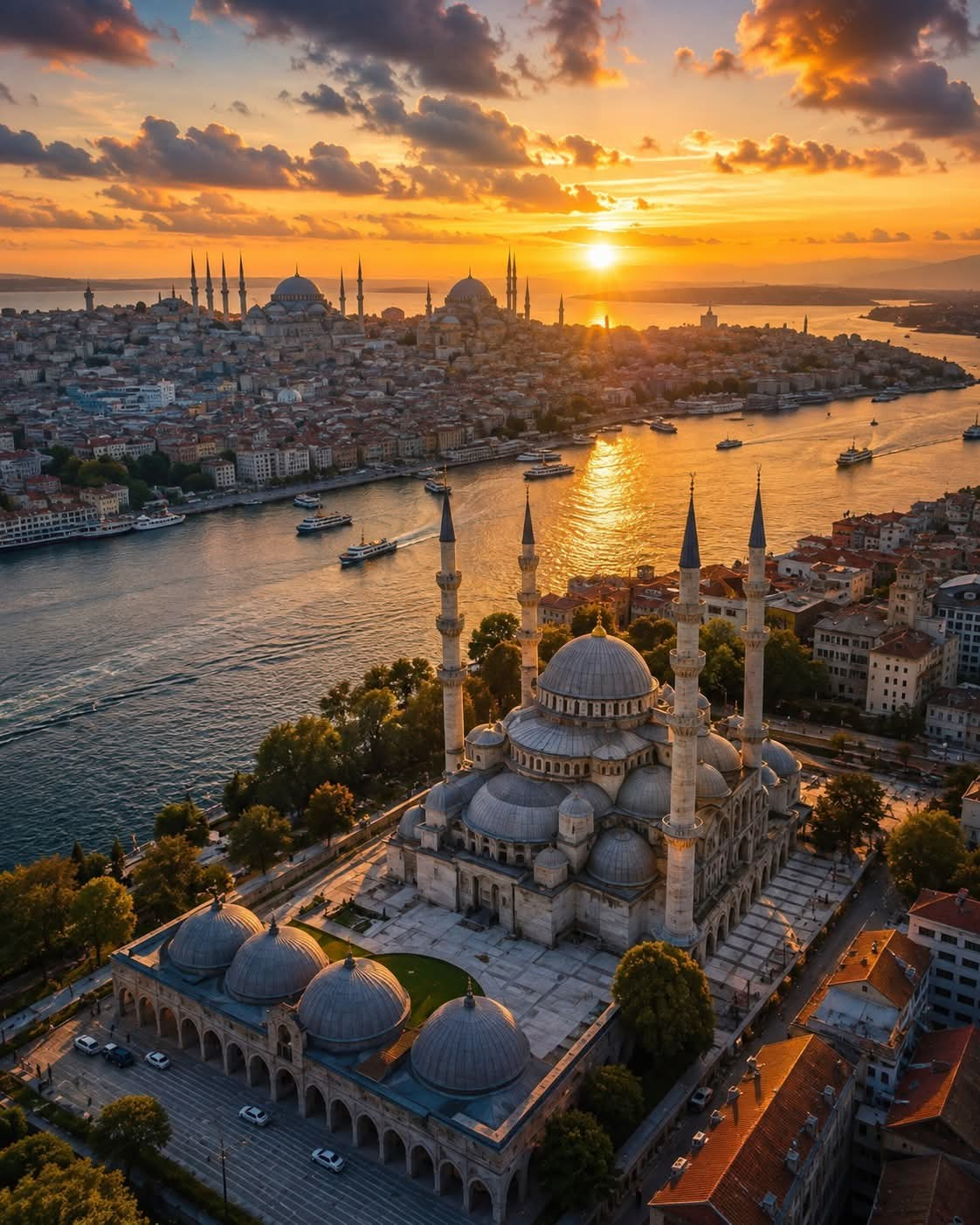
  • Sunset over Istanbul, where domes, minarets, and the Bosphorus create one of Turkey’s most iconic city views.

    For centuries, this skyline has reflected Istanbul’s unique place between Europe and Asia.

    Istanbul, Turkey
    #Istanbul #Turkey #Bosphorus #TurkishArchitecture
    Sunset over Istanbul, where domes, minarets, and the Bosphorus create one of Turkey’s most iconic city views. 🇹🇷✨ For centuries, this skyline has reflected Istanbul’s unique place between Europe and Asia. 📍 Istanbul, Turkey 🇹🇷 #Istanbul #Turkey #Bosphorus #TurkishArchitecture
    0 Comments 0 Shares
  • TURKEY
    Things you probably didn’t know about Türkiye (breaking common myths):

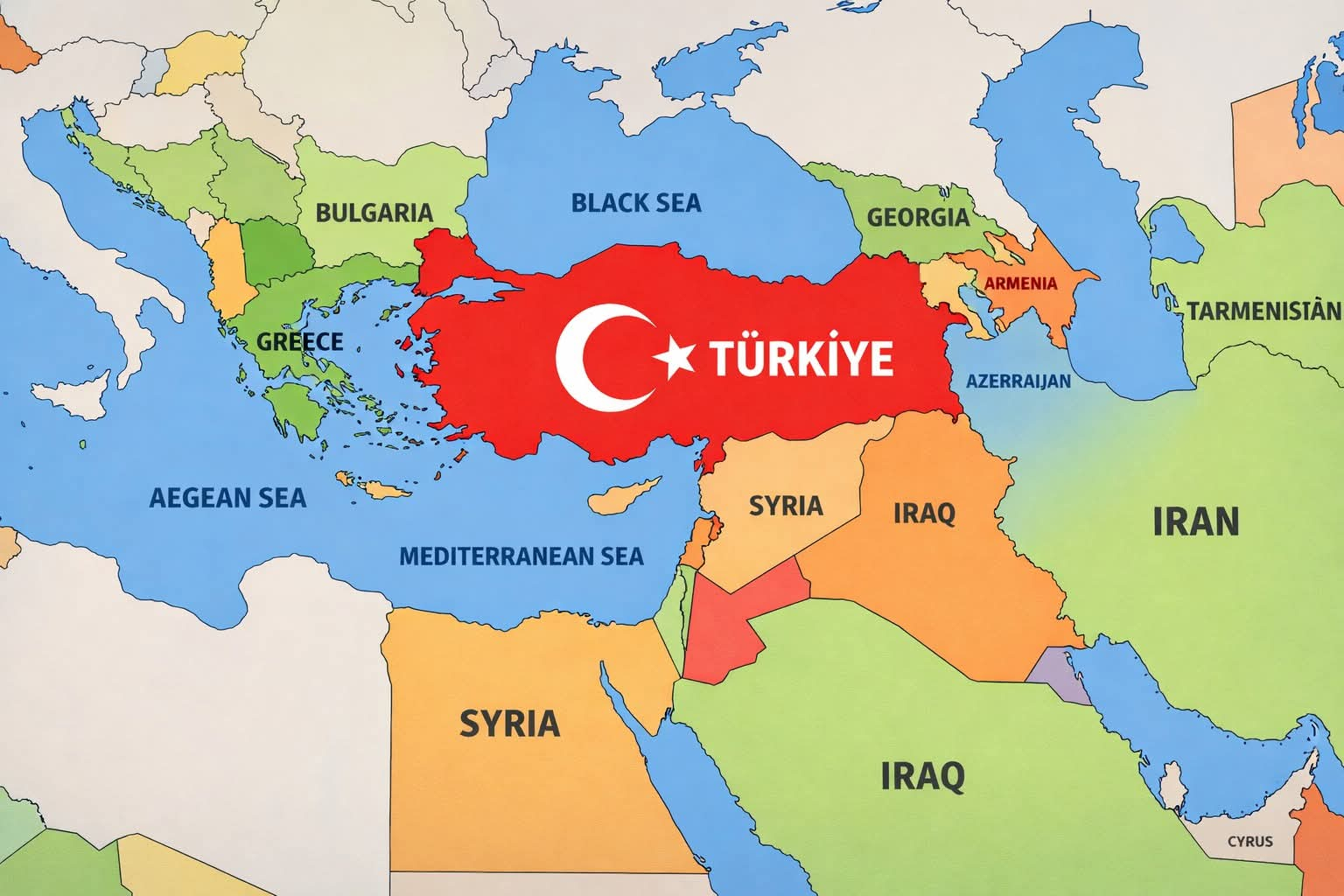
    A bridge between continents: One of the few countries in the world that spans both Europe and Asia — with Istanbul divided by the Bosphorus Strait.

    Not the capital you think: While Istanbul is the most famous city, the real capital is Ankara.

    Empire legacy: The heart of the Ottoman Empire for over 600 years, influencing Europe, Asia, and Africa.

    Hagia Sophia is unique: The iconic Hagia Sophia has served as a church, mosque, and museum throughout history.

    Cradle of civilizations: Home to ancient cultures like the Hittites, Greeks, and Romans — leaving behind incredible archaeological heritage.

    Tea > Coffee: Contrary to popular belief, tea is consumed more than coffee and is a daily essential.

    Turkish baths: The famous “hammam” is a centuries-old tradition of relaxation and cleansing from the Ottoman era.

    Unreal landscapes: Places like Cappadocia are known for fairy chimneys and breathtaking hot air balloon rides.

    Rich cuisine: From kebabs to baklava and Turkish delight, Turkish food is loved worldwide.

    Strategic location: Controls key routes between the Black Sea and the Mediterranean — making it geopolitically important.

    Historic bazaars: The Grand Bazaar in Istanbul is one of the oldest and largest covered markets in the world.

    Cultural diversity: A unique blend of European, Asian, and Middle Eastern influences in architecture, music, and traditions.

    Global TV hits: Turkish series and films are hugely popular in Latin America and beyond.

    Follow for more amazing facts!
    Like | Comment | Share

    #Turkey #Türkiye #Travel #History #Culture #Explore
    🇹🇷 TURKEY 🇹🇷 🧠😍 Things you probably didn’t know about Türkiye (breaking common myths): 👏👏 🌍 A bridge between continents: One of the few countries in the world that spans both Europe and Asia — with Istanbul divided by the Bosphorus Strait. 🏛️ Not the capital you think: While Istanbul is the most famous city, the real capital is Ankara. 👑 Empire legacy: The heart of the Ottoman Empire for over 600 years, influencing Europe, Asia, and Africa. 🕌 Hagia Sophia is unique: The iconic Hagia Sophia has served as a church, mosque, and museum throughout history. 🏺 Cradle of civilizations: Home to ancient cultures like the Hittites, Greeks, and Romans — leaving behind incredible archaeological heritage. 🍵 Tea > Coffee: Contrary to popular belief, tea is consumed more than coffee and is a daily essential. 🛁 Turkish baths: The famous “hammam” is a centuries-old tradition of relaxation and cleansing from the Ottoman era. 🎈 Unreal landscapes: Places like Cappadocia are known for fairy chimneys and breathtaking hot air balloon rides. 🍽️ Rich cuisine: From kebabs to baklava and Turkish delight, Turkish food is loved worldwide. 🌐 Strategic location: Controls key routes between the Black Sea and the Mediterranean — making it geopolitically important. 🛍️ Historic bazaars: The Grand Bazaar in Istanbul is one of the oldest and largest covered markets in the world. 🎶 Cultural diversity: A unique blend of European, Asian, and Middle Eastern influences in architecture, music, and traditions. 📺 Global TV hits: Turkish series and films are hugely popular in Latin America and beyond. 👉 Follow for more amazing facts! 🌍✨ ❤️ Like | 💬 Comment | 🔁 Share #Turkey #Türkiye #Travel #History #Culture #Explore
    1
    0 Comments 0 Shares
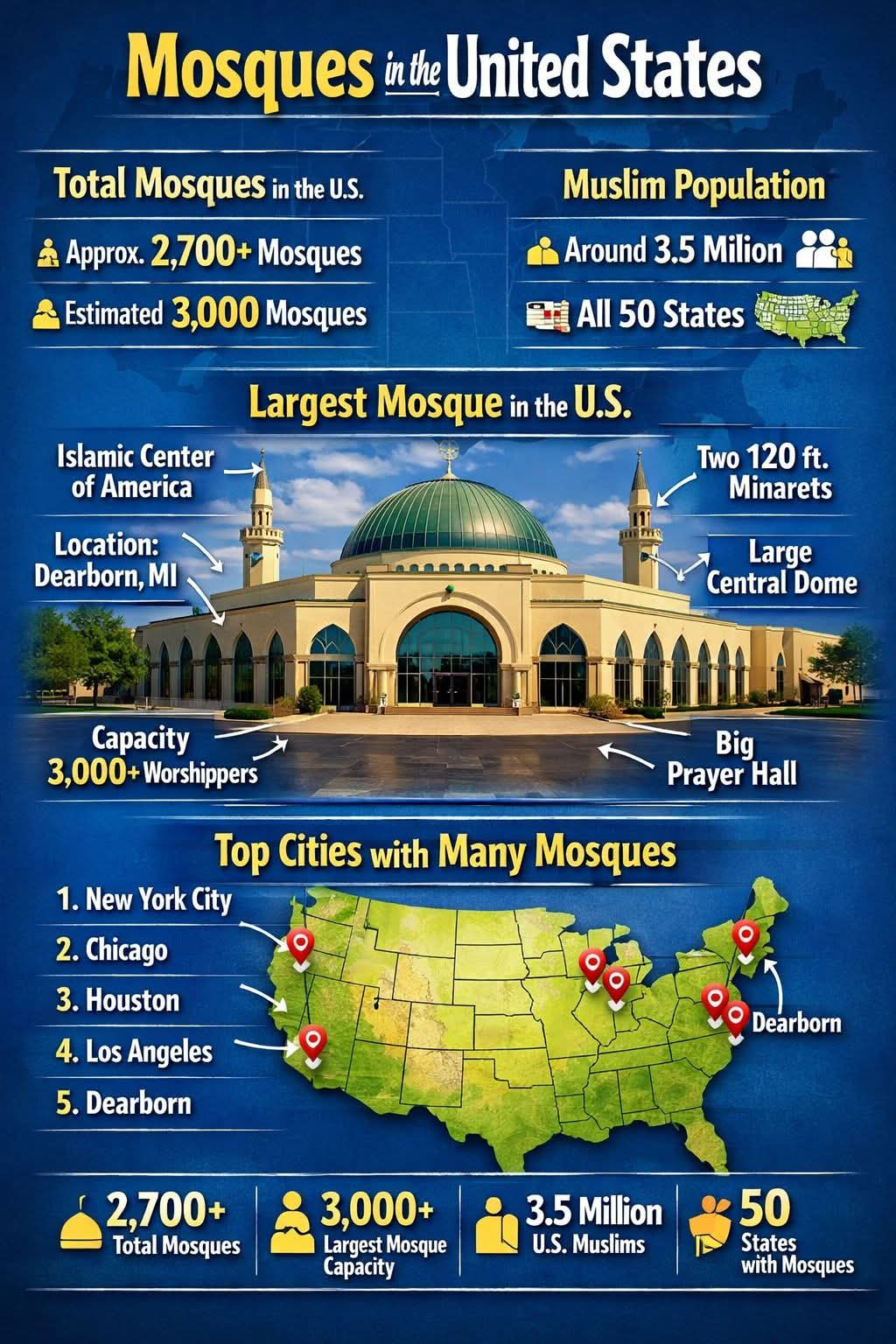
  • The United States has a growing Muslim community and thousands of mosques spread across the country. According to research by the Institute for Social Policy and Understanding, there are approximately 2,700 to 3,000 mosques in America today. These mosques serve as places for daily prayers, Friday congregational prayers, Islamic education, and community activities. Over the past few decades, the number of mosques has increased significantly due to the rising Muslim population and immigration from different parts of the world.
    The Muslim population in the United States is estimated to be around 3.5 million people. Muslims in America come from diverse ethnic backgrounds including Arabs, South Asians, African Americans, Turks, and Africans. Because of this diversity, many mosques also function as cultural and community centers where people gather for religious learning, charity work, and social support.
    One of the largest and most well-known mosques in the country is the Islamic Center of America, located in Dearborn, Michigan. This mosque is famous for its beautiful architecture, large central dome, and tall minarets. It can accommodate more than 3,000 worshippers at a time and is considered one of the biggest Islamic centers in North America.
    Major cities such as New York City, Chicago, Houston, and Los Angeles have many mosques because they have large Muslim populations. These mosques play an important role in maintaining religious identity, promoting community unity, and supporting charitable and educational activities throughout the United States.
    The United States has a growing Muslim community and thousands of mosques spread across the country. According to research by the Institute for Social Policy and Understanding, there are approximately 2,700 to 3,000 mosques in America today. These mosques serve as places for daily prayers, Friday congregational prayers, Islamic education, and community activities. Over the past few decades, the number of mosques has increased significantly due to the rising Muslim population and immigration from different parts of the world. The Muslim population in the United States is estimated to be around 3.5 million people. Muslims in America come from diverse ethnic backgrounds including Arabs, South Asians, African Americans, Turks, and Africans. Because of this diversity, many mosques also function as cultural and community centers where people gather for religious learning, charity work, and social support. One of the largest and most well-known mosques in the country is the Islamic Center of America, located in Dearborn, Michigan. This mosque is famous for its beautiful architecture, large central dome, and tall minarets. It can accommodate more than 3,000 worshippers at a time and is considered one of the biggest Islamic centers in North America. Major cities such as New York City, Chicago, Houston, and Los Angeles have many mosques because they have large Muslim populations. These mosques play an important role in maintaining religious identity, promoting community unity, and supporting charitable and educational activities throughout the United States.
    0 Comments 0 Shares
  • The Mosque of the Faculty of Theology at Marmara University
    #Türkiye
    Looking for a unique place to visit? The Marmara University Faculty of Theology Mosque fascinates visitors with its architectural details.

    The new-gen mosque is in fact a complex, composed of study rooms, exhibition areas, a book cafe, a conference hall, and more.

    The star of the show is the mosque’s marvellous dome, representing the rotating movement essential to our universe.

    Explore more on our official İstanbul page:

    #GoTürkiye #Goİstanbul #İstanbul #Mosque #FaithTürkiye #Faith #Architecture
    The Mosque of the Faculty of Theology at Marmara University 📍#Türkiye Looking for a unique place to visit? The Marmara University Faculty of Theology Mosque fascinates visitors with its architectural details. The new-gen mosque is in fact a complex, composed of study rooms, exhibition areas, a book cafe, a conference hall, and more. The star of the show is the mosque’s marvellous dome, representing the rotating movement essential to our universe. Explore more on our official İstanbul page: #GoTürkiye #Goİstanbul #İstanbul #Mosque #FaithTürkiye #Faith #Architecture
    0 Comments 0 Shares
  • Istanbul, Turkey ...
    Did you know that Istanbul, located in Turkey, is one of the most important cities in the world due to its history, culture and geographical location. It is the only city that straddles two continents, Europe and Asia, divided by the Bosphorus Strait. Founded as Byzantium and later known as Constantinople, it was the capital of three great empires: the Roman, the Byzantine and the Ottoman.
    Istanbul is famous for its impressive architecture, such as the Hagia Sophia, the Blue Mosque and the Topkapi Palace, former residences of the Ottoman Sultans. The city is also known for its vibrant culture and diversity, reflected in its cuisine, bazaars and historical monuments.
    Today, Istanbul is the economic and cultural center of Turkey, combining the ancient and the modern. Its streets are filled with bustling markets, such as the Grand Bazaar, along with cosmopolitan neighborhoods and modern skyscrapers. It is a popular tourist destination for its unique mix of cultures, history and modernity.
    Istanbul's Old City reflects the cultural influences of the different empires that ruled the region.
    Istanbul, Turkey 🇹🇷... Did you know that Istanbul, located in Turkey, is one of the most important cities in the world due to its history, culture and geographical location. It is the only city that straddles two continents, Europe and Asia, divided by the Bosphorus Strait. Founded as Byzantium and later known as Constantinople, it was the capital of three great empires: the Roman, the Byzantine and the Ottoman. Istanbul is famous for its impressive architecture, such as the Hagia Sophia, the Blue Mosque and the Topkapi Palace, former residences of the Ottoman Sultans. The city is also known for its vibrant culture and diversity, reflected in its cuisine, bazaars and historical monuments. Today, Istanbul is the economic and cultural center of Turkey, combining the ancient and the modern. Its streets are filled with bustling markets, such as the Grand Bazaar, along with cosmopolitan neighborhoods and modern skyscrapers. It is a popular tourist destination for its unique mix of cultures, history and modernity. Istanbul's Old City reflects the cultural influences of the different empires that ruled the region.
    0 Comments 0 Shares
More Results