• In 1890, Sirkeci Station opened its doors — and Istanbul became the grand finale of Europe’s most legendary train journey.

    The Orient Express had already become a symbol of luxury travel.

    By 1889, trains could finally reach Constantinople directly from Europe.

    Then, in 1890, a new terminal opened at Sirkeci.

    Designed by Prussian architect August Jasmund, the station combined European railway architecture with Orientalist details and quickly became one of the great gateways into Istanbul.

    Imagine arriving here at the end of the 19th century.

    Porters carrying trunks.

    Horse-drawn carriages waiting outside.

    Travellers stepping into Istanbul after crossing Europe by rail.

    For us, Sirkeci is historic.

    For them, it was the beginning of a new age of travel.

    Would you have wanted to arrive in Istanbul here in 1890?

    AI historical reconstruction inspired by the period
    In 1890, Sirkeci Station opened its doors — and Istanbul became the grand finale of Europe’s most legendary train journey. The Orient Express had already become a symbol of luxury travel. By 1889, trains could finally reach Constantinople directly from Europe. Then, in 1890, a new terminal opened at Sirkeci. Designed by Prussian architect August Jasmund, the station combined European railway architecture with Orientalist details and quickly became one of the great gateways into Istanbul. Imagine arriving here at the end of the 19th century. Porters carrying trunks. Horse-drawn carriages waiting outside. Travellers stepping into Istanbul after crossing Europe by rail. For us, Sirkeci is historic. For them, it was the beginning of a new age of travel. Would you have wanted to arrive in Istanbul here in 1890? AI historical reconstruction inspired by the period
    0 Comments 0 Shares
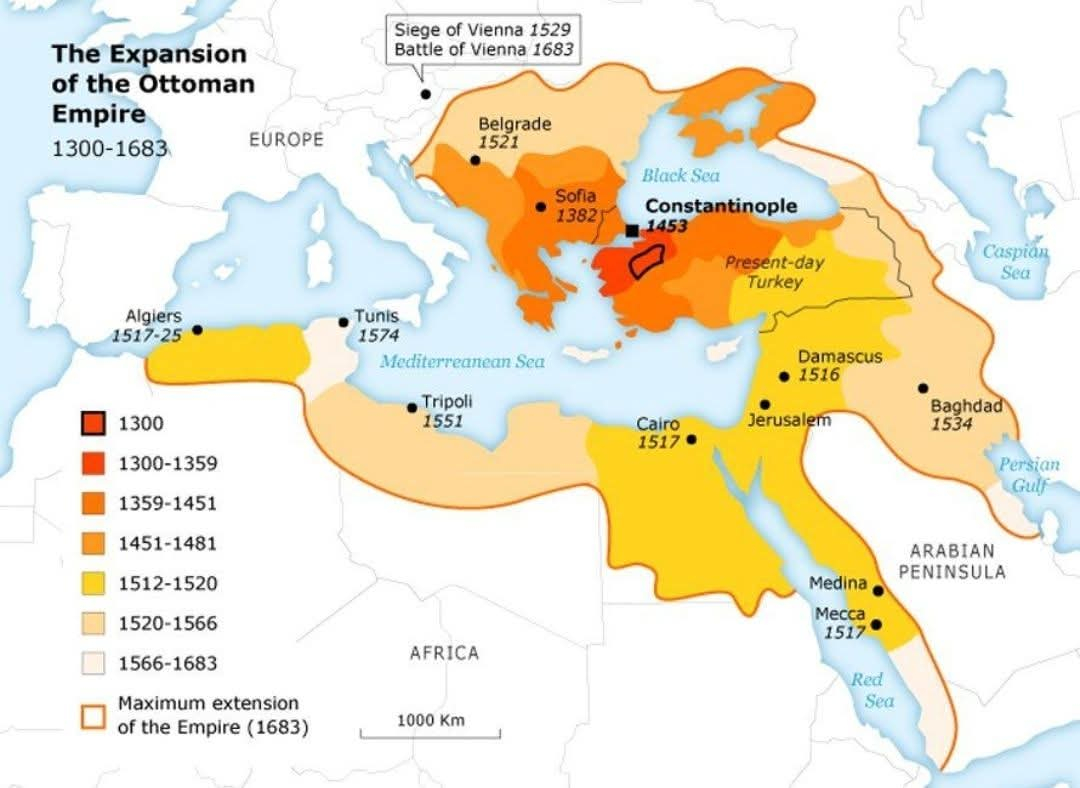
  • The Ottoman Empire at Its Greatest Extent

    At its height, the Ottoman Empire was one of the most powerful states in world history, spanning large parts of Southeastern Europe, Western Asia, and North Africa.

    A Transcontinental Empire

    The empire controlled territories surrounding much of the Mediterranean, Black Sea, and Red Sea, creating a strategic bridge between Europe, Asia, and Africa.

    Major Regions Under Ottoman Rule

    Anatolia — the Ottoman heartland
    The Balkans — extensive territories across Southeastern Europe
    Greece — much of the region was incorporated into the empire at different periods
    The Levant — including Syria and surrounding territories
    Mesopotamia — major Ottoman territories in present-day Iraq
    Egypt — an important economic and strategic province
    North Africa — Ottoman territories along much of the southern Mediterranean
    The Arabian Peninsula — including the Hejaz and other regions
    The Caucasus — areas contested and controlled at different times

    Key Facts

    Istanbul (Constantinople) became the imperial capital after the Ottoman conquest of 1453.
    At its height, the empire controlled territories across three continents.
    The Mediterranean Sea, Black Sea, Red Sea, and major land routes were strategically important to Ottoman power.
    The empire ruled over a remarkable diversity of peoples, languages, religions, and cultures.
    Ottoman influence lasted for more than six centuries, from its foundation around the end of the 13th century until its dissolution in the early 20th century.

    From a Frontier State to a Global Power

    What began as a small Anatolian principality developed into a vast empire that became a major political and military power between Europe, Asia, and Africa.

    The Ottoman Empire was not simply a European or Asian empire—it was a truly transcontinental power.

    #OttomanEmpire #OttomanHistory #History #Geography #WorldHistory
    🕌 The Ottoman Empire at Its Greatest Extent At its height, the Ottoman Empire was one of the most powerful states in world history, spanning large parts of Southeastern Europe, Western Asia, and North Africa. 🌍 A Transcontinental Empire The empire controlled territories surrounding much of the Mediterranean, Black Sea, and Red Sea, creating a strategic bridge between Europe, Asia, and Africa. 🗺️ Major Regions Under Ottoman Rule 🇹🇷 Anatolia — the Ottoman heartland 🌍 The Balkans — extensive territories across Southeastern Europe 🇬🇷 Greece — much of the region was incorporated into the empire at different periods 🇸🇾 The Levant — including Syria and surrounding territories 🇮🇶 Mesopotamia — major Ottoman territories in present-day Iraq 🇪🇬 Egypt — an important economic and strategic province 🌍 North Africa — Ottoman territories along much of the southern Mediterranean 🕌 The Arabian Peninsula — including the Hejaz and other regions ⛰️ The Caucasus — areas contested and controlled at different times ⚔️ Key Facts 🔹 Istanbul (Constantinople) became the imperial capital after the Ottoman conquest of 1453. 🔹 At its height, the empire controlled territories across three continents. 🔹 The Mediterranean Sea, Black Sea, Red Sea, and major land routes were strategically important to Ottoman power. 🔹 The empire ruled over a remarkable diversity of peoples, languages, religions, and cultures. 🔹 Ottoman influence lasted for more than six centuries, from its foundation around the end of the 13th century until its dissolution in the early 20th century. 🏛️ From a Frontier State to a Global Power What began as a small Anatolian principality developed into a vast empire that became a major political and military power between Europe, Asia, and Africa. The Ottoman Empire was not simply a European or Asian empire—it was a truly transcontinental power. #OttomanEmpire #OttomanHistory #History #Geography #WorldHistory
    0 Comments 0 Shares
  • THE OTTOMAN EMPIRE

    The Ottoman Empire was one of the longest-lasting and most influential empires in world history, existing for more than 600 years, from 1299 to 1922.

    Origins: Founded by Osman I in the late 13th century, it began as a small principality in Anatolia and gradually expanded into a powerful empire.

    Greatest Expansion: At its height, the empire controlled vast territories across Southeastern Europe, Western Asia, the Middle East and North Africa, connecting three continents.

    Capital: After the conquest of Constantinople in 1453, the city became the political and cultural center of the empire. It is known today as Istanbul.

    Strategic Position: Ottoman territories surrounded major waterways and trade routes, including the Mediterranean Sea, Black Sea and Red Sea, giving the empire enormous geopolitical importance.

    Legacy: The Ottoman Empire left a lasting impact on architecture, culture, cuisine, art, politics and the history of numerous countries across Europe, Asia and Africa.

    From a small Anatolian principality to a vast transcontinental empire, the Ottoman Empire played a major role in shaping the history of three continents.

    #OttomanEmpire #WorldHistory #HistoryFacts #HistoricalMaps #Geography #Empire #Istanbul #History
    🏛️ THE OTTOMAN EMPIRE The Ottoman Empire was one of the longest-lasting and most influential empires in world history, existing for more than 600 years, from 1299 to 1922. 🔹 Origins: Founded by Osman I in the late 13th century, it began as a small principality in Anatolia and gradually expanded into a powerful empire. 🔹 Greatest Expansion: At its height, the empire controlled vast territories across Southeastern Europe, Western Asia, the Middle East and North Africa, connecting three continents. 🔹 Capital: After the conquest of Constantinople in 1453, the city became the political and cultural center of the empire. It is known today as Istanbul. 🔹 Strategic Position: Ottoman territories surrounded major waterways and trade routes, including the Mediterranean Sea, Black Sea and Red Sea, giving the empire enormous geopolitical importance. 🔹 Legacy: The Ottoman Empire left a lasting impact on architecture, culture, cuisine, art, politics and the history of numerous countries across Europe, Asia and Africa. 🌍 From a small Anatolian principality to a vast transcontinental empire, the Ottoman Empire played a major role in shaping the history of three continents. #OttomanEmpire #WorldHistory #HistoryFacts #HistoricalMaps #Geography #Empire #Istanbul #History
    0 Comments 0 Shares
  • The Ottoman Empire at Its Peak – 1683

    In 1683, the Ottoman Empire stood as one of the world’s most powerful states, stretching across three continents.

    Territory – From Hungary in the heart of Europe to the Arabian deserts, from North Africa to the Caucasus, the empire spanned 6-7 million square kilometers.

    Capital – Istanbul, once Constantinople, was a global hub of trade, culture, and politics.

    Diversity – The empire united Turks, Arabs, Kurds, Greeks, Armenians, Slavs, Jews, and many more under a vast administrative system.

    Military Power – The Janissaries and navy projected influence across the Mediterranean, Red Sea, and beyond.

    1683 Vienna Campaign – Marked the high tide of Ottoman expansion into Europe, though the failed siege of Vienna also signaled the turning point of imperial fortunes.

    The Ottoman Empire in 1683 was not just a political force — it was a cultural mosaic and a major player in global history.

    A true ISLAMIC UNITY is not only the only solution to provide Peace, Tranquility, and Security today — just as the Ottoman State ensured for 600 years — but also the only path for the economic development of poor Islamic countries.
    The Ottoman Empire at Its Peak – 1683 In 1683, the Ottoman Empire stood as one of the world’s most powerful states, stretching across three continents. 🔹 Territory – From Hungary in the heart of Europe to the Arabian deserts, from North Africa to the Caucasus, the empire spanned 6-7 million square kilometers. 🔹 Capital – Istanbul, once Constantinople, was a global hub of trade, culture, and politics. 🔹 Diversity – The empire united Turks, Arabs, Kurds, Greeks, Armenians, Slavs, Jews, and many more under a vast administrative system. 🔹 Military Power – The Janissaries and navy projected influence across the Mediterranean, Red Sea, and beyond. 🔹 1683 Vienna Campaign – Marked the high tide of Ottoman expansion into Europe, though the failed siege of Vienna also signaled the turning point of imperial fortunes. The Ottoman Empire in 1683 was not just a political force — it was a cultural mosaic and a major player in global history. A true ISLAMIC UNITY is not only the only solution to provide Peace, Tranquility, and Security today — just as the Ottoman State ensured for 600 years — but also the only path for the economic development of poor Islamic countries.
    0 Comments 0 Shares
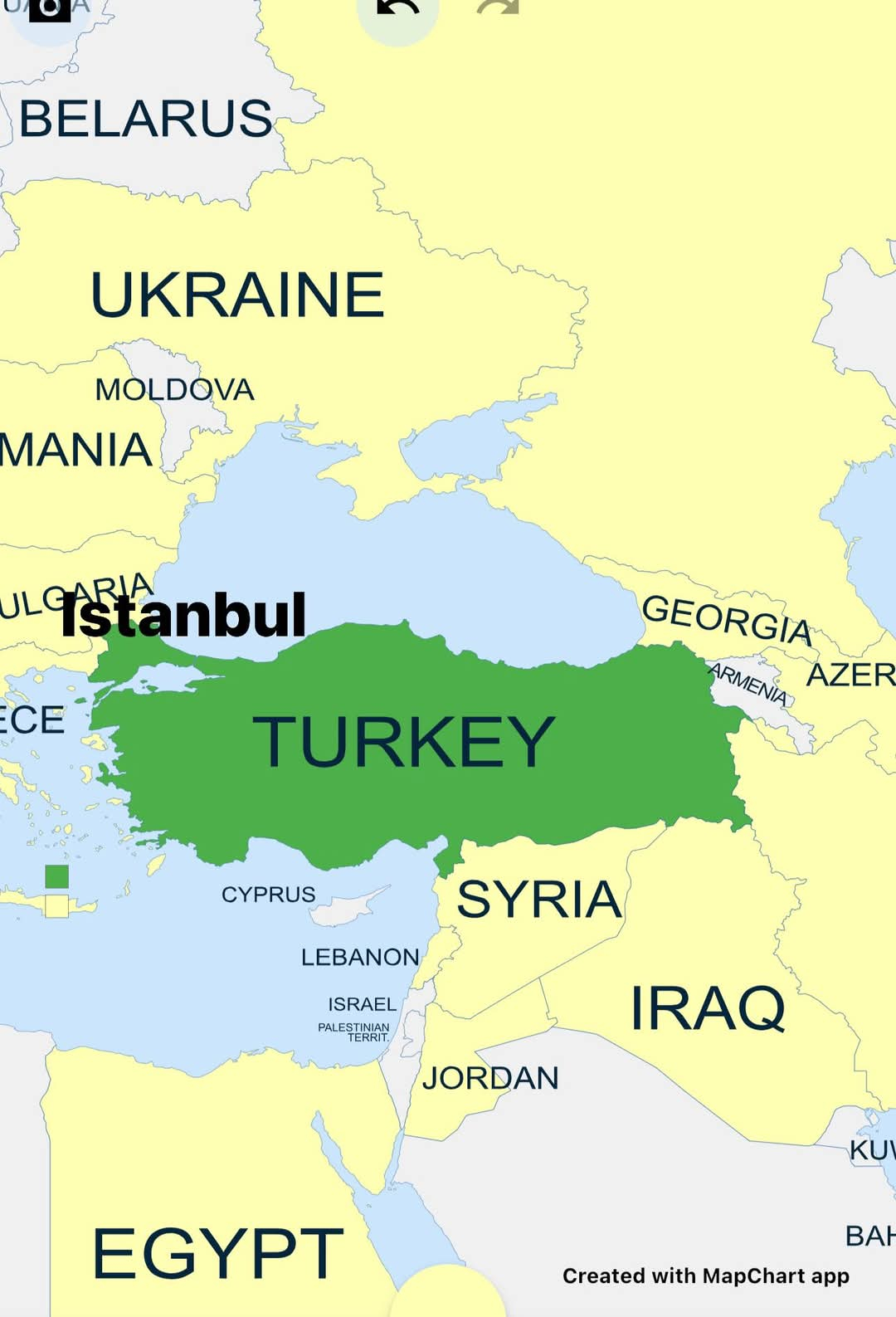
  • Istanbul, Turkey ...
    Did you know that Istanbul, located in Turkey, is one of the most important cities in the world due to its history, culture and geographical location. It is the only city that straddles two continents, Europe and Asia, divided by the Bosphorus Strait. Founded as Byzantium and later known as Constantinople, it was the capital of three great empires: the Roman, the Byzantine and the Ottoman.
    Istanbul is famous for its impressive architecture, such as the Hagia Sophia, the Blue Mosque and the Topkapi Palace, former residences of the Ottoman Sultans. The city is also known for its vibrant culture and diversity, reflected in its cuisine, bazaars and historical monuments.
    Today, Istanbul is the economic and cultural center of Turkey, combining the ancient and the modern. Its streets are filled with bustling markets, such as the Grand Bazaar, along with cosmopolitan neighborhoods and modern skyscrapers. It is a popular tourist destination for its unique mix of cultures, history and modernity.
    Istanbul's Old City reflects the cultural influences of the different empires that ruled the region.
    Istanbul, Turkey 🇹🇷... Did you know that Istanbul, located in Turkey, is one of the most important cities in the world due to its history, culture and geographical location. It is the only city that straddles two continents, Europe and Asia, divided by the Bosphorus Strait. Founded as Byzantium and later known as Constantinople, it was the capital of three great empires: the Roman, the Byzantine and the Ottoman. Istanbul is famous for its impressive architecture, such as the Hagia Sophia, the Blue Mosque and the Topkapi Palace, former residences of the Ottoman Sultans. The city is also known for its vibrant culture and diversity, reflected in its cuisine, bazaars and historical monuments. Today, Istanbul is the economic and cultural center of Turkey, combining the ancient and the modern. Its streets are filled with bustling markets, such as the Grand Bazaar, along with cosmopolitan neighborhoods and modern skyscrapers. It is a popular tourist destination for its unique mix of cultures, history and modernity. Istanbul's Old City reflects the cultural influences of the different empires that ruled the region.
    0 Comments 0 Shares
  • ISTANBUL, TURKEY

    Did you know that Istanbul, located in Turkey, is one of the most important cities in the world for its history, culture and geographical location. It is the only city that spans two continents, Europe and Asia, divided by the Bosporus Strait. Founded as Byzantium and later known as Constantinople, it was the capital of three great empires: the Roman, Byzantine and Ottoman.

    Istanbul is famous for its impressive architecture, such as the Basilica of Santa Sophia, the Blue Mosque and the Topkapi Palace, former residences of the Ottoman sultans. The city is also known for its vibrant culture and diversity, reflected in its cuisine, bazaars, and historical monuments.

    Today, Istanbul is the economic and cultural center of Turkey, combining the ancient and the modern. Its streets are teeming with bustling markets, like the Grand Bazaar, along with cosmopolitan neighborhoods and modern skyscrapers. It's a popular tourist destination for its unique blend of cultures, history, and modernity.

    Istanbul is the Ancient City reflects the cultural influences of the different empires that ruled the region.
    ISTANBUL, TURKEY🇹🇷🥰 Did you know that Istanbul, located in Turkey, is one of the most important cities in the world for its history, culture and geographical location. It is the only city that spans two continents, Europe and Asia, divided by the Bosporus Strait. Founded as Byzantium and later known as Constantinople, it was the capital of three great empires: the Roman, Byzantine and Ottoman. Istanbul is famous for its impressive architecture, such as the Basilica of Santa Sophia, the Blue Mosque and the Topkapi Palace, former residences of the Ottoman sultans. The city is also known for its vibrant culture and diversity, reflected in its cuisine, bazaars, and historical monuments. Today, Istanbul is the economic and cultural center of Turkey, combining the ancient and the modern. Its streets are teeming with bustling markets, like the Grand Bazaar, along with cosmopolitan neighborhoods and modern skyscrapers. It's a popular tourist destination for its unique blend of cultures, history, and modernity. Istanbul is the Ancient City reflects the cultural influences of the different empires that ruled the region.
    0 Comments 0 Shares
  • Welcome to Istanbul: The City Between Two Continents!
    Did you know Istanbul is the only city in the world that spans both Europe and Asia? This magical Turkish metropolis is a living museum of history, culture, and modern life—all in one breathtaking place!

    Quick Facts:

    • Location: Northwest Turkey, along the Bosphorus Strait
    • Area: ~5,343 km²
    • Population: 15+ million (Turkey’s largest city!)
    • Language: Turkish
    • Currency: Turkish Lira (TRY)

    ⸻

    Must-See Highlights:

    • Historic Icons: Hagia Sophia, Blue Mosque, Topkapi Palace, Galata Tower, Roman Hippodrome
    • UNESCO Site: The Historic Areas of Istanbul (Byzantine + Ottoman treasures)
    • Bridges That Connect Continents: Bosphorus Bridge & Fatih Sultan Mehmet Bridge
    • Famous Bazaars: Grand Bazaar & Spice Bazaar – centuries of shopping history!
    • Unique Transport: Ferry rides between continents, nostalgic trams, funiculars

    ⸻

    Tastes of Istanbul:

    Kebab, köfte, simit (sesame bread ring), meze plates, sweet baklava, and of course—Turkish tea in tulip-shaped glasses!

    ⸻

    Fun Fact:

    Istanbul was once known as Byzantium and Constantinople, serving as capital of 3 great empires: Roman, Byzantine, and Ottoman!

    ⸻

    Istanbul isn’t just a city—it’s an experience that connects history and the future!

    #Istanbul #VisitTurkey #CityOfTwoContinents #Bosphorus #TurkishCulture #TravelGoals #AmazingWorldGeography
    🇹🇷✨ Welcome to Istanbul: The City Between Two Continents! Did you know Istanbul is the only city in the world that spans both Europe and Asia? This magical Turkish metropolis is a living museum of history, culture, and modern life—all in one breathtaking place! 🌍 Quick Facts: • Location: Northwest Turkey, along the Bosphorus Strait • Area: ~5,343 km² • Population: 15+ million (Turkey’s largest city!) • Language: Turkish • Currency: Turkish Lira (TRY) ⸻ 🕌 Must-See Highlights: • Historic Icons: Hagia Sophia, Blue Mosque, Topkapi Palace, Galata Tower, Roman Hippodrome • UNESCO Site: The Historic Areas of Istanbul (Byzantine + Ottoman treasures) • Bridges That Connect Continents: Bosphorus Bridge & Fatih Sultan Mehmet Bridge • Famous Bazaars: Grand Bazaar & Spice Bazaar – centuries of shopping history! • Unique Transport: Ferry rides between continents, nostalgic trams, funiculars ⸻ 🍽️ Tastes of Istanbul: Kebab, köfte, simit (sesame bread ring), meze plates, sweet baklava, and of course—Turkish tea in tulip-shaped glasses! ⸻ 🔍 Fun Fact: Istanbul was once known as Byzantium and Constantinople, serving as capital of 3 great empires: Roman, Byzantine, and Ottoman! ⸻ Istanbul isn’t just a city—it’s an experience that connects history and the future! #Istanbul #VisitTurkey #CityOfTwoContinents #Bosphorus #TurkishCulture #TravelGoals #AmazingWorldGeography
    0 Comments 0 Shares
  • Taraweeh prayer in Hagia Sophia in Istanbul, Turkey.

    Hagia Sophia was a significant Christian church in Constantinople for almost 1,000 years before Sultan Mehmed II of the Ottoman Empire conquered it.
    Taraweeh prayer in Hagia Sophia in 🇹🇷 Istanbul, Turkey. Hagia Sophia was a significant Christian church in Constantinople for almost 1,000 years before Sultan Mehmed II of the Ottoman Empire conquered it.
    0 Comments 0 Shares
  • Explore Istanbul: A City Where East Meets West in Turkey!

    Discover Istanbul, a vibrant metropolis that straddles two continents, offering a rich tapestry of culture, history, and architecture. This unique city, formerly known as Constantinople, serves as a bridge between Europe and Asia and is known for its captivating blend of Eastern and Western influences.

    Visit iconic landmarks like the Hagia Sophia mosque, masterpiece of Byzantine architecture that has stood as a church, a mosque, and now a museum. Explore the majestic Topkapi Palace, the sprawling complex where sultans once ruled. Wander through the bustling Grand Bazaar, a labyrinth of shops offering everything from spices to intricate jewelry.

    Stroll along the Bosphorus Strait and enjoy the scenic views, dine on delicious Turkish cuisine, and soak in the rich history and dynamic atmosphere of this cosmopolitan city. Whether you're exploring ancient sites, enjoying local coffee in quaint cafes, or watching the sunset over the skyline, Istanbul promises an unforgettable experience.

    #IstanbulTurkey #TravelTurkey #CulturalCrossroads #HistoricCities #discoveristanbul
    🌟 Explore Istanbul: A City Where East Meets West in Turkey! 🇹🇷🌉 Discover Istanbul, a vibrant metropolis that straddles two continents, offering a rich tapestry of culture, history, and architecture. This unique city, formerly known as Constantinople, serves as a bridge between Europe and Asia and is known for its captivating blend of Eastern and Western influences. 🌍🕌 Visit iconic landmarks like the Hagia Sophia mosque, masterpiece of Byzantine architecture that has stood as a church, a mosque, and now a museum. Explore the majestic Topkapi Palace, the sprawling complex where sultans once ruled. Wander through the bustling Grand Bazaar, a labyrinth of shops offering everything from spices to intricate jewelry. 🏰🛍️ Stroll along the Bosphorus Strait and enjoy the scenic views, dine on delicious Turkish cuisine, and soak in the rich history and dynamic atmosphere of this cosmopolitan city. Whether you're exploring ancient sites, enjoying local coffee in quaint cafes, or watching the sunset over the skyline, Istanbul promises an unforgettable experience. 🌅☕ #IstanbulTurkey #TravelTurkey #CulturalCrossroads #HistoricCities #discoveristanbul
    1
    0 Comments 0 Shares
  • "A Monumental Panorama of Constantinople" by Cosimo Comidas de Carbognano (1749-1814)
    #constantinople #kostantiniyye #i̇stanbul #byzantine #ottoman #topkapısarayı #hagiasophia #ayasofya
    "A Monumental Panorama of Constantinople" by Cosimo Comidas de Carbognano (1749-1814) #constantinople #kostantiniyye #i̇stanbul #byzantine #ottoman #topkapısarayı #hagiasophia #ayasofya
    0 Comments 0 Shares
More Results