• 8 children. 1 mother and 1 grandmother underway on camels and donkeys in remote Chad. The Arabe people of Chad are thought to have originally arrived in the country in the 7th century after crossing from Egypt, through Sudan, to get there. These days they make up one of the 200+ nomadic tribal groups that criss-cross the country each day on the backs of camels, cows, donkeys and horse-drawn carriages. They are normally incredibly shy with photographers and usually dislike us being in their world. Therefore encounters like this require careful attention, handling and kindness from someone who knows them well. When Arabs migrate, their whole homes are packed up on their livestock. The youngest children and animals, along with family elders who can’t keep pace, get to ride in fairytale boxes on tops of camels. Their movements are what initially drove me to plan this expedition in Chad. I have yet to set the dates for a future visit but if you are curious to join me please message me. #ingervandyke #wildimagesphototours #chad #nomads #arabe
    8 children. 1 mother and 1 grandmother underway on camels and donkeys in remote Chad. The Arabe people of Chad are thought to have originally arrived in the country in the 7th century after crossing from Egypt, through Sudan, to get there. These days they make up one of the 200+ nomadic tribal groups that criss-cross the country each day on the backs of camels, cows, donkeys and horse-drawn carriages. They are normally incredibly shy with photographers and usually dislike us being in their world. Therefore encounters like this require careful attention, handling and kindness from someone who knows them well. When Arabs migrate, their whole homes are packed up on their livestock. The youngest children and animals, along with family elders who can’t keep pace, get to ride in fairytale boxes on tops of camels. Their movements are what initially drove me to plan this expedition in Chad. I have yet to set the dates for a future visit but if you are curious to join me please message me. #ingervandyke #wildimagesphototours #chad #nomads #arabe
    0 Comments 0 Shares
  • The Ottoman Empire at Its Greatest Extent

    At its height, the Ottoman Empire was one of the most powerful states in world history, spanning large parts of Southeastern Europe, Western Asia, and North Africa.

    A Transcontinental Empire

    The empire controlled territories surrounding much of the Mediterranean, Black Sea, and Red Sea, creating a strategic bridge between Europe, Asia, and Africa.

    Major Regions Under Ottoman Rule

    Anatolia — the Ottoman heartland
    The Balkans — extensive territories across Southeastern Europe
    Greece — much of the region was incorporated into the empire at different periods
    The Levant — including Syria and surrounding territories
    Mesopotamia — major Ottoman territories in present-day Iraq
    Egypt — an important economic and strategic province
    North Africa — Ottoman territories along much of the southern Mediterranean
    The Arabian Peninsula — including the Hejaz and other regions
    The Caucasus — areas contested and controlled at different times

    Key Facts

    Istanbul (Constantinople) became the imperial capital after the Ottoman conquest of 1453.
    At its height, the empire controlled territories across three continents.
    The Mediterranean Sea, Black Sea, Red Sea, and major land routes were strategically important to Ottoman power.
    The empire ruled over a remarkable diversity of peoples, languages, religions, and cultures.
    Ottoman influence lasted for more than six centuries, from its foundation around the end of the 13th century until its dissolution in the early 20th century.

    From a Frontier State to a Global Power

    What began as a small Anatolian principality developed into a vast empire that became a major political and military power between Europe, Asia, and Africa.

    The Ottoman Empire was not simply a European or Asian empire—it was a truly transcontinental power.

    #OttomanEmpire #OttomanHistory #History #Geography #WorldHistory
    ๐Ÿ•Œ The Ottoman Empire at Its Greatest Extent At its height, the Ottoman Empire was one of the most powerful states in world history, spanning large parts of Southeastern Europe, Western Asia, and North Africa. ๐ŸŒ A Transcontinental Empire The empire controlled territories surrounding much of the Mediterranean, Black Sea, and Red Sea, creating a strategic bridge between Europe, Asia, and Africa. ๐Ÿ—บ๏ธ Major Regions Under Ottoman Rule ๐Ÿ‡น๐Ÿ‡ท Anatolia — the Ottoman heartland ๐ŸŒ The Balkans — extensive territories across Southeastern Europe ๐Ÿ‡ฌ๐Ÿ‡ท Greece — much of the region was incorporated into the empire at different periods ๐Ÿ‡ธ๐Ÿ‡พ The Levant — including Syria and surrounding territories ๐Ÿ‡ฎ๐Ÿ‡ถ Mesopotamia — major Ottoman territories in present-day Iraq ๐Ÿ‡ช๐Ÿ‡ฌ Egypt — an important economic and strategic province ๐ŸŒ North Africa — Ottoman territories along much of the southern Mediterranean ๐Ÿ•Œ The Arabian Peninsula — including the Hejaz and other regions โ›ฐ๏ธ The Caucasus — areas contested and controlled at different times โš”๏ธ Key Facts ๐Ÿ”น Istanbul (Constantinople) became the imperial capital after the Ottoman conquest of 1453. ๐Ÿ”น At its height, the empire controlled territories across three continents. ๐Ÿ”น The Mediterranean Sea, Black Sea, Red Sea, and major land routes were strategically important to Ottoman power. ๐Ÿ”น The empire ruled over a remarkable diversity of peoples, languages, religions, and cultures. ๐Ÿ”น Ottoman influence lasted for more than six centuries, from its foundation around the end of the 13th century until its dissolution in the early 20th century. ๐Ÿ›๏ธ From a Frontier State to a Global Power What began as a small Anatolian principality developed into a vast empire that became a major political and military power between Europe, Asia, and Africa. The Ottoman Empire was not simply a European or Asian empire—it was a truly transcontinental power. #OttomanEmpire #OttomanHistory #History #Geography #WorldHistory
    0 Comments 0 Shares
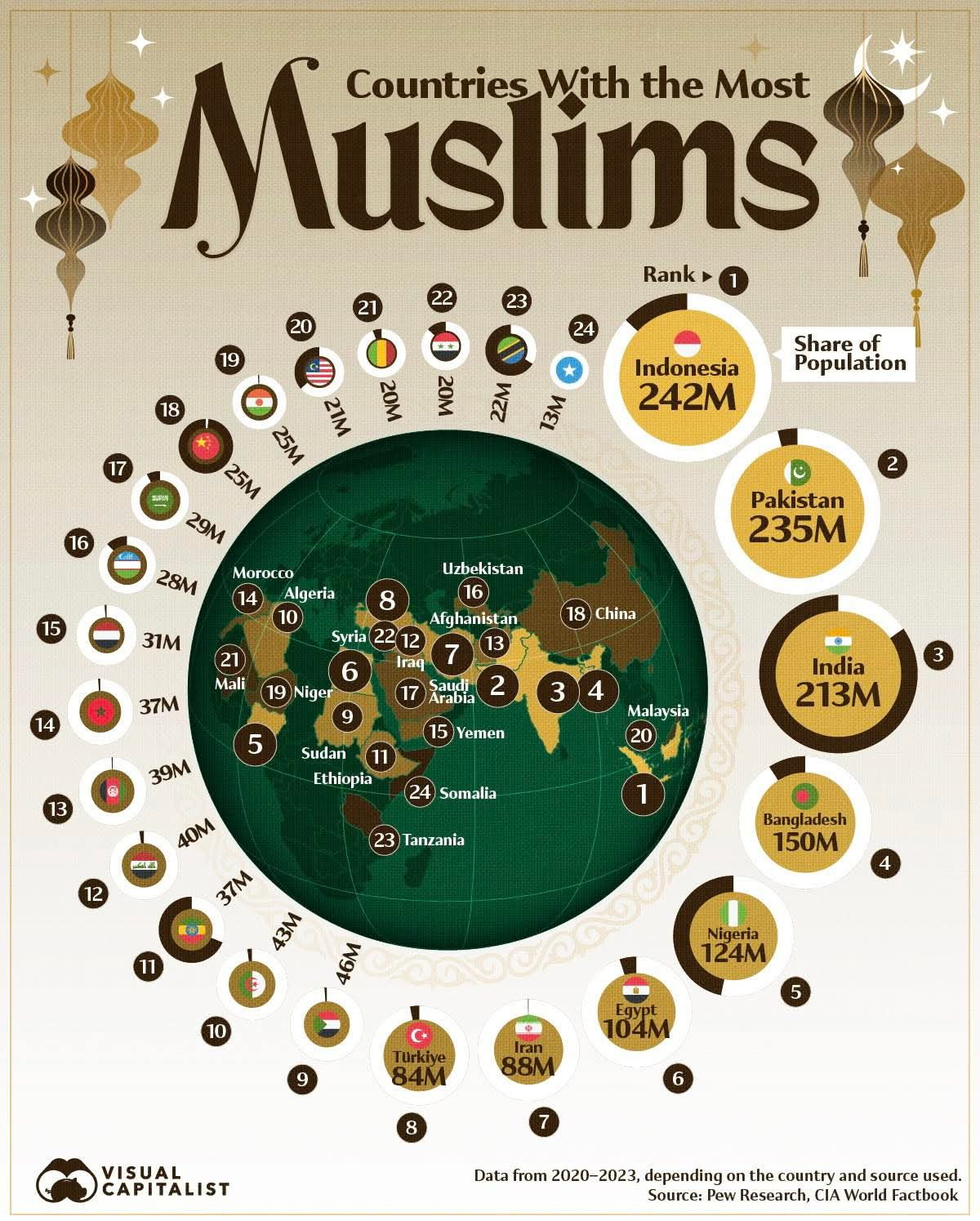
  • Countries With the Most Muslims (% Population)

    1. Indonesia - 242M (87.0%)
    2. Pakistan - 235M (96.3%)
    3. India - 213M (15.3%)
    4. Bangladesh - 150M (91.0%)
    5. Nigeria - 124M (53.5%)
    6. Egypt - 104M (95%)
    7. Iran - 88M (99.8%)
    8. Turkey - 84M (97%)
    9. Sudan - 46M (99%)
    10. Algeria - 43M (98.0%)
    11. Iraq - 40M (98%)
    12. Afghanistan - 39M (99.7%)
    13. Ethiopia - 37M (31.3%)
    14. Morocco - 37M (99.0%)
    15. Yemen - 31M (99.1%)
    16. Saudi Arabia - 29M (92.7%)
    17. Uzbekistan - 28M (88.0%)
    18. China - 25M (1.4%)
    19. Nigér - 25M (99.3%)
    20. Tanzania - 22M (34.1%)
    21. Malaysia - 21M (63.5%)
    22. Mali - 20M (93.9%)
    23. Syria - 20M (87.0%)
    24. Somalia - 13M (99.8%)

    The data comes from two complementary sources: Pew Research, which tracks global religious affiliation, and the CIA World Factbook, which publishes national demographic splits.

    Countries With the Largest Muslim Populations: Islam is the world’s second-largest religion, with 1.8 billion Muslims dispersed across every continent. Due to data constraints, the most recent figures between 2020–2023 have been utilized, depending on availability per country. Africa is home to some of the fastest-growing Muslim populations. Nigeria, already the continent’s most populous country, now counts over 124 million Muslims, comprising more than half its citizens. In North Africa, Egypt and Algeria each report that roughly 95-98% of their inhabitants identify as Muslim, reflecting centuries-old cultural and religious continuity.
    ๐Ÿ•Œ Countries With the Most Muslims (% Population) 1. ๐Ÿ‡ฎ๐Ÿ‡ฉ Indonesia - 242M (87.0%) 2. ๐Ÿ‡ต๐Ÿ‡ฐ Pakistan - 235M (96.3%) 3. ๐Ÿ‡ฎ๐Ÿ‡ณ India - 213M (15.3%) 4. ๐Ÿ‡ง๐Ÿ‡ฉ Bangladesh - 150M (91.0%) 5. ๐Ÿ‡ณ๐Ÿ‡ฌ Nigeria - 124M (53.5%) 6. ๐Ÿ‡ช๐Ÿ‡ฌ Egypt - 104M (95%) 7. ๐Ÿ‡ฎ๐Ÿ‡ท Iran - 88M (99.8%) 8. ๐Ÿ‡น๐Ÿ‡ท Turkey - 84M (97%) 9. ๐Ÿ‡ธ๐Ÿ‡ฉ Sudan - 46M (99%) 10. ๐Ÿ‡ฉ๐Ÿ‡ฟ Algeria - 43M (98.0%) 11. ๐Ÿ‡ฎ๐Ÿ‡ถ Iraq - 40M (98%) 12. ๐Ÿ‡ฆ๐Ÿ‡ซ Afghanistan - 39M (99.7%) 13. ๐Ÿ‡ช๐Ÿ‡น Ethiopia - 37M (31.3%) 14. ๐Ÿ‡ฒ๐Ÿ‡ฆ Morocco - 37M (99.0%) 15. ๐Ÿ‡พ๐Ÿ‡ช Yemen - 31M (99.1%) 16. ๐Ÿ‡ธ๐Ÿ‡ฆ Saudi Arabia - 29M (92.7%) 17. ๐Ÿ‡บ๐Ÿ‡ฟ Uzbekistan - 28M (88.0%) 18. ๐Ÿ‡จ๐Ÿ‡ณ China - 25M (1.4%) 19. ๐Ÿ‡ณ๐Ÿ‡ช Nigér - 25M (99.3%) 20. ๐Ÿ‡น๐Ÿ‡ฟ Tanzania - 22M (34.1%) 21. ๐Ÿ‡ฒ๐Ÿ‡พ Malaysia - 21M (63.5%) 22. ๐Ÿ‡ฒ๐Ÿ‡ฑ Mali - 20M (93.9%) 23. ๐Ÿ‡ธ๐Ÿ‡พ Syria - 20M (87.0%) 24. ๐Ÿ‡ธ๐Ÿ‡ด Somalia - 13M (99.8%) ๐Ÿ“Œ The data comes from two complementary sources: Pew Research, which tracks global religious affiliation, and the CIA World Factbook, which publishes national demographic splits. Countries With the Largest Muslim Populations: Islam is the world’s second-largest religion, with 1.8 billion Muslims dispersed across every continent. Due to data constraints, the most recent figures between 2020–2023 have been utilized, depending on availability per country. Africa is home to some of the fastest-growing Muslim populations. Nigeria, already the continent’s most populous country, now counts over 124 million Muslims, comprising more than half its citizens. In North Africa, Egypt and Algeria each report that roughly 95-98% of their inhabitants identify as Muslim, reflecting centuries-old cultural and religious continuity.
    0 Comments 0 Shares
  • Diabetes rates around the world:

    1. Pakistan: 30.8%
    2. Kuwait: 24.9%
    8. Egypt: 20.9%
    10. Qatar: 19.5%
    12. Malaysia: 19%
    14. Saudi Arabia: 18.7%
    17. Mexico: 16.9%
    26. Turkey: 14.5%
    27. Bangladesh: 14.2%
    48. Sri Lanka: 11.3%
    53. South Africa: 10.8%
    54. Iraq: 10.7%
    55. United States: 10.7%
    56. Indonesia: 10.6%
    57. China: 10.6%
    60. Spain: 10.3%
    63. Thailand: 9.7%
    64. India: 9.6%
    71. Iran: 9.1%
    74. Portugal: 9.1%
    78. Brazil: 8.8%
    83. Nepal: 8.7%
    86. North Korea: 8.6%
    96. Canada: 7.7%
    107. Philippines: 7.1%
    113. South Korea: 6.8%
    116. Japan: 6.6%
    127. Australia: 6.4%
    129. Italy: 6.4%
    132. United Kingdom: 6.3%
    135. New Zealand: 6.2%
    139. Vietnam: 6.1%
    153. Russia: 5.6%
    162. Argentina: 5.4%
    165. France: 5.3%
    169. Ethiopia: 5%
    183. Kenya: 4%
    186. Nigeria: 3.6%

    Percentage of people age 20-79 who have type 1 or type 2 diabetes
    Diabetes rates around the world: 1. ๐Ÿ‡ต๐Ÿ‡ฐPakistan: 30.8% 2. ๐Ÿ‡ฐ๐Ÿ‡ผKuwait: 24.9% 8. ๐Ÿ‡ช๐Ÿ‡ฌEgypt: 20.9% 10. ๐Ÿ‡ถ๐Ÿ‡ฆQatar: 19.5% 12. ๐Ÿ‡ฒ๐Ÿ‡พMalaysia: 19% 14. ๐Ÿ‡ธ๐Ÿ‡ฆSaudi Arabia: 18.7% 17. ๐Ÿ‡ฒ๐Ÿ‡ฝMexico: 16.9% 26. ๐Ÿ‡น๐Ÿ‡ทTurkey: 14.5% 27. ๐Ÿ‡ง๐Ÿ‡ฉBangladesh: 14.2% 48. ๐Ÿ‡ฑ๐Ÿ‡ฐSri Lanka: 11.3% 53. ๐Ÿ‡ฟ๐Ÿ‡ฆSouth Africa: 10.8% 54. ๐Ÿ‡ฎ๐Ÿ‡ถIraq: 10.7% 55. ๐Ÿ‡บ๐Ÿ‡ธUnited States: 10.7% 56. ๐Ÿ‡ฎ๐Ÿ‡ฉIndonesia: 10.6% 57. ๐Ÿ‡จ๐Ÿ‡ณChina: 10.6% 60. ๐Ÿ‡ช๐Ÿ‡ธSpain: 10.3% 63. ๐Ÿ‡น๐Ÿ‡ญThailand: 9.7% 64. ๐Ÿ‡ฎ๐Ÿ‡ณIndia: 9.6% 71. ๐Ÿ‡ฎ๐Ÿ‡ทIran: 9.1% 74. ๐Ÿ‡ต๐Ÿ‡นPortugal: 9.1% 78. ๐Ÿ‡ง๐Ÿ‡ทBrazil: 8.8% 83. ๐Ÿ‡ณ๐Ÿ‡ตNepal: 8.7% 86. ๐Ÿ‡ฐ๐Ÿ‡ตNorth Korea: 8.6% 96. ๐Ÿ‡จ๐Ÿ‡ฆCanada: 7.7% 107. ๐Ÿ‡ต๐Ÿ‡ญPhilippines: 7.1% 113. ๐Ÿ‡ฐ๐Ÿ‡ทSouth Korea: 6.8% 116. ๐Ÿ‡ฏ๐Ÿ‡ตJapan: 6.6% 127. ๐Ÿ‡ฆ๐Ÿ‡บAustralia: 6.4% 129. ๐Ÿ‡ฎ๐Ÿ‡นItaly: 6.4% 132. ๐Ÿ‡ฌ๐Ÿ‡งUnited Kingdom: 6.3% 135. ๐Ÿ‡ณ๐Ÿ‡ฟNew Zealand: 6.2% 139. ๐Ÿ‡ป๐Ÿ‡ณVietnam: 6.1% 153. ๐Ÿ‡ท๐Ÿ‡บRussia: 5.6% 162. ๐Ÿ‡ฆ๐Ÿ‡ทArgentina: 5.4% 165. ๐Ÿ‡ซ๐Ÿ‡ทFrance: 5.3% 169. ๐Ÿ‡ช๐Ÿ‡นEthiopia: 5% 183. ๐Ÿ‡ฐ๐Ÿ‡ชKenya: 4% 186. ๐Ÿ‡ณ๐Ÿ‡ฌNigeria: 3.6% ๐Ÿ“Œ Percentage of people age 20-79 who have type 1 or type 2 diabetes
    0 Comments 0 Shares
  • Most Populous Countries in The World (August 2025)

    1. India - 1,465,677,586 (1.47B)
    2. China - 1,415,623,588 (1.42B)
    3. United States - 347,538,693 (348M)
    4. Indonesia - 286,035,530 (286M)
    5. Pakistan - 255,219,554 (255M)
    6. Nigeria - 238,251,907 (238M)
    7. Brazil - 212,932,800 (213M)
    8. Bangladesh - 176,002,683 (176M)
    9. Russia - 143,876,305 (144M)
    10. Ethiopia - 135,983,125 (136M)
    11. Mexico - 132,107,942 (132M)
    12. Japan - 123,007,892 (123M)
    13. Egypt - 118,638,206 (119M)
    14. Philippines - 116,926,846 (117M)
    15. DR Congo - 113,367,106 (113M)
    16. Vietnam - 101,689,007 (102M)
    17. Iran - 92,543,805 (92M)
    18. Turkey - 87,716,710 (88M)
    19. Germany - 84,004,876 (84M)
    20. Thailand - 71,612,755 (72M)
    21. Tanzania - 70,801,979 (71M)
    22. United Kingdom - 69,609,918 (70M)
    23. France - 66,665,565 (67M)
    24. South Africa - 64,849,940 (65M)
    25. Italy - 59,117,339 (59M)
    26. Kenya - 57,680,076 (58M)
    27. Myanmar - 54,900,269 (55M)
    28. Colombia - 53,500,821 (54M)
    29. South Korea - 51,659,659 (52M)
    30. Sudan - 51,821,910 (52M)
    31. Uganda - 51,562,757 (52M)
    32. Spain - 47,886,966 (48M)
    33. Algeria - 47,520,822 (48M)
    34. Iraq - 47,151,180 (47M)
    35. Argentina - 45,873,616 (46M)
    36. Afghanistan - 43,999,045 (44M)
    37. Yemen - 41,927,208 (42M)
    38. Canada - 40,180,416 (40M)
    39. Angola - 39,187,953 (39M)
    40. Morocco - 38,479,712 (38M)
    41. Poland - 38,080,709 (38M)
    42. Uzbekistan - 37,146,431 (37M)
    43. Malaysia - 36,036,035 (36M)
    44. Mozambique - 35,760,667 (36M)
    45. Ghana - 35,150,102 (35M)
    46. Peru - 34,626,633 (35M)
    47. Saudi Arabia - 34,647,916 (35M)
    48. Madagascar - 32,842,738 (33M)
    49. ๐Ÿ‡จ๐Ÿ‡ฎ Côte d'Ivoire - 32,813,785 (33M)
    50. Cameroon - 29,978,049 (30M)
    Most Populous Countries in The World (August 2025) 1. ๐Ÿ‡ฎ๐Ÿ‡ณ India - 1,465,677,586 (1.47B) 2. ๐Ÿ‡จ๐Ÿ‡ณ China - 1,415,623,588 (1.42B) 3. ๐Ÿ‡บ๐Ÿ‡ธ United States - 347,538,693 (348M) 4. ๐Ÿ‡ฎ๐Ÿ‡ฉ Indonesia - 286,035,530 (286M) 5. ๐Ÿ‡ต๐Ÿ‡ฐ Pakistan - 255,219,554 (255M) 6. ๐Ÿ‡ณ๐Ÿ‡ฌ Nigeria - 238,251,907 (238M) 7. ๐Ÿ‡ง๐Ÿ‡ท Brazil - 212,932,800 (213M) 8. ๐Ÿ‡ง๐Ÿ‡ฉ Bangladesh - 176,002,683 (176M) 9. ๐Ÿ‡ท๐Ÿ‡บ Russia - 143,876,305 (144M) 10. ๐Ÿ‡ช๐Ÿ‡น Ethiopia - 135,983,125 (136M) 11. ๐Ÿ‡ฒ๐Ÿ‡ฝ Mexico - 132,107,942 (132M) 12. ๐Ÿ‡ฏ๐Ÿ‡ต Japan - 123,007,892 (123M) 13. ๐Ÿ‡ช๐Ÿ‡ฌ Egypt - 118,638,206 (119M) 14. ๐Ÿ‡ต๐Ÿ‡ญ Philippines - 116,926,846 (117M) 15. ๐Ÿ‡จ๐Ÿ‡ฉ DR Congo - 113,367,106 (113M) 16. ๐Ÿ‡ป๐Ÿ‡ณ Vietnam - 101,689,007 (102M) 17. ๐Ÿ‡ฎ๐Ÿ‡ท Iran - 92,543,805 (92M) 18. ๐Ÿ‡น๐Ÿ‡ท Turkey - 87,716,710 (88M) 19. ๐Ÿ‡ฉ๐Ÿ‡ช Germany - 84,004,876 (84M) 20. ๐Ÿ‡น๐Ÿ‡ญ Thailand - 71,612,755 (72M) 21. ๐Ÿ‡น๐Ÿ‡ฟ Tanzania - 70,801,979 (71M) 22. ๐Ÿ‡ฌ๐Ÿ‡ง United Kingdom - 69,609,918 (70M) 23. ๐Ÿ‡ซ๐Ÿ‡ท France - 66,665,565 (67M) 24. ๐Ÿ‡ฟ๐Ÿ‡ฆ South Africa - 64,849,940 (65M) 25. ๐Ÿ‡ฎ๐Ÿ‡น Italy - 59,117,339 (59M) 26. ๐Ÿ‡ฐ๐Ÿ‡ช Kenya - 57,680,076 (58M) 27. ๐Ÿ‡ฒ๐Ÿ‡ฒ Myanmar - 54,900,269 (55M) 28. ๐Ÿ‡จ๐Ÿ‡ด Colombia - 53,500,821 (54M) 29. ๐Ÿ‡ฐ๐Ÿ‡ท South Korea - 51,659,659 (52M) 30. ๐Ÿ‡ธ๐Ÿ‡ฉ Sudan - 51,821,910 (52M) 31. ๐Ÿ‡บ๐Ÿ‡ฌ Uganda - 51,562,757 (52M) 32. ๐Ÿ‡ช๐Ÿ‡ธ Spain - 47,886,966 (48M) 33. ๐Ÿ‡ฉ๐Ÿ‡ฟ Algeria - 47,520,822 (48M) 34. ๐Ÿ‡ฎ๐Ÿ‡ถ Iraq - 47,151,180 (47M) 35. ๐Ÿ‡ฆ๐Ÿ‡ท Argentina - 45,873,616 (46M) 36. ๐Ÿ‡ฆ๐Ÿ‡ซ Afghanistan - 43,999,045 (44M) 37. ๐Ÿ‡พ๐Ÿ‡ช Yemen - 41,927,208 (42M) 38. ๐Ÿ‡จ๐Ÿ‡ฆ Canada - 40,180,416 (40M) 39. ๐Ÿ‡ฆ๐Ÿ‡ด Angola - 39,187,953 (39M) 40. ๐Ÿ‡ฒ๐Ÿ‡ฆ Morocco - 38,479,712 (38M) 41. ๐Ÿ‡ต๐Ÿ‡ฑ Poland - 38,080,709 (38M) 42. ๐Ÿ‡บ๐Ÿ‡ฟ Uzbekistan - 37,146,431 (37M) 43. ๐Ÿ‡ฒ๐Ÿ‡พ Malaysia - 36,036,035 (36M) 44. ๐Ÿ‡ฒ๐Ÿ‡ฟ Mozambique - 35,760,667 (36M) 45. ๐Ÿ‡ฌ๐Ÿ‡ญ Ghana - 35,150,102 (35M) 46. ๐Ÿ‡ต๐Ÿ‡ช Peru - 34,626,633 (35M) 47. ๐Ÿ‡ธ๐Ÿ‡ฆ Saudi Arabia - 34,647,916 (35M) 48. ๐Ÿ‡ฒ๐Ÿ‡ฌ Madagascar - 32,842,738 (33M) 49. ๐Ÿ‡จ๐Ÿ‡ฎ Côte d'Ivoire - 32,813,785 (33M) 50. ๐Ÿ‡จ๐Ÿ‡ฒ Cameroon - 29,978,049 (30M)
    0 Comments 0 Shares
  • Fareed Kotb | Egypt
    Fareed Kotb | Egypt
    0 Comments 0 Shares
  • Ramadan vibes in Egypt.
    Ramadan vibes in Egypt.
    0 Comments 0 Shares
  • Islamic World

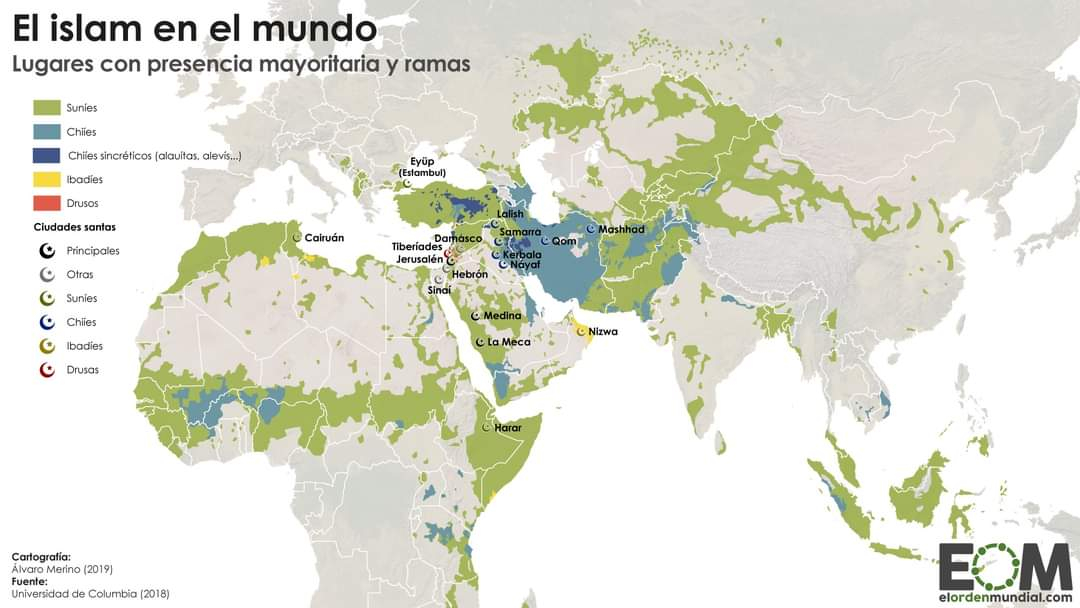
    The Islamic world refers to countries and regions where Islam is dominant, influencing various aspects of life, including culture, politics, law, and education. It is not just limited to the Middle East; it spans Africa, Asia, and Europe.
    Critical Aspects of the Islamic World:
    1. Geographical Spread:
    Middle East and North Africa (MENA): The heartland of Islam, including countries like Saudi Arabia, Egypt, Iran, and Turkey.
    South Asia: Countries like Pakistan, Bangladesh, and Afghanistan, where Islam plays a central role.
    Southeast Asia: Indonesia, the world's most populous Muslim-majority country, Malaysia, and Brunei.
    Sub-Saharan Africa: Countries like Nigeria, Sudan, and Somalia have significant Muslim populations.
    Europe: There are significant Muslim communities in Bosnia and Herzegovina, Albania, and growing populations in Western Europe due to migration.
    2. Cultural and Religious Practices:
    Religious Practices: The Five Pillars of Islam (Shahada, Salah, Zakat, Sawm, Hajj) are central to Islamic life.
    Islamic Law (Sharia): In many Muslim-majority countries, Sharia law influences or directly governs legal systems, covering everything from criminal law to personal status issues like marriage and inheritance.
    Language: Arabic is the liturgical language of Islam, but other languages, such as Persian, Turkish, Urdu, and Malay, are widely spoken in the Islamic world.
    3. Historical Contributions:
    The Golden Age of Islam (8th to 14th century) was a period of significant advancements in science, medicine, mathematics, and philosophy, with learning centres in cities like Baghdad, Cairo, and Cordoba.
    Architecture: Islamic architecture is renowned for its mosques, madrasas (schools), and palaces, featuring minarets, domes, and intricate geometric designs.
    4. Modern-Day Dynamics:
    Political Landscape: The Islamic world includes various governance systems, from monarchies in the Gulf States to republics in Iran and Turkey. Political Islam and movements like the Muslim Brotherhood have had significant influence in some regions.
    Economic Power: The Islamic world includes some of the world's largest oil producers, like Saudi Arabia and Iran, which play a critical role in global energy markets.
    Social Issues: The Islamic world faces diverse social challenges, from modernisation and globalisation to debates over women's rights, democracy, and the role of religion in the state.
    5. Global Influence:
    Diaspora: Significant Muslim communities in Europe, North America, and other parts of the world contribute to the global influence of Islam.
    Interfaith Relations: Islam is one of the world's major religions, with interfaith dialogue becoming increasingly important in promoting understanding and cooperation between different religious communities.
    The Islamic world is diverse and complex, with a rich history and significant impact on global culture, politics, and economics.
    Islamic World The Islamic world refers to countries and regions where Islam is dominant, influencing various aspects of life, including culture, politics, law, and education. It is not just limited to the Middle East; it spans Africa, Asia, and Europe. Critical Aspects of the Islamic World: 1. Geographical Spread: Middle East and North Africa (MENA): The heartland of Islam, including countries like Saudi Arabia, Egypt, Iran, and Turkey. South Asia: Countries like Pakistan, Bangladesh, and Afghanistan, where Islam plays a central role. Southeast Asia: Indonesia, the world's most populous Muslim-majority country, Malaysia, and Brunei. Sub-Saharan Africa: Countries like Nigeria, Sudan, and Somalia have significant Muslim populations. Europe: There are significant Muslim communities in Bosnia and Herzegovina, Albania, and growing populations in Western Europe due to migration. 2. Cultural and Religious Practices: Religious Practices: The Five Pillars of Islam (Shahada, Salah, Zakat, Sawm, Hajj) are central to Islamic life. Islamic Law (Sharia): In many Muslim-majority countries, Sharia law influences or directly governs legal systems, covering everything from criminal law to personal status issues like marriage and inheritance. Language: Arabic is the liturgical language of Islam, but other languages, such as Persian, Turkish, Urdu, and Malay, are widely spoken in the Islamic world. 3. Historical Contributions: The Golden Age of Islam (8th to 14th century) was a period of significant advancements in science, medicine, mathematics, and philosophy, with learning centres in cities like Baghdad, Cairo, and Cordoba. Architecture: Islamic architecture is renowned for its mosques, madrasas (schools), and palaces, featuring minarets, domes, and intricate geometric designs. 4. Modern-Day Dynamics: Political Landscape: The Islamic world includes various governance systems, from monarchies in the Gulf States to republics in Iran and Turkey. Political Islam and movements like the Muslim Brotherhood have had significant influence in some regions. Economic Power: The Islamic world includes some of the world's largest oil producers, like Saudi Arabia and Iran, which play a critical role in global energy markets. Social Issues: The Islamic world faces diverse social challenges, from modernisation and globalisation to debates over women's rights, democracy, and the role of religion in the state. 5. Global Influence: Diaspora: Significant Muslim communities in Europe, North America, and other parts of the world contribute to the global influence of Islam. Interfaith Relations: Islam is one of the world's major religions, with interfaith dialogue becoming increasingly important in promoting understanding and cooperation between different religious communities. The Islamic world is diverse and complex, with a rich history and significant impact on global culture, politics, and economics.
    0 Comments 0 Shares
  • “No one can tell me how to dress.” – Egyptian Volleyball Olympic Doaa Elghobashy while facing criticism for not wearing a bikini.

    #muslim #islam #olympics
    “No one can tell me how to dress.” – Egyptian Volleyball Olympic Doaa Elghobashy while facing criticism for not wearing a bikini. ๐Ÿ‡ช๐Ÿ‡ฌ #muslim #islam #olympics
    0 Comments 0 Shares
  • Palestinians are marking the 57th anniversary of the Naksa, or the day of the setback — an annual observance of the 1967 Six-Day War between Israel and Arab armies.

    Also known as the June War, it ended with Israel defeating the Arab armies and occupying the Palestine’s West Bank and Gaza, plus Egypt’s Sinai Peninsula and Syria’s Golan Heights.

    The war ended with another massive displacement of Palestinians from their homeland following the Nakba, meaning “the Catastrophe,” in 1948, with an estimated 250,000 to 400,000 forcibly displaced.

    Many UN resolutions demanding Israel’s withdrawal from the territories have failed as Israel maintains the occupation of all territories, except the Sinai Peninsula which it withdrew from in 1982 following a peace treaty with Egypt.

    Israel’s current war on Gaza extends its decades-long objective of uprooting and exterminating Palestinians from their land. At least 36,550 Palestinians have been killed in the besieged enclave over nearly eight months and nearly all of the 2.2 million population has been displaced.
    Palestinians are marking the 57th anniversary of the Naksa, or the day of the setback — an annual observance of the 1967 Six-Day War between Israel and Arab armies. Also known as the June War, it ended with Israel defeating the Arab armies and occupying the Palestine’s West Bank and Gaza, plus Egypt’s Sinai Peninsula and Syria’s Golan Heights. The war ended with another massive displacement of Palestinians from their homeland following the Nakba, meaning “the Catastrophe,” in 1948, with an estimated 250,000 to 400,000 forcibly displaced. Many UN resolutions demanding Israel’s withdrawal from the territories have failed as Israel maintains the occupation of all territories, except the Sinai Peninsula which it withdrew from in 1982 following a peace treaty with Egypt. Israel’s current war on Gaza extends its decades-long objective of uprooting and exterminating Palestinians from their land. At least 36,550 Palestinians have been killed in the besieged enclave over nearly eight months and nearly all of the 2.2 million population has been displaced.
    0 Comments 0 Shares
More Results