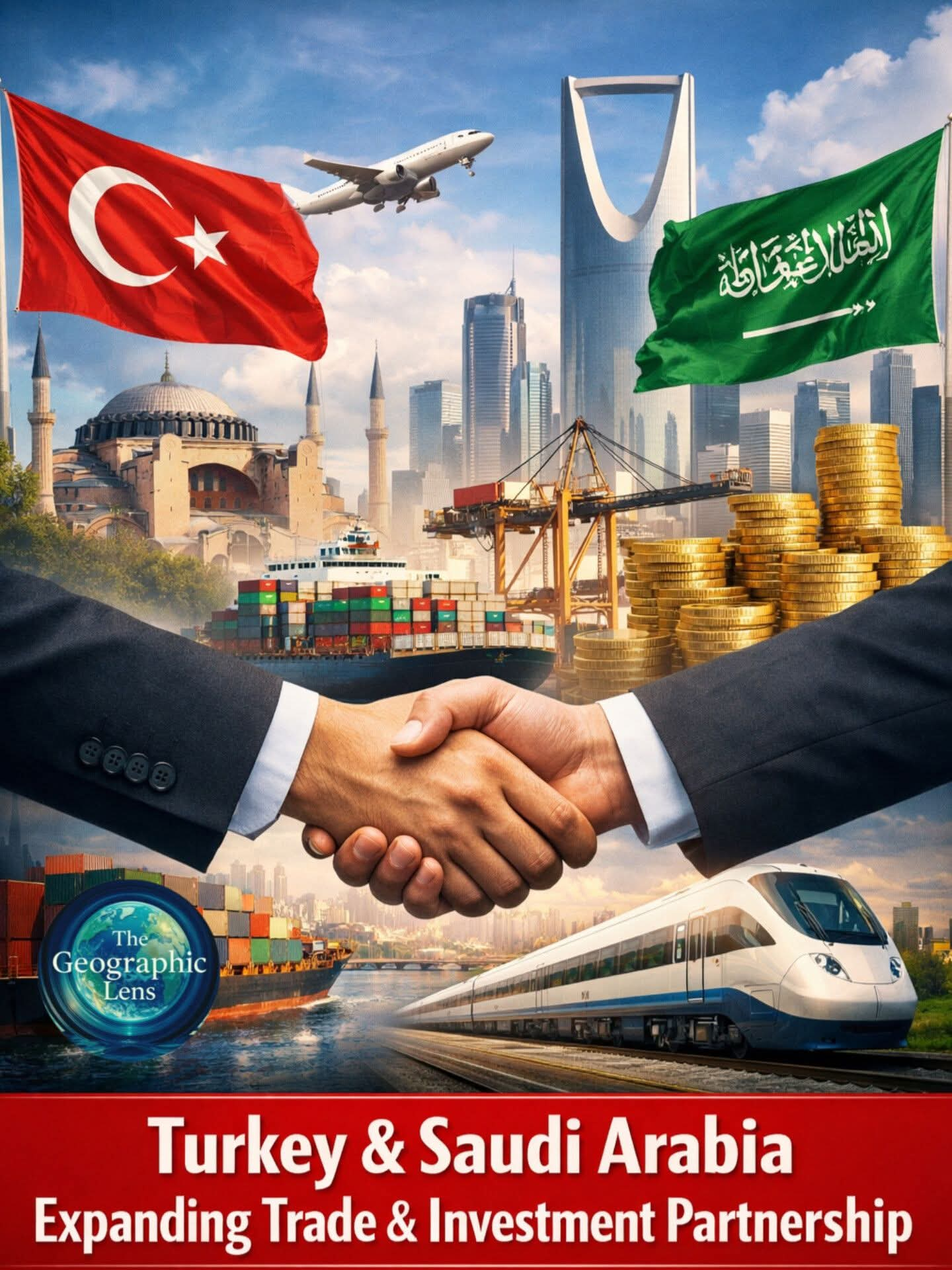
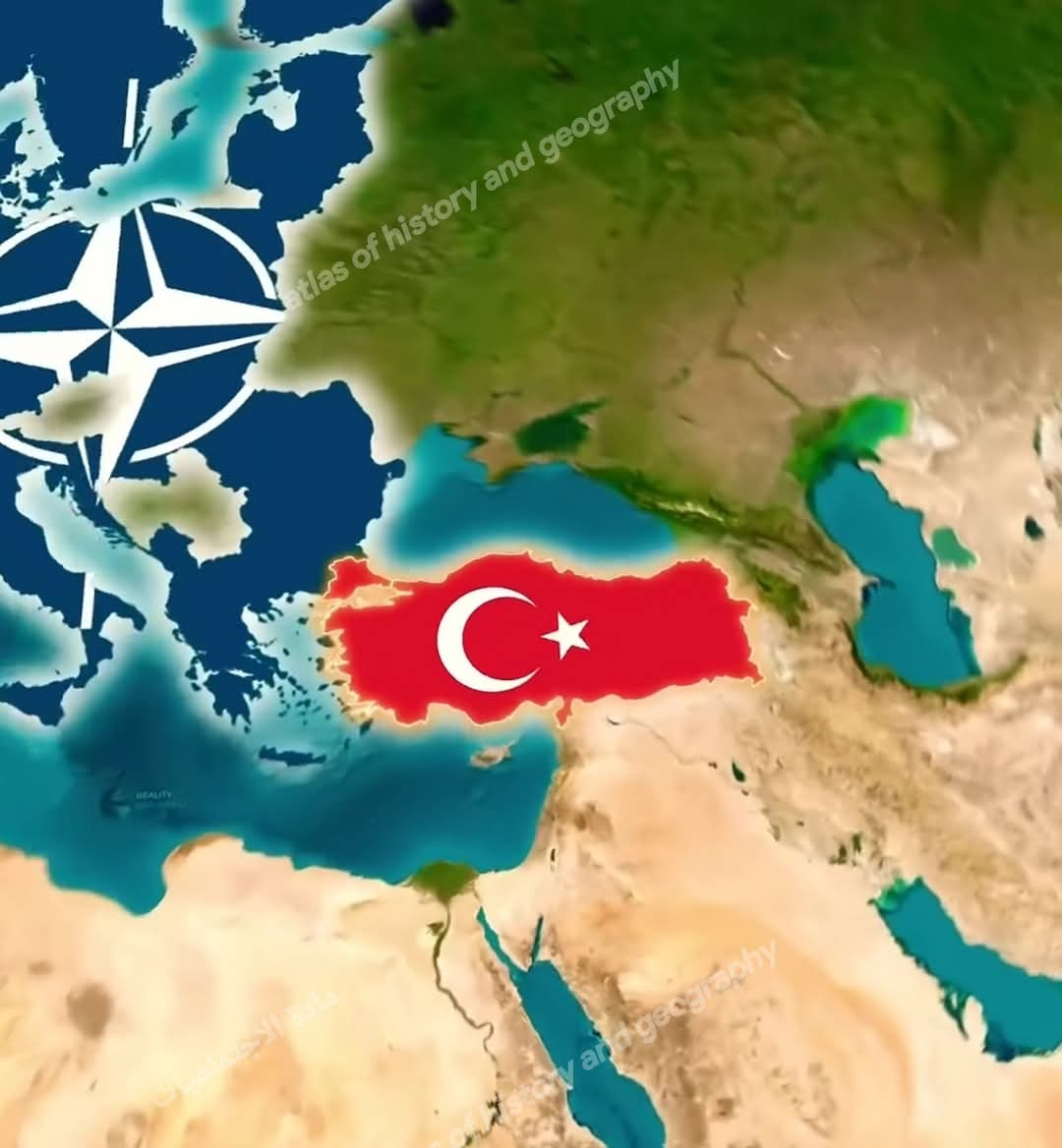
• Turkey–Saudi Arabia … Expanding Trade & Investment Partnership Toward New Economic Opportunities

    Reports indicate that Türkiye and Saudi Arabia have signed a new protocol aimed at strengthening trade and investment relations between the two countries during the conclusion of the third meeting of the Turkish–Saudi Coordination Council.

    Context: The agreement reflects growing economic cooperation between Ankara and Riyadh as both countries seek to expand regional partnerships, diversify investments, and increase bilateral trade opportunities.

    Key dynamics:
    Expanding bilateral trade and investment cooperation
    Strengthening economic coordination between Türkiye and Saudi Arabia
    Supporting joint projects and regional economic partnerships
    Enhancing connectivity between Middle Eastern markets

    Source: Statements from the Turkish Ministry of Trade regarding the Turkish–Saudi Coordination Council meeting

    #Turkey #SaudiArabia #Trade #Investment #Economy #MiddleEast #Diplomacy #Business #BreakingNews
    Turkey–Saudi Arabia ๐Ÿ‡น๐Ÿ‡ท๐Ÿค๐Ÿ‡ธ๐Ÿ‡ฆ… Expanding Trade & Investment Partnership Toward New Economic Opportunities ๐ŸŒ๐Ÿ’ผ Reports indicate that Türkiye and Saudi Arabia have signed a new protocol aimed at strengthening trade and investment relations between the two countries during the conclusion of the third meeting of the Turkish–Saudi Coordination Council. ๐Ÿ“Š Context: The agreement reflects growing economic cooperation between Ankara and Riyadh as both countries seek to expand regional partnerships, diversify investments, and increase bilateral trade opportunities. ๐ŸŒ Key dynamics: ๐Ÿ“ˆ Expanding bilateral trade and investment cooperation ๐Ÿค Strengthening economic coordination between Türkiye and Saudi Arabia ๐Ÿ—๏ธ Supporting joint projects and regional economic partnerships ๐ŸŒ Enhancing connectivity between Middle Eastern markets ๐Ÿ“Œ Source: Statements from the Turkish Ministry of Trade regarding the Turkish–Saudi Coordination Council meeting #Turkey #SaudiArabia #Trade #Investment #Economy #MiddleEast #Diplomacy #Business #BreakingNews
    0 Reacties 0 aandelen
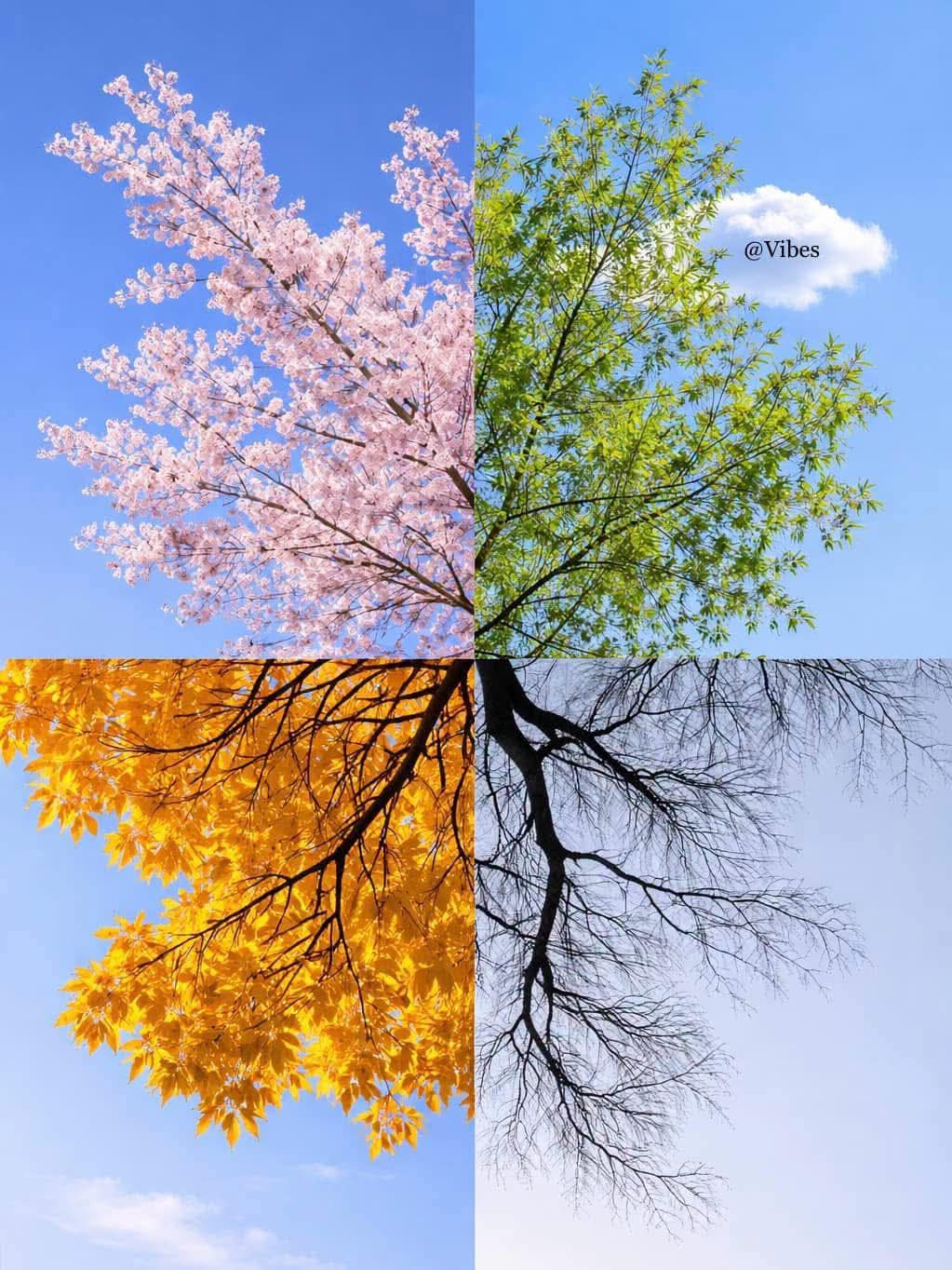
  • Four seasons… one soul
    Life changes, but we keep growing.
    Four seasons… one soul ๐ŸŒธ๐ŸŒฟ๐Ÿ‚โ„๏ธ Life changes, but we keep growing.
    0 Reacties 0 aandelen
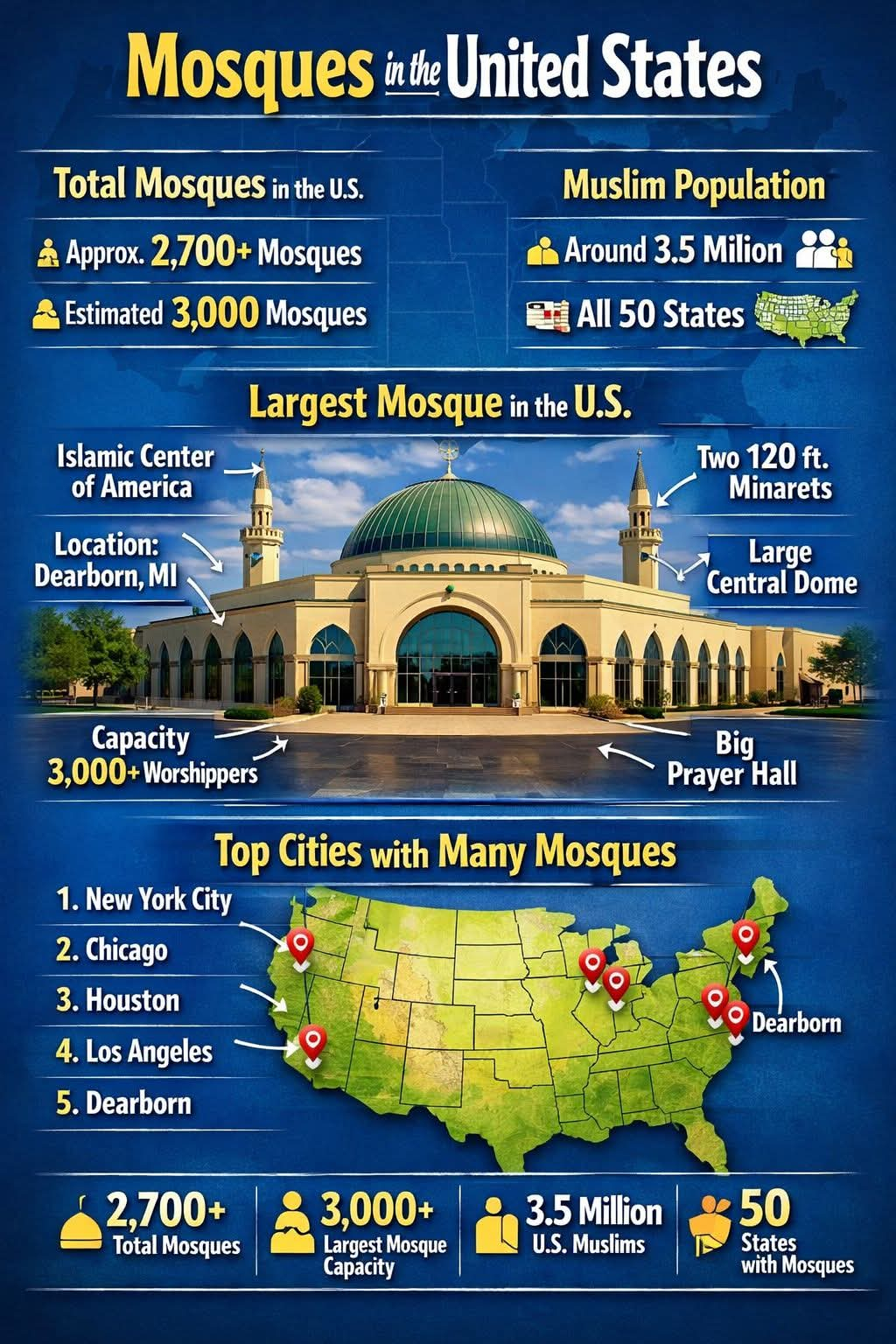
  • The United States has a growing Muslim community and thousands of mosques spread across the country. According to research by the Institute for Social Policy and Understanding, there are approximately 2,700 to 3,000 mosques in America today. These mosques serve as places for daily prayers, Friday congregational prayers, Islamic education, and community activities. Over the past few decades, the number of mosques has increased significantly due to the rising Muslim population and immigration from different parts of the world.
    The Muslim population in the United States is estimated to be around 3.5 million people. Muslims in America come from diverse ethnic backgrounds including Arabs, South Asians, African Americans, Turks, and Africans. Because of this diversity, many mosques also function as cultural and community centers where people gather for religious learning, charity work, and social support.
    One of the largest and most well-known mosques in the country is the Islamic Center of America, located in Dearborn, Michigan. This mosque is famous for its beautiful architecture, large central dome, and tall minarets. It can accommodate more than 3,000 worshippers at a time and is considered one of the biggest Islamic centers in North America.
    Major cities such as New York City, Chicago, Houston, and Los Angeles have many mosques because they have large Muslim populations. These mosques play an important role in maintaining religious identity, promoting community unity, and supporting charitable and educational activities throughout the United States.
    The United States has a growing Muslim community and thousands of mosques spread across the country. According to research by the Institute for Social Policy and Understanding, there are approximately 2,700 to 3,000 mosques in America today. These mosques serve as places for daily prayers, Friday congregational prayers, Islamic education, and community activities. Over the past few decades, the number of mosques has increased significantly due to the rising Muslim population and immigration from different parts of the world. The Muslim population in the United States is estimated to be around 3.5 million people. Muslims in America come from diverse ethnic backgrounds including Arabs, South Asians, African Americans, Turks, and Africans. Because of this diversity, many mosques also function as cultural and community centers where people gather for religious learning, charity work, and social support. One of the largest and most well-known mosques in the country is the Islamic Center of America, located in Dearborn, Michigan. This mosque is famous for its beautiful architecture, large central dome, and tall minarets. It can accommodate more than 3,000 worshippers at a time and is considered one of the biggest Islamic centers in North America. Major cities such as New York City, Chicago, Houston, and Los Angeles have many mosques because they have large Muslim populations. These mosques play an important role in maintaining religious identity, promoting community unity, and supporting charitable and educational activities throughout the United States.
    0 Reacties 0 aandelen
  • Russia’s Growing Muslim Population
    Islam continues to grow in different parts of the world, and Russia is one of the countries where the Muslim population has a significant presence.
    According to reports:
    • Russia has a Muslim population of over 28 Million
    • There are more than 8,000 Mosques across the country
    • Islam is considered the second largest religion in Russia
    Muslims in Russia belong to diverse ethnic groups and regions, contributing richly to the country’s culture, history, and society.
    From historic mosques in Tatarstan and Chechnya to large Islamic centers in major cities, Islam has a deep-rooted presence in the region.
    This reminds us that Islam is truly a global faith — crossing borders, cultures, and languages.
    May Allah keep the Ummah united and firm upon faith. Ameen.

    #Islam
    #IslamicReminder
    #Deen
    #Sunnah
    #MuslimUmmah
    #IslamicPost
    #Faith
    #IslamicMotivation
    #RussiaMuslims
    #IslamInRussia
    #MuslimPopulation
    #GlobalIslam
    Russia’s Growing Muslim Population ๐Ÿ‡ท๐Ÿ‡บ๐Ÿ•Œ Islam continues to grow in different parts of the world, and Russia is one of the countries where the Muslim population has a significant presence. According to reports: • Russia has a Muslim population of over 28 Million • There are more than 8,000 Mosques across the country • Islam is considered the second largest religion in Russia Muslims in Russia belong to diverse ethnic groups and regions, contributing richly to the country’s culture, history, and society. From historic mosques in Tatarstan and Chechnya to large Islamic centers in major cities, Islam has a deep-rooted presence in the region. This reminds us that Islam is truly a global faith — crossing borders, cultures, and languages. May Allah keep the Ummah united and firm upon faith. Ameen. #Islam #IslamicReminder #Deen #Sunnah #MuslimUmmah #IslamicPost #Faith #IslamicMotivation #RussiaMuslims #IslamInRussia #MuslimPopulation #GlobalIslam
    0 Reacties 0 aandelen
  • Turkey’s Population Growth in 2025
    In 2025, Turkey’s population grew by 427,224 people compared to the previous year, reaching a total of 86,092,168 residents.
    This steady rise reflects ongoing demographic momentum shaped by natural growth and social dynamics across the country.

    #fblifestyle
    #Turkey #PopulationGrowth #Demographics #Statistics #2025Data #GlobalTrends #DataUpdate
    Turkey’s Population Growth in 2025๐Ÿ‡น๐Ÿ‡ท๐Ÿ“ˆ In 2025, Turkey’s population grew by 427,224 people compared to the previous year, reaching a total of 86,092,168 residents. This steady rise reflects ongoing demographic momentum shaped by natural growth and social dynamics across the country. ๐ŸŒโœจ #fblifestyle #Turkey #PopulationGrowth #Demographics #Statistics #2025Data #GlobalTrends #DataUpdate
    0 Reacties 0 aandelen
  • Turkey’s Economic Journey: From Crisis to Trillion-Dollar Growth

    From $256B in 1999 to over $1.4T in 2025, Turkey’s GDP story reflects resilience, reform, global challenges, and strong post-pandemic momentum.
    A dynamic transformation shaped by industry, trade, infrastructure, and a young workforce.

    Swipe through the infographic to see how the numbers evolved over 25+ years.

    #fblifestyle
    #Turkey #EconomicGrowth #GDP #GlobalEconomy #EmergingMarkets #Finance #DataVisual #Infographic #EconomicTrends
    Turkey’s Economic๐Ÿ“ˆ๐Ÿ‡น๐Ÿ‡ท Journey: From Crisis to Trillion-Dollar Growth๐ŸŒ From $256B in 1999 to over $1.4T in 2025, Turkey’s GDP story reflects resilience, reform, global challenges, and strong post-pandemic momentum. A dynamic transformation shaped by industry, trade, infrastructure, and a young workforce. Swipe through the infographic to see how the numbers evolved over 25+ years. ๐Ÿ“Šโœจ #fblifestyle #Turkey #EconomicGrowth #GDP #GlobalEconomy #EmergingMarkets #Finance #DataVisual #Infographic #EconomicTrends
    0 Reacties 0 aandelen
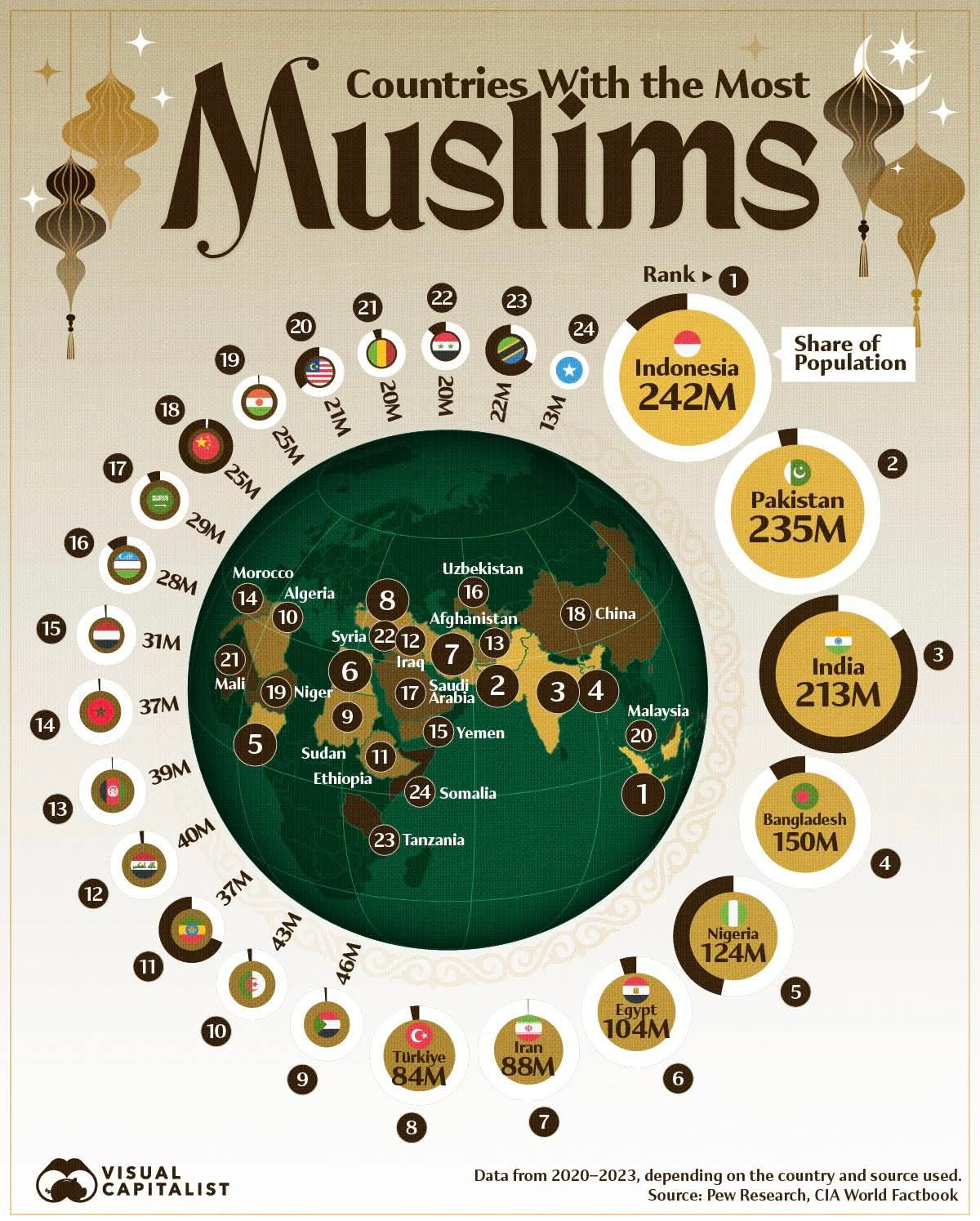
  • Countries With the Most Muslims (% Population)

    1. Indonesia - 242M (87.0%)
    2. Pakistan - 235M (96.3%)
    3. India - 213M (15.3%)
    4. Bangladesh - 150M (91.0%)
    5. Nigeria - 124M (53.5%)
    6. Egypt - 104M (95%)
    7. Iran - 88M (99.8%)
    8. Turkey - 84M (97%)
    9. Sudan - 46M (99%)
    10. Algeria - 43M (98.0%)
    11. Iraq - 40M (98%)
    12. Afghanistan - 39M (99.7%)
    13. Ethiopia - 37M (31.3%)
    14. Morocco - 37M (99.0%)
    15. Yemen - 31M (99.1%)
    16. Saudi Arabia - 29M (92.7%)
    17. Uzbekistan - 28M (88.0%)
    18. China - 25M (1.4%)
    19. Nigér - 25M (99.3%)
    20. Tanzania - 22M (34.1%)
    21. Malaysia - 21M (63.5%)
    22. Mali - 20M (93.9%)
    23. Syria - 20M (87.0%)
    24. Somalia - 13M (99.8%)

    The data comes from two complementary sources: Pew Research, which tracks global religious affiliation, and the CIA World Factbook, which publishes national demographic splits.

    Countries With the Largest Muslim Populations: Islam is the world’s second-largest religion, with 1.8 billion Muslims dispersed across every continent. Due to data constraints, the most recent figures between 2020–2023 have been utilized, depending on availability per country. Africa is home to some of the fastest-growing Muslim populations. Nigeria, already the continent’s most populous country, now counts over 124 million Muslims, comprising more than half its citizens. In North Africa, Egypt and Algeria each report that roughly 95-98% of their inhabitants identify as Muslim, reflecting centuries-old cultural and religious continuity.
    ๐Ÿ•Œ Countries With the Most Muslims (% Population) 1. ๐Ÿ‡ฎ๐Ÿ‡ฉ Indonesia - 242M (87.0%) 2. ๐Ÿ‡ต๐Ÿ‡ฐ Pakistan - 235M (96.3%) 3. ๐Ÿ‡ฎ๐Ÿ‡ณ India - 213M (15.3%) 4. ๐Ÿ‡ง๐Ÿ‡ฉ Bangladesh - 150M (91.0%) 5. ๐Ÿ‡ณ๐Ÿ‡ฌ Nigeria - 124M (53.5%) 6. ๐Ÿ‡ช๐Ÿ‡ฌ Egypt - 104M (95%) 7. ๐Ÿ‡ฎ๐Ÿ‡ท Iran - 88M (99.8%) 8. ๐Ÿ‡น๐Ÿ‡ท Turkey - 84M (97%) 9. ๐Ÿ‡ธ๐Ÿ‡ฉ Sudan - 46M (99%) 10. ๐Ÿ‡ฉ๐Ÿ‡ฟ Algeria - 43M (98.0%) 11. ๐Ÿ‡ฎ๐Ÿ‡ถ Iraq - 40M (98%) 12. ๐Ÿ‡ฆ๐Ÿ‡ซ Afghanistan - 39M (99.7%) 13. ๐Ÿ‡ช๐Ÿ‡น Ethiopia - 37M (31.3%) 14. ๐Ÿ‡ฒ๐Ÿ‡ฆ Morocco - 37M (99.0%) 15. ๐Ÿ‡พ๐Ÿ‡ช Yemen - 31M (99.1%) 16. ๐Ÿ‡ธ๐Ÿ‡ฆ Saudi Arabia - 29M (92.7%) 17. ๐Ÿ‡บ๐Ÿ‡ฟ Uzbekistan - 28M (88.0%) 18. ๐Ÿ‡จ๐Ÿ‡ณ China - 25M (1.4%) 19. ๐Ÿ‡ณ๐Ÿ‡ช Nigér - 25M (99.3%) 20. ๐Ÿ‡น๐Ÿ‡ฟ Tanzania - 22M (34.1%) 21. ๐Ÿ‡ฒ๐Ÿ‡พ Malaysia - 21M (63.5%) 22. ๐Ÿ‡ฒ๐Ÿ‡ฑ Mali - 20M (93.9%) 23. ๐Ÿ‡ธ๐Ÿ‡พ Syria - 20M (87.0%) 24. ๐Ÿ‡ธ๐Ÿ‡ด Somalia - 13M (99.8%) ๐Ÿ“Œ The data comes from two complementary sources: Pew Research, which tracks global religious affiliation, and the CIA World Factbook, which publishes national demographic splits. Countries With the Largest Muslim Populations: Islam is the world’s second-largest religion, with 1.8 billion Muslims dispersed across every continent. Due to data constraints, the most recent figures between 2020–2023 have been utilized, depending on availability per country. Africa is home to some of the fastest-growing Muslim populations. Nigeria, already the continent’s most populous country, now counts over 124 million Muslims, comprising more than half its citizens. In North Africa, Egypt and Algeria each report that roughly 95-98% of their inhabitants identify as Muslim, reflecting centuries-old cultural and religious continuity.
    0 Reacties 0 aandelen
  • Istanbul Airport (IST) has achieved an impressive milestone: it is now the most connected airport in the world, with direct flights to 310 international destinations. This vast air network makes it a true global hub, connecting Europe, Asia, Africa and even parts of the Americas quickly and efficiently.

    Despite this, IST only ranks 7th in the world ranking for passenger movement. In other words, although it is the absolute leader in connectivity, there are still other airports with a higher volume of travelers, such as Atlanta (USA), Dubai and London-Heathrow.

    This difference shows that connectivity is not the same as volume. While airports like Atlanta concentrate domestic flights and local passengers, Istanbul focuses on connecting between continents, serving as a strategic point for international stopovers.

    The airport's success is also linked to the growth of Turkish Airlines, one of the companies that flies the most to different countries in the world.
    Istanbul Airport (IST) has achieved an impressive milestone: it is now the most connected airport in the world, with direct flights to 310 international destinations. This vast air network makes it a true global hub, connecting Europe, Asia, Africa and even parts of the Americas quickly and efficiently. Despite this, IST only ranks 7th in the world ranking for passenger movement. In other words, although it is the absolute leader in connectivity, there are still other airports with a higher volume of travelers, such as Atlanta (USA), Dubai and London-Heathrow. This difference shows that connectivity is not the same as volume. While airports like Atlanta concentrate domestic flights and local passengers, Istanbul focuses on connecting between continents, serving as a strategic point for international stopovers. The airport's success is also linked to the growth of Turkish Airlines, one of the companies that flies the most to different countries in the world.
    0 Reacties 0 aandelen
  • #Turkey is located at the crossroads of Asia and Europe. It is bordered by Greece and Bulgaria to the northwest, the Black Sea to the north, Georgia to the northeast, Armenia, the Azerbaijani exclave of Nakhchivan, and Iran to the east, Iraq to the southeast, Syria and the Mediterranean Sea to the south, and the Aegean Sea to the west.
    Area: 783,562 square kilometers.
    Topography: Includes the Taurus Mountains in the south, the Pontic Mountains in the north, fertile plains like the Anatolian Plain, and the Central Anatolian Plateau, along with lakes such as Lake Van.
    Water Bodies: Borders four major seas: the Black Sea, the Sea of Marmara, the Aegean Sea, and the Mediterranean Sea.
    2. Climate:
    Coastal Areas:
    Mediterranean and Aegean Coasts: Mediterranean climate with hot, dry summers and mild, wet winters.
    Black Sea Coast: Moderate and humid climate year-round.
    Inland Regions: Continental climate with hot, dry summers and very cold, snowy winters.
    Climate Change: Turkey faces challenges like drought and rising temperatures due to climate change.
    3. Population:
    Population Size: Approximately 84.5 million (2021).
    Population Distribution: Istanbul is the largest city with over 15.5 million residents. Ankara is the second largest, followed by Izmir, Bursa, and Antalya.
    Ethnic Diversity: Predominantly Turks, with a significant Kurdish minority, and smaller Armenian, Arab, and Greek communities.
    Population Growth: About 1.2% annually.
    4. Economy:
    GDP: Approximately $7.209 trillion in 2021.
    Exports: Includes agricultural products, automobiles, textiles, and electronics, valued at $225 billion.
    Imports: Mainly energy and raw materials, totaling $271 billion.
    Unemployment Rate: Around 10.3%.
    Agriculture and Industry: Notable for wheat, hazelnuts, and olives, as well as being a leading producer of automobiles and steel.
    5. Currency:
    The official currency is the Turkish Lira (TRY), which experiences fluctuations in value against foreign currencies.
    6. Tourism:
    Visitor Numbers: Turkey welcomed around 30 million tourists in 2021.
    Revenue: Approximately $24.5 billion.
    Top Destinations:
    Istanbul: Iconic landmarks like Hagia Sophia, the Blue Mosque, and Topkapi Palace.
    Antalya: A hub for coastal tourism.
    Cappadocia: Known for its unique landscapes and hot air balloons.
    Historical Sites: Ephesus and Troy.
    7. History:
    Civilizations: Turkey has been home to various civilizations, including the Hittites, Persians, Romans, and Byzantines.
    Ottoman Era: Spanned from the 14th century to the early 20th century.
    Modern Republic: Established in 1923 under Mustafa Kemal Atatürk, who moved the capital to Ankara and initiated widespread reforms.
    8. Education:
    Education System: Mandatory for 12 years (6 years primary, 3 years middle, 3 years secondary).
    Higher Education: Home to numerous universities, including Istanbul University and Middle East Technical University.
    Literacy Rate: Approximately 96%.
    9. Healthcare:
    Healthcare System: Turkey has a well-developed healthcare system encompassing public and private sectors.
    Medical Tourism: A popular destination for medical and cosmetic treatments, attracting thousands of patients annually.
    Hospitals: Equipped with state-of-the-art medical technology.
    10. Culture:
    Official Language: Turkish.
    Religion: Islam is the predominant religion, with Christian and Jewish minorities.
    Traditions: A blend of Eastern and Western cultural influences.
    Turkey serves as a bridge between East and West, with a rich history and modern development.
    #Turkey is located at the crossroads of Asia and Europe. It is bordered by Greece and Bulgaria to the northwest, the Black Sea to the north, Georgia to the northeast, Armenia, the Azerbaijani exclave of Nakhchivan, and Iran to the east, Iraq to the southeast, Syria and the Mediterranean Sea to the south, and the Aegean Sea to the west. Area: 783,562 square kilometers. Topography: Includes the Taurus Mountains in the south, the Pontic Mountains in the north, fertile plains like the Anatolian Plain, and the Central Anatolian Plateau, along with lakes such as Lake Van. Water Bodies: Borders four major seas: the Black Sea, the Sea of Marmara, the Aegean Sea, and the Mediterranean Sea. ๐ŸŒ 2. Climate: Coastal Areas: Mediterranean and Aegean Coasts: Mediterranean climate with hot, dry summers and mild, wet winters. Black Sea Coast: Moderate and humid climate year-round. Inland Regions: Continental climate with hot, dry summers and very cold, snowy winters. Climate Change: Turkey faces challenges like drought and rising temperatures due to climate change. ๐ŸŒ 3. Population: Population Size: Approximately 84.5 million (2021). Population Distribution: Istanbul is the largest city with over 15.5 million residents. Ankara is the second largest, followed by Izmir, Bursa, and Antalya. Ethnic Diversity: Predominantly Turks, with a significant Kurdish minority, and smaller Armenian, Arab, and Greek communities. Population Growth: About 1.2% annually. ๐ŸŒ 4. Economy: GDP: Approximately $7.209 trillion in 2021. Exports: Includes agricultural products, automobiles, textiles, and electronics, valued at $225 billion. Imports: Mainly energy and raw materials, totaling $271 billion. Unemployment Rate: Around 10.3%. Agriculture and Industry: Notable for wheat, hazelnuts, and olives, as well as being a leading producer of automobiles and steel. ๐ŸŒ 5. Currency: The official currency is the Turkish Lira (TRY), which experiences fluctuations in value against foreign currencies. ๐ŸŒ 6. Tourism: Visitor Numbers: Turkey welcomed around 30 million tourists in 2021. Revenue: Approximately $24.5 billion. Top Destinations: Istanbul: Iconic landmarks like Hagia Sophia, the Blue Mosque, and Topkapi Palace. Antalya: A hub for coastal tourism. Cappadocia: Known for its unique landscapes and hot air balloons. Historical Sites: Ephesus and Troy. ๐ŸŒ 7. History: Civilizations: Turkey has been home to various civilizations, including the Hittites, Persians, Romans, and Byzantines. Ottoman Era: Spanned from the 14th century to the early 20th century. Modern Republic: Established in 1923 under Mustafa Kemal Atatürk, who moved the capital to Ankara and initiated widespread reforms. ๐ŸŒ 8. Education: Education System: Mandatory for 12 years (6 years primary, 3 years middle, 3 years secondary). Higher Education: Home to numerous universities, including Istanbul University and Middle East Technical University. Literacy Rate: Approximately 96%. ๐ŸŒ 9. Healthcare: Healthcare System: Turkey has a well-developed healthcare system encompassing public and private sectors. Medical Tourism: A popular destination for medical and cosmetic treatments, attracting thousands of patients annually. Hospitals: Equipped with state-of-the-art medical technology. ๐ŸŒ 10. Culture: Official Language: Turkish. Religion: Islam is the predominant religion, with Christian and Jewish minorities. Traditions: A blend of Eastern and Western cultural influences. Turkey serves as a bridge between East and West, with a rich history and modern development.
    0 Reacties 0 aandelen
  • Turkey: The Golden Bridge Between East and West
    1. Location & Area
    Turkey spans both Asia and Europe, with a total area of approximately 783,562 km², making it one of the largest countries in the region.

    2. Land of Geographical Diversity
    From Mediterranean coastlines to Anatolian mountains, Turkey offers rich landscapes and diverse cultures.

    3. Ottoman Heritage & Modern Civilization
    With deep roots in the Ottoman Empire, Turkey is filled with historic landmarks like Hagia Sophia and Topkapi Palace.

    4. Population
    Turkey has about 85 million people, mainly concentrated in Istanbul, Ankara, and Izmir.

    5. A Vibrant and Growing Economy
    Its economy is based on industry, tourism, and agriculture, and is considered one of the world’s leading emerging markets.

    6. A Regional Transport Hub
    Turkey acts as a key transport link between Europe and Asia, with modern airways and high-speed rail networks.

    7. A Unique Cultural Identity
    It blends modernity with Islamic traditions, offering a mix of cuisines, arts, and customs from both East and West.

    8. Sports & Entertainment
    Football is the most popular sport, with iconic clubs like Galatasaray and Fenerbahçe based in Istanbul.

    9. Advanced Education & Top Universities
    Turkey attracts international students, especially in fields like medicine, engineering, and political science.

    #Turkey #Istanbul #Anatolia
    Turkey: The Golden Bridge Between East and West 1. ๐Ÿ—บ๏ธ๐Ÿ“ Location & Area Turkey spans both Asia and Europe, with a total area of approximately 783,562 km², making it one of the largest countries in the region. 2. ๐Ÿ‡น๐Ÿ‡ท๐Ÿž๏ธ Land of Geographical Diversity From Mediterranean coastlines to Anatolian mountains, Turkey offers rich landscapes and diverse cultures. 3. ๐Ÿ•Œ๐Ÿ›๏ธ Ottoman Heritage & Modern Civilization With deep roots in the Ottoman Empire, Turkey is filled with historic landmarks like Hagia Sophia and Topkapi Palace. 4. ๐Ÿ‘ฅ๐Ÿ“Š Population Turkey has about 85 million people, mainly concentrated in Istanbul, Ankara, and Izmir. 5. ๐Ÿ’น๐Ÿ—๏ธ A Vibrant and Growing Economy Its economy is based on industry, tourism, and agriculture, and is considered one of the world’s leading emerging markets. 6. โœˆ๏ธ๐Ÿš… A Regional Transport Hub Turkey acts as a key transport link between Europe and Asia, with modern airways and high-speed rail networks. 7. ๐Ÿ•Œ๐Ÿง• A Unique Cultural Identity It blends modernity with Islamic traditions, offering a mix of cuisines, arts, and customs from both East and West. 8. โšฝ๐ŸŽญ Sports & Entertainment Football is the most popular sport, with iconic clubs like Galatasaray and Fenerbahçe based in Istanbul. 9. ๐Ÿง ๐ŸŽ“ Advanced Education & Top Universities Turkey attracts international students, especially in fields like medicine, engineering, and political science. #Turkey #Istanbul #Anatolia
    0 Reacties 0 aandelen
Zoekresultaten