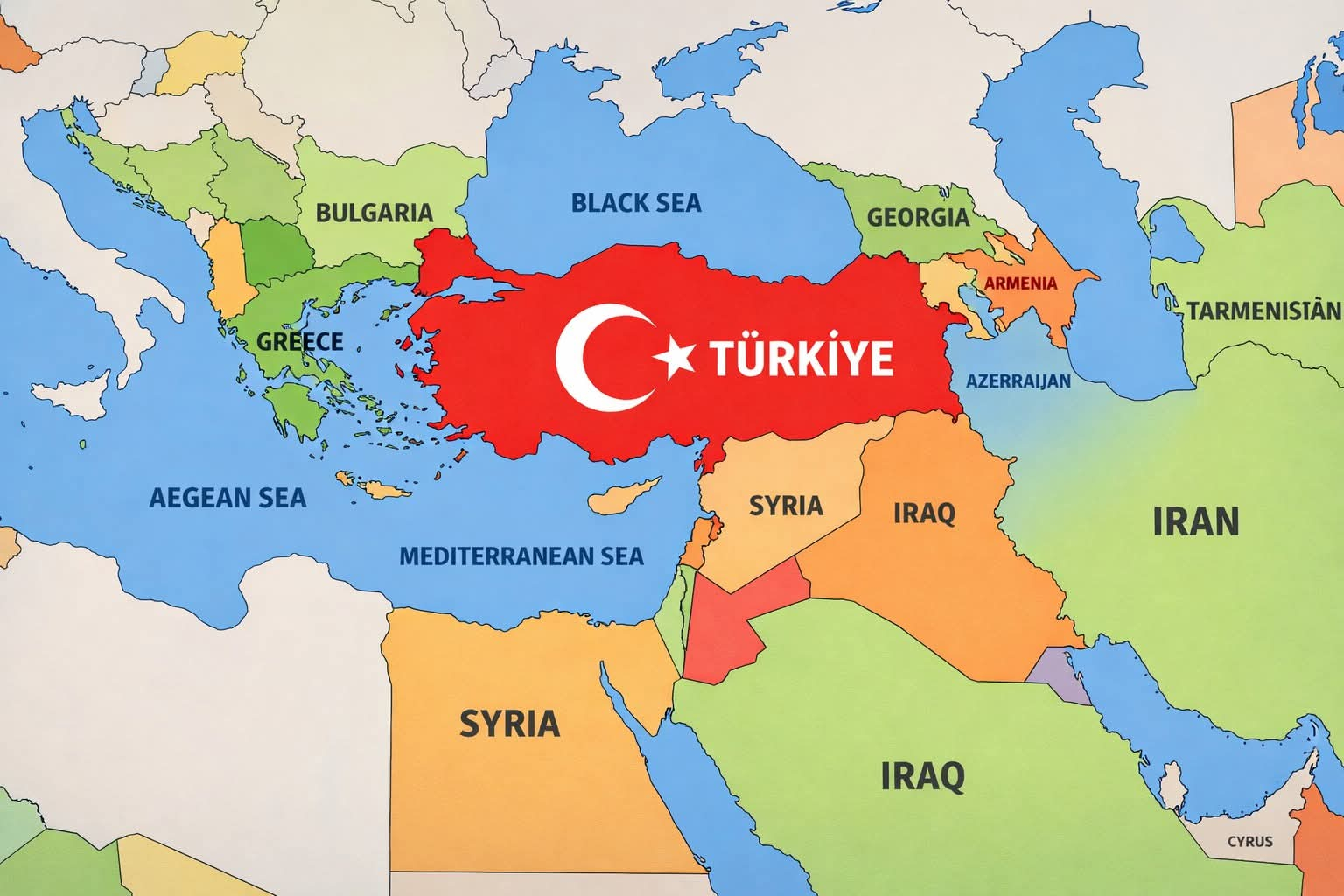
• TURKEY
    Things you probably didn’t know about Türkiye (breaking common myths):

    A bridge between continents: One of the few countries in the world that spans both Europe and Asia — with Istanbul divided by the Bosphorus Strait.

    Not the capital you think: While Istanbul is the most famous city, the real capital is Ankara.

    Empire legacy: The heart of the Ottoman Empire for over 600 years, influencing Europe, Asia, and Africa.

    Hagia Sophia is unique: The iconic Hagia Sophia has served as a church, mosque, and museum throughout history.

    Cradle of civilizations: Home to ancient cultures like the Hittites, Greeks, and Romans — leaving behind incredible archaeological heritage.

    Tea > Coffee: Contrary to popular belief, tea is consumed more than coffee and is a daily essential.

    Turkish baths: The famous “hammam” is a centuries-old tradition of relaxation and cleansing from the Ottoman era.

    Unreal landscapes: Places like Cappadocia are known for fairy chimneys and breathtaking hot air balloon rides.

    Rich cuisine: From kebabs to baklava and Turkish delight, Turkish food is loved worldwide.

    Strategic location: Controls key routes between the Black Sea and the Mediterranean — making it geopolitically important.

    Historic bazaars: The Grand Bazaar in Istanbul is one of the oldest and largest covered markets in the world.

    Cultural diversity: A unique blend of European, Asian, and Middle Eastern influences in architecture, music, and traditions.

    Global TV hits: Turkish series and films are hugely popular in Latin America and beyond.

    Follow for more amazing facts!
    Like | Comment | Share

    #Turkey #Türkiye #Travel #History #Culture #Explore
    🇹🇷 TURKEY 🇹🇷 🧠😍 Things you probably didn’t know about Türkiye (breaking common myths): 👏👏 🌍 A bridge between continents: One of the few countries in the world that spans both Europe and Asia — with Istanbul divided by the Bosphorus Strait. 🏛️ Not the capital you think: While Istanbul is the most famous city, the real capital is Ankara. 👑 Empire legacy: The heart of the Ottoman Empire for over 600 years, influencing Europe, Asia, and Africa. 🕌 Hagia Sophia is unique: The iconic Hagia Sophia has served as a church, mosque, and museum throughout history. 🏺 Cradle of civilizations: Home to ancient cultures like the Hittites, Greeks, and Romans — leaving behind incredible archaeological heritage. 🍵 Tea > Coffee: Contrary to popular belief, tea is consumed more than coffee and is a daily essential. 🛁 Turkish baths: The famous “hammam” is a centuries-old tradition of relaxation and cleansing from the Ottoman era. 🎈 Unreal landscapes: Places like Cappadocia are known for fairy chimneys and breathtaking hot air balloon rides. 🍽️ Rich cuisine: From kebabs to baklava and Turkish delight, Turkish food is loved worldwide. 🌐 Strategic location: Controls key routes between the Black Sea and the Mediterranean — making it geopolitically important. 🛍️ Historic bazaars: The Grand Bazaar in Istanbul is one of the oldest and largest covered markets in the world. 🎶 Cultural diversity: A unique blend of European, Asian, and Middle Eastern influences in architecture, music, and traditions. 📺 Global TV hits: Turkish series and films are hugely popular in Latin America and beyond. 👉 Follow for more amazing facts! 🌍✨ ❤️ Like | 💬 Comment | 🔁 Share #Turkey #Türkiye #Travel #History #Culture #Explore
    1
    0 Commentarii 0 Distribuiri
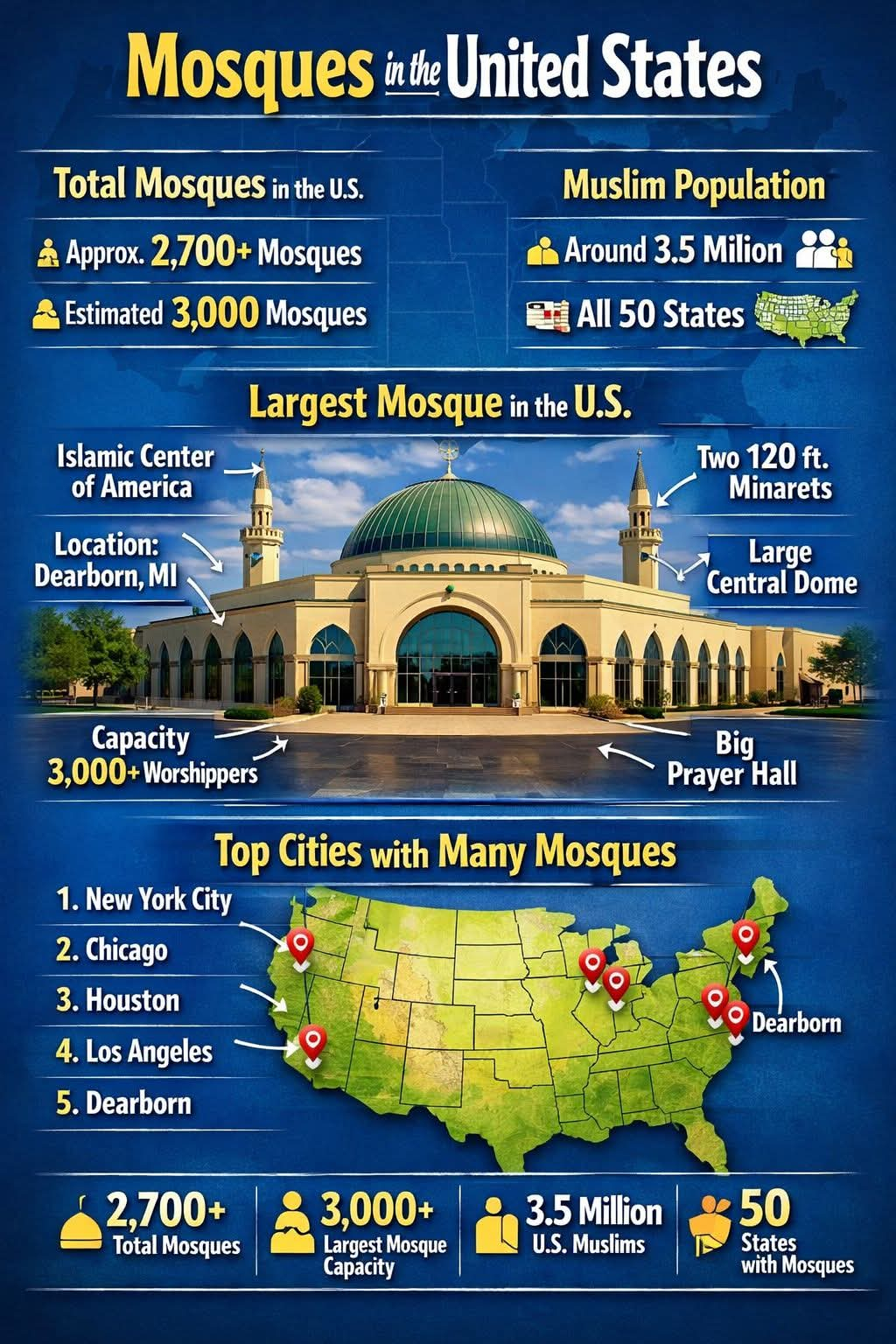
  • The United States has a growing Muslim community and thousands of mosques spread across the country. According to research by the Institute for Social Policy and Understanding, there are approximately 2,700 to 3,000 mosques in America today. These mosques serve as places for daily prayers, Friday congregational prayers, Islamic education, and community activities. Over the past few decades, the number of mosques has increased significantly due to the rising Muslim population and immigration from different parts of the world.
    The Muslim population in the United States is estimated to be around 3.5 million people. Muslims in America come from diverse ethnic backgrounds including Arabs, South Asians, African Americans, Turks, and Africans. Because of this diversity, many mosques also function as cultural and community centers where people gather for religious learning, charity work, and social support.
    One of the largest and most well-known mosques in the country is the Islamic Center of America, located in Dearborn, Michigan. This mosque is famous for its beautiful architecture, large central dome, and tall minarets. It can accommodate more than 3,000 worshippers at a time and is considered one of the biggest Islamic centers in North America.
    Major cities such as New York City, Chicago, Houston, and Los Angeles have many mosques because they have large Muslim populations. These mosques play an important role in maintaining religious identity, promoting community unity, and supporting charitable and educational activities throughout the United States.
    The United States has a growing Muslim community and thousands of mosques spread across the country. According to research by the Institute for Social Policy and Understanding, there are approximately 2,700 to 3,000 mosques in America today. These mosques serve as places for daily prayers, Friday congregational prayers, Islamic education, and community activities. Over the past few decades, the number of mosques has increased significantly due to the rising Muslim population and immigration from different parts of the world. The Muslim population in the United States is estimated to be around 3.5 million people. Muslims in America come from diverse ethnic backgrounds including Arabs, South Asians, African Americans, Turks, and Africans. Because of this diversity, many mosques also function as cultural and community centers where people gather for religious learning, charity work, and social support. One of the largest and most well-known mosques in the country is the Islamic Center of America, located in Dearborn, Michigan. This mosque is famous for its beautiful architecture, large central dome, and tall minarets. It can accommodate more than 3,000 worshippers at a time and is considered one of the biggest Islamic centers in North America. Major cities such as New York City, Chicago, Houston, and Los Angeles have many mosques because they have large Muslim populations. These mosques play an important role in maintaining religious identity, promoting community unity, and supporting charitable and educational activities throughout the United States.
    0 Commentarii 0 Distribuiri
  • Thought the Middle East had the most Muslims? Think again!
    Indonesia alone has 242 million Muslims — more than the entire Middle East and North Africa region combined (which totals around 400–450 million across dozens of countries). Right behind are Pakistan (235M), India (213M), Bangladesh (150M+), and others, showing how South & Southeast Asia actually dominate the global picture, home to the largest concentrations of the world's 1.8+ billion Muslims.
    Thought the Middle East had the most Muslims? Think again! Indonesia alone has 242 million Muslims — more than the entire Middle East and North Africa region combined (which totals around 400–450 million across dozens of countries). Right behind are Pakistan (235M), India (213M), Bangladesh (150M+), and others, showing how South & Southeast Asia actually dominate the global picture, home to the largest concentrations of the world's 1.8+ billion Muslims.
    0 Commentarii 0 Distribuiri
  • Africa stands at the heart of the world’s camel population, holding a clear lead in global numbers and reaffirming its deep agricultural and pastoral heritage. Of the more than 40 million camels worldwide, over 80% are found across the African continent, according to the Food and Agriculture Organization (FAO).

    These resilient animals remain vital to food security, transport, and tourism, serving as livelihoods for millions of people. Here are the top 10 camel-rich countries in the world.
    Africa stands at the heart of the world’s camel population, holding a clear lead in global numbers and reaffirming its deep agricultural and pastoral heritage. Of the more than 40 million camels worldwide, over 80% are found across the African continent, according to the Food and Agriculture Organization (FAO). These resilient animals remain vital to food security, transport, and tourism, serving as livelihoods for millions of people. Here are the top 10 camel-rich countries in the world.
    0 Commentarii 0 Distribuiri
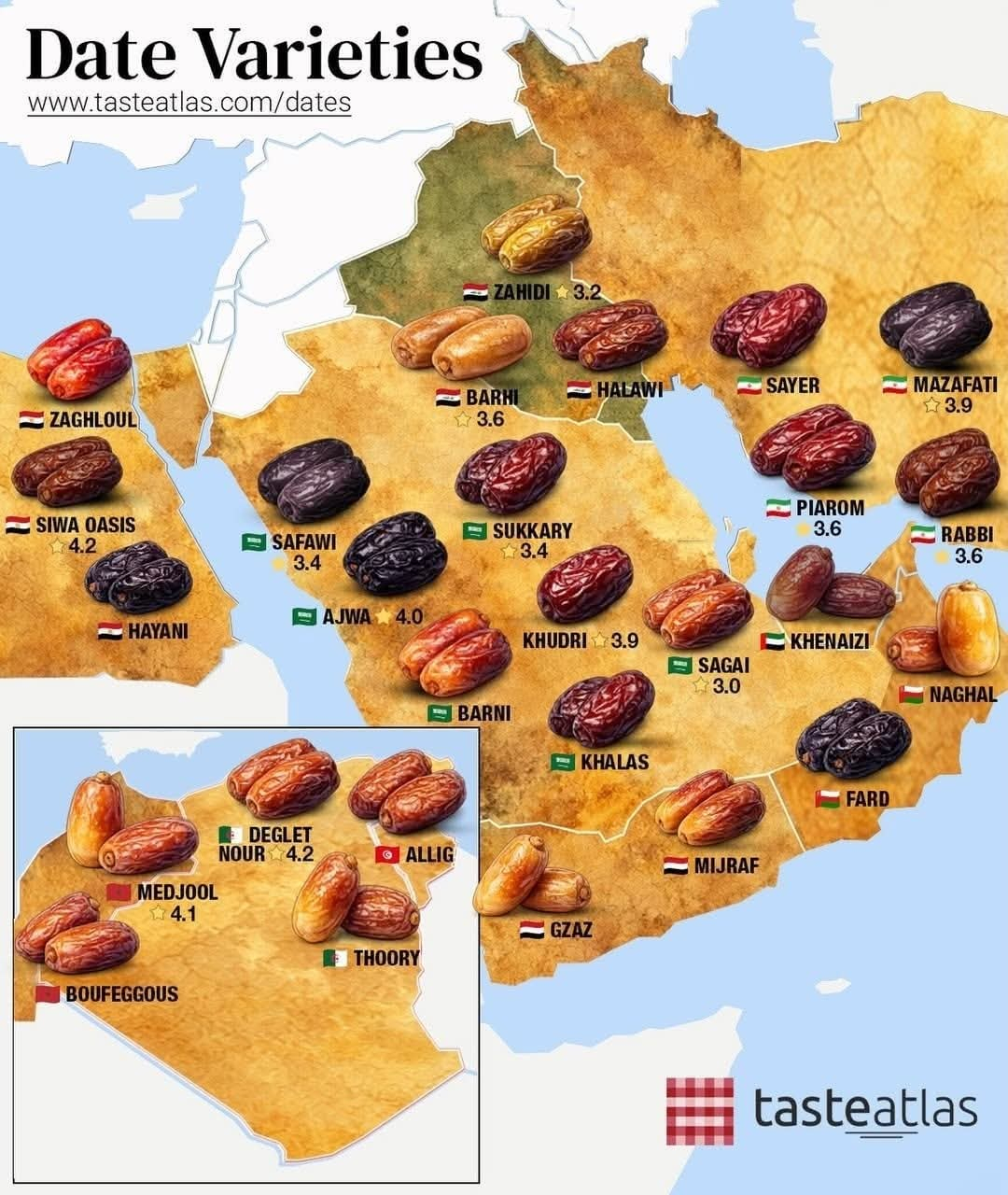
  • From the plush, caramel-rich Medjool of Morocco to the firm, nutty Deglet Noor of Algeria and the dark, “holy” Ajwa of Medina, the Middle East and North Africa offer hundreds of distinct date types that vary wildly in taste and texture. From syrupy and soft to dry and bread-like, each serving a specific purpose whether enjoyed as a fresh snack, a natural sweetener in baking, or a traditional gift. More than just a superfruit, dates are a vital cultural cornerstone and a “desert staple” that have provided essential nutrition, hospitality, and spiritual significance to the region for millennia.

    Ramadan is so close. May Allah allow Us to reach it in good health
    From the plush, caramel-rich Medjool of Morocco to the firm, nutty Deglet Noor of Algeria and the dark, “holy” Ajwa of Medina, the Middle East and North Africa offer hundreds of distinct date types that vary wildly in taste and texture. From syrupy and soft to dry and bread-like, each serving a specific purpose whether enjoyed as a fresh snack, a natural sweetener in baking, or a traditional gift. More than just a superfruit, dates are a vital cultural cornerstone and a “desert staple” that have provided essential nutrition, hospitality, and spiritual significance to the region for millennia. Ramadan is so close. May Allah allow Us to reach it in good health
    0 Commentarii 0 Distribuiri
  • The Ottoman Empire at Its Peak – 1683

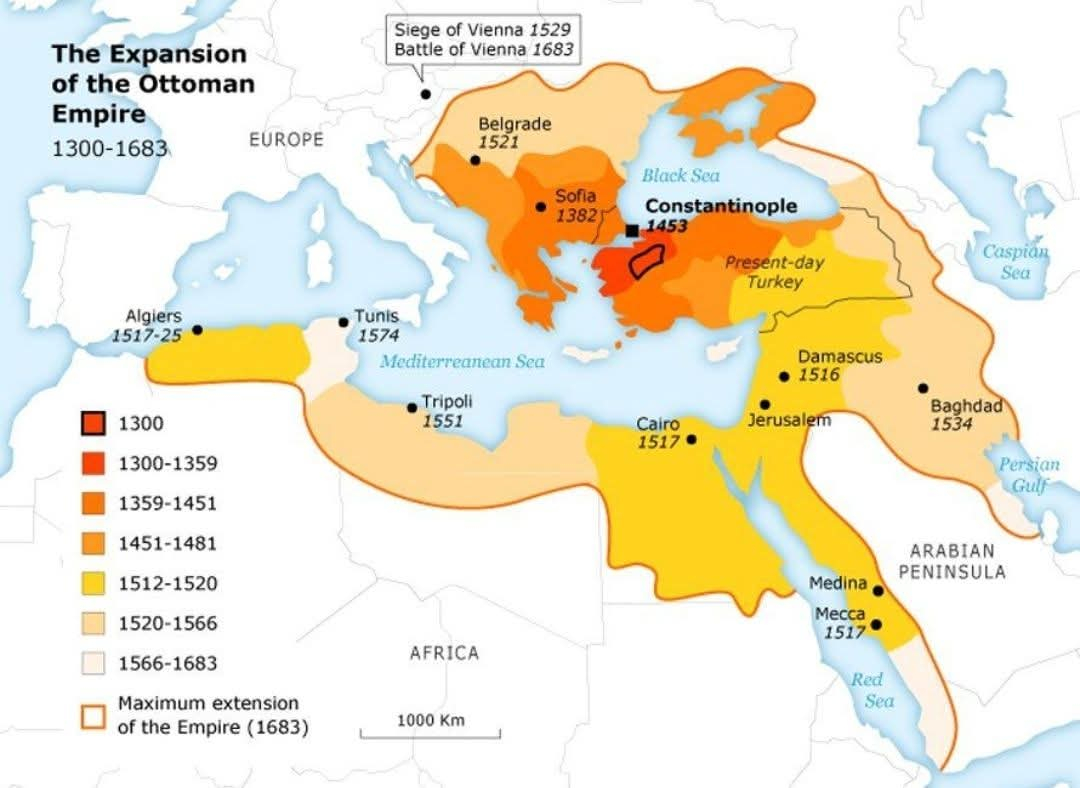
    In 1683, the Ottoman Empire stood as one of the world’s most powerful states, stretching across three continents.

    Territory – From Hungary in the heart of Europe to the Arabian deserts, from North Africa to the Caucasus, the empire spanned 6-7 million square kilometers.

    Capital – Istanbul, once Constantinople, was a global hub of trade, culture, and politics.

    Diversity – The empire united Turks, Arabs, Kurds, Greeks, Armenians, Slavs, Jews, and many more under a vast administrative system.

    Military Power – The Janissaries and navy projected influence across the Mediterranean, Red Sea, and beyond.

    1683 Vienna Campaign – Marked the high tide of Ottoman expansion into Europe, though the failed siege of Vienna also signaled the turning point of imperial fortunes.

    The Ottoman Empire in 1683 was not just a political force — it was a cultural mosaic and a major player in global history.

    A true ISLAMIC UNITY is not only the only solution to provide Peace, Tranquility, and Security today — just as the Ottoman State ensured for 600 years — but also the only path for the economic development of poor Islamic countries.
    The Ottoman Empire at Its Peak – 1683 In 1683, the Ottoman Empire stood as one of the world’s most powerful states, stretching across three continents. 🔹 Territory – From Hungary in the heart of Europe to the Arabian deserts, from North Africa to the Caucasus, the empire spanned 6-7 million square kilometers. 🔹 Capital – Istanbul, once Constantinople, was a global hub of trade, culture, and politics. 🔹 Diversity – The empire united Turks, Arabs, Kurds, Greeks, Armenians, Slavs, Jews, and many more under a vast administrative system. 🔹 Military Power – The Janissaries and navy projected influence across the Mediterranean, Red Sea, and beyond. 🔹 1683 Vienna Campaign – Marked the high tide of Ottoman expansion into Europe, though the failed siege of Vienna also signaled the turning point of imperial fortunes. The Ottoman Empire in 1683 was not just a political force — it was a cultural mosaic and a major player in global history. A true ISLAMIC UNITY is not only the only solution to provide Peace, Tranquility, and Security today — just as the Ottoman State ensured for 600 years — but also the only path for the economic development of poor Islamic countries.
    0 Commentarii 0 Distribuiri
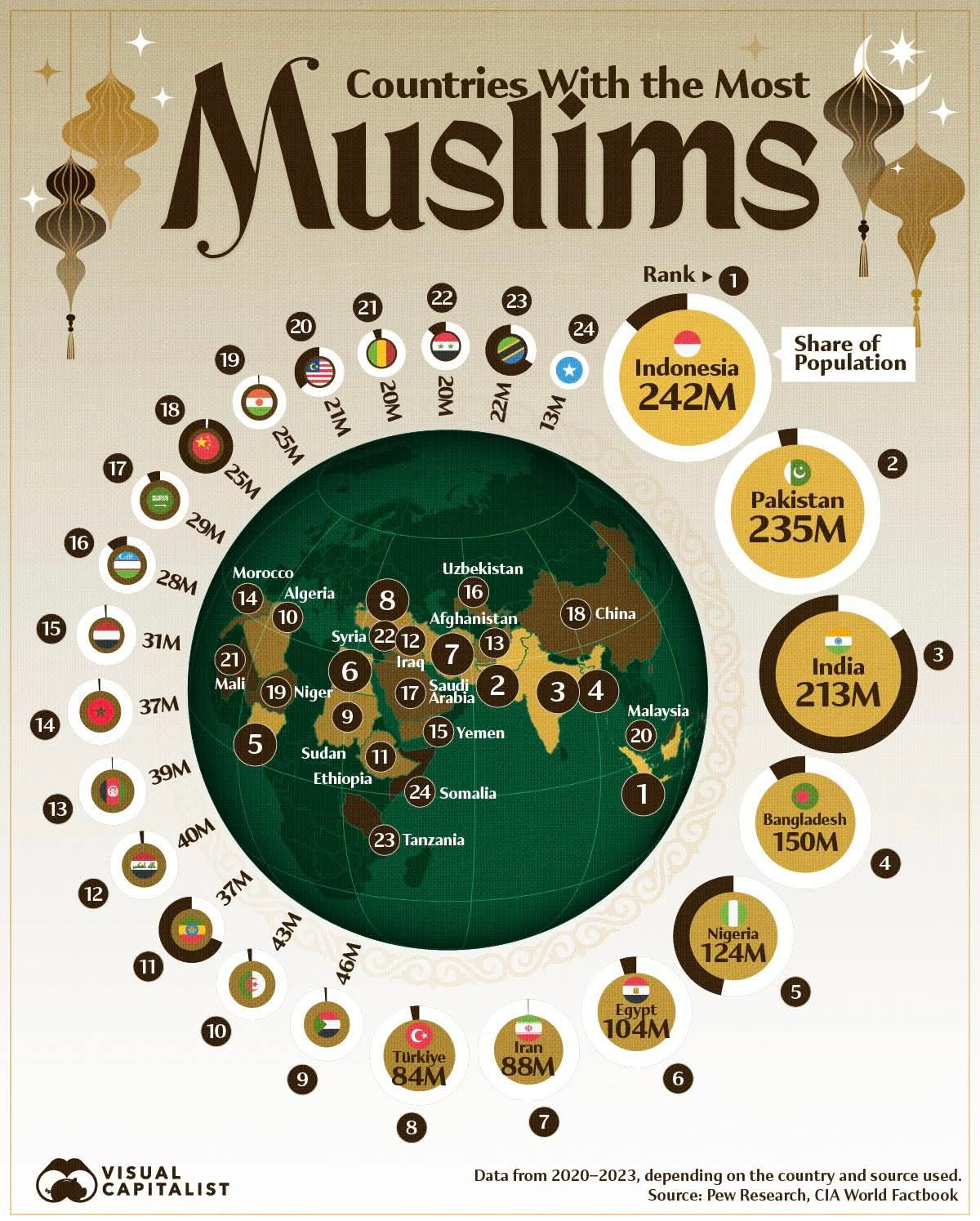
  • Countries With the Most Muslims (% Population)

    1. Indonesia - 242M (87.0%)
    2. Pakistan - 235M (96.3%)
    3. India - 213M (15.3%)
    4. Bangladesh - 150M (91.0%)
    5. Nigeria - 124M (53.5%)
    6. Egypt - 104M (95%)
    7. Iran - 88M (99.8%)
    8. Turkey - 84M (97%)
    9. Sudan - 46M (99%)
    10. Algeria - 43M (98.0%)
    11. Iraq - 40M (98%)
    12. Afghanistan - 39M (99.7%)
    13. Ethiopia - 37M (31.3%)
    14. Morocco - 37M (99.0%)
    15. Yemen - 31M (99.1%)
    16. Saudi Arabia - 29M (92.7%)
    17. Uzbekistan - 28M (88.0%)
    18. China - 25M (1.4%)
    19. Nigér - 25M (99.3%)
    20. Tanzania - 22M (34.1%)
    21. Malaysia - 21M (63.5%)
    22. Mali - 20M (93.9%)
    23. Syria - 20M (87.0%)
    24. Somalia - 13M (99.8%)

    The data comes from two complementary sources: Pew Research, which tracks global religious affiliation, and the CIA World Factbook, which publishes national demographic splits.

    Countries With the Largest Muslim Populations: Islam is the world’s second-largest religion, with 1.8 billion Muslims dispersed across every continent. Due to data constraints, the most recent figures between 2020–2023 have been utilized, depending on availability per country. Africa is home to some of the fastest-growing Muslim populations. Nigeria, already the continent’s most populous country, now counts over 124 million Muslims, comprising more than half its citizens. In North Africa, Egypt and Algeria each report that roughly 95-98% of their inhabitants identify as Muslim, reflecting centuries-old cultural and religious continuity.
    🕌 Countries With the Most Muslims (% Population) 1. 🇮🇩 Indonesia - 242M (87.0%) 2. 🇵🇰 Pakistan - 235M (96.3%) 3. 🇮🇳 India - 213M (15.3%) 4. 🇧🇩 Bangladesh - 150M (91.0%) 5. 🇳🇬 Nigeria - 124M (53.5%) 6. 🇪🇬 Egypt - 104M (95%) 7. 🇮🇷 Iran - 88M (99.8%) 8. 🇹🇷 Turkey - 84M (97%) 9. 🇸🇩 Sudan - 46M (99%) 10. 🇩🇿 Algeria - 43M (98.0%) 11. 🇮🇶 Iraq - 40M (98%) 12. 🇦🇫 Afghanistan - 39M (99.7%) 13. 🇪🇹 Ethiopia - 37M (31.3%) 14. 🇲🇦 Morocco - 37M (99.0%) 15. 🇾🇪 Yemen - 31M (99.1%) 16. 🇸🇦 Saudi Arabia - 29M (92.7%) 17. 🇺🇿 Uzbekistan - 28M (88.0%) 18. 🇨🇳 China - 25M (1.4%) 19. 🇳🇪 Nigér - 25M (99.3%) 20. 🇹🇿 Tanzania - 22M (34.1%) 21. 🇲🇾 Malaysia - 21M (63.5%) 22. 🇲🇱 Mali - 20M (93.9%) 23. 🇸🇾 Syria - 20M (87.0%) 24. 🇸🇴 Somalia - 13M (99.8%) 📌 The data comes from two complementary sources: Pew Research, which tracks global religious affiliation, and the CIA World Factbook, which publishes national demographic splits. Countries With the Largest Muslim Populations: Islam is the world’s second-largest religion, with 1.8 billion Muslims dispersed across every continent. Due to data constraints, the most recent figures between 2020–2023 have been utilized, depending on availability per country. Africa is home to some of the fastest-growing Muslim populations. Nigeria, already the continent’s most populous country, now counts over 124 million Muslims, comprising more than half its citizens. In North Africa, Egypt and Algeria each report that roughly 95-98% of their inhabitants identify as Muslim, reflecting centuries-old cultural and religious continuity.
    0 Commentarii 0 Distribuiri
  • Diabetes rates around the world:

    1. Pakistan: 30.8%
    2. Kuwait: 24.9%
    8. Egypt: 20.9%
    10. Qatar: 19.5%
    12. Malaysia: 19%
    14. Saudi Arabia: 18.7%
    17. Mexico: 16.9%
    26. Turkey: 14.5%
    27. Bangladesh: 14.2%
    48. Sri Lanka: 11.3%
    53. South Africa: 10.8%
    54. Iraq: 10.7%
    55. United States: 10.7%
    56. Indonesia: 10.6%
    57. China: 10.6%
    60. Spain: 10.3%
    63. Thailand: 9.7%
    64. India: 9.6%
    71. Iran: 9.1%
    74. Portugal: 9.1%
    78. Brazil: 8.8%
    83. Nepal: 8.7%
    86. North Korea: 8.6%
    96. Canada: 7.7%
    107. Philippines: 7.1%
    113. South Korea: 6.8%
    116. Japan: 6.6%
    127. Australia: 6.4%
    129. Italy: 6.4%
    132. United Kingdom: 6.3%
    135. New Zealand: 6.2%
    139. Vietnam: 6.1%
    153. Russia: 5.6%
    162. Argentina: 5.4%
    165. France: 5.3%
    169. Ethiopia: 5%
    183. Kenya: 4%
    186. Nigeria: 3.6%

    Percentage of people age 20-79 who have type 1 or type 2 diabetes
    Diabetes rates around the world: 1. 🇵🇰Pakistan: 30.8% 2. 🇰🇼Kuwait: 24.9% 8. 🇪🇬Egypt: 20.9% 10. 🇶🇦Qatar: 19.5% 12. 🇲🇾Malaysia: 19% 14. 🇸🇦Saudi Arabia: 18.7% 17. 🇲🇽Mexico: 16.9% 26. 🇹🇷Turkey: 14.5% 27. 🇧🇩Bangladesh: 14.2% 48. 🇱🇰Sri Lanka: 11.3% 53. 🇿🇦South Africa: 10.8% 54. 🇮🇶Iraq: 10.7% 55. 🇺🇸United States: 10.7% 56. 🇮🇩Indonesia: 10.6% 57. 🇨🇳China: 10.6% 60. 🇪🇸Spain: 10.3% 63. 🇹🇭Thailand: 9.7% 64. 🇮🇳India: 9.6% 71. 🇮🇷Iran: 9.1% 74. 🇵🇹Portugal: 9.1% 78. 🇧🇷Brazil: 8.8% 83. 🇳🇵Nepal: 8.7% 86. 🇰🇵North Korea: 8.6% 96. 🇨🇦Canada: 7.7% 107. 🇵🇭Philippines: 7.1% 113. 🇰🇷South Korea: 6.8% 116. 🇯🇵Japan: 6.6% 127. 🇦🇺Australia: 6.4% 129. 🇮🇹Italy: 6.4% 132. 🇬🇧United Kingdom: 6.3% 135. 🇳🇿New Zealand: 6.2% 139. 🇻🇳Vietnam: 6.1% 153. 🇷🇺Russia: 5.6% 162. 🇦🇷Argentina: 5.4% 165. 🇫🇷France: 5.3% 169. 🇪🇹Ethiopia: 5% 183. 🇰🇪Kenya: 4% 186. 🇳🇬Nigeria: 3.6% 📌 Percentage of people age 20-79 who have type 1 or type 2 diabetes
    0 Commentarii 0 Distribuiri
  • Most Populous Countries in The World (August 2025)

    1. India - 1,465,677,586 (1.47B)
    2. China - 1,415,623,588 (1.42B)
    3. United States - 347,538,693 (348M)
    4. Indonesia - 286,035,530 (286M)
    5. Pakistan - 255,219,554 (255M)
    6. Nigeria - 238,251,907 (238M)
    7. Brazil - 212,932,800 (213M)
    8. Bangladesh - 176,002,683 (176M)
    9. Russia - 143,876,305 (144M)
    10. Ethiopia - 135,983,125 (136M)
    11. Mexico - 132,107,942 (132M)
    12. Japan - 123,007,892 (123M)
    13. Egypt - 118,638,206 (119M)
    14. Philippines - 116,926,846 (117M)
    15. DR Congo - 113,367,106 (113M)
    16. Vietnam - 101,689,007 (102M)
    17. Iran - 92,543,805 (92M)
    18. Turkey - 87,716,710 (88M)
    19. Germany - 84,004,876 (84M)
    20. Thailand - 71,612,755 (72M)
    21. Tanzania - 70,801,979 (71M)
    22. United Kingdom - 69,609,918 (70M)
    23. France - 66,665,565 (67M)
    24. South Africa - 64,849,940 (65M)
    25. Italy - 59,117,339 (59M)
    26. Kenya - 57,680,076 (58M)
    27. Myanmar - 54,900,269 (55M)
    28. Colombia - 53,500,821 (54M)
    29. South Korea - 51,659,659 (52M)
    30. Sudan - 51,821,910 (52M)
    31. Uganda - 51,562,757 (52M)
    32. Spain - 47,886,966 (48M)
    33. Algeria - 47,520,822 (48M)
    34. Iraq - 47,151,180 (47M)
    35. Argentina - 45,873,616 (46M)
    36. Afghanistan - 43,999,045 (44M)
    37. Yemen - 41,927,208 (42M)
    38. Canada - 40,180,416 (40M)
    39. Angola - 39,187,953 (39M)
    40. Morocco - 38,479,712 (38M)
    41. Poland - 38,080,709 (38M)
    42. Uzbekistan - 37,146,431 (37M)
    43. Malaysia - 36,036,035 (36M)
    44. Mozambique - 35,760,667 (36M)
    45. Ghana - 35,150,102 (35M)
    46. Peru - 34,626,633 (35M)
    47. Saudi Arabia - 34,647,916 (35M)
    48. Madagascar - 32,842,738 (33M)
    49. 🇨🇮 Côte d'Ivoire - 32,813,785 (33M)
    50. Cameroon - 29,978,049 (30M)
    Most Populous Countries in The World (August 2025) 1. 🇮🇳 India - 1,465,677,586 (1.47B) 2. 🇨🇳 China - 1,415,623,588 (1.42B) 3. 🇺🇸 United States - 347,538,693 (348M) 4. 🇮🇩 Indonesia - 286,035,530 (286M) 5. 🇵🇰 Pakistan - 255,219,554 (255M) 6. 🇳🇬 Nigeria - 238,251,907 (238M) 7. 🇧🇷 Brazil - 212,932,800 (213M) 8. 🇧🇩 Bangladesh - 176,002,683 (176M) 9. 🇷🇺 Russia - 143,876,305 (144M) 10. 🇪🇹 Ethiopia - 135,983,125 (136M) 11. 🇲🇽 Mexico - 132,107,942 (132M) 12. 🇯🇵 Japan - 123,007,892 (123M) 13. 🇪🇬 Egypt - 118,638,206 (119M) 14. 🇵🇭 Philippines - 116,926,846 (117M) 15. 🇨🇩 DR Congo - 113,367,106 (113M) 16. 🇻🇳 Vietnam - 101,689,007 (102M) 17. 🇮🇷 Iran - 92,543,805 (92M) 18. 🇹🇷 Turkey - 87,716,710 (88M) 19. 🇩🇪 Germany - 84,004,876 (84M) 20. 🇹🇭 Thailand - 71,612,755 (72M) 21. 🇹🇿 Tanzania - 70,801,979 (71M) 22. 🇬🇧 United Kingdom - 69,609,918 (70M) 23. 🇫🇷 France - 66,665,565 (67M) 24. 🇿🇦 South Africa - 64,849,940 (65M) 25. 🇮🇹 Italy - 59,117,339 (59M) 26. 🇰🇪 Kenya - 57,680,076 (58M) 27. 🇲🇲 Myanmar - 54,900,269 (55M) 28. 🇨🇴 Colombia - 53,500,821 (54M) 29. 🇰🇷 South Korea - 51,659,659 (52M) 30. 🇸🇩 Sudan - 51,821,910 (52M) 31. 🇺🇬 Uganda - 51,562,757 (52M) 32. 🇪🇸 Spain - 47,886,966 (48M) 33. 🇩🇿 Algeria - 47,520,822 (48M) 34. 🇮🇶 Iraq - 47,151,180 (47M) 35. 🇦🇷 Argentina - 45,873,616 (46M) 36. 🇦🇫 Afghanistan - 43,999,045 (44M) 37. 🇾🇪 Yemen - 41,927,208 (42M) 38. 🇨🇦 Canada - 40,180,416 (40M) 39. 🇦🇴 Angola - 39,187,953 (39M) 40. 🇲🇦 Morocco - 38,479,712 (38M) 41. 🇵🇱 Poland - 38,080,709 (38M) 42. 🇺🇿 Uzbekistan - 37,146,431 (37M) 43. 🇲🇾 Malaysia - 36,036,035 (36M) 44. 🇲🇿 Mozambique - 35,760,667 (36M) 45. 🇬🇭 Ghana - 35,150,102 (35M) 46. 🇵🇪 Peru - 34,626,633 (35M) 47. 🇸🇦 Saudi Arabia - 34,647,916 (35M) 48. 🇲🇬 Madagascar - 32,842,738 (33M) 49. 🇨🇮 Côte d'Ivoire - 32,813,785 (33M) 50. 🇨🇲 Cameroon - 29,978,049 (30M)
    0 Commentarii 0 Distribuiri
  • Simplified Map Of Africa's Religions
    Simplified Map Of Africa's Religions
    0 Commentarii 0 Distribuiri
Sponsorizeaza Paginile