• HARRAN: WHERE HISTORY LIVES BENEATH THE DOMES!

    Harran, Şanlıurfa, Türkiye… A timeless land of history and culture.

    With thousands of years of history, distinctive architecture, and a rich cultural heritage, Harran is one of the most remarkable historical settlements in Anatolia. Its iconic domed beehive houses are not only architectural wonders but also precious reminders of the region’s deep-rooted history and traditions.

    Where Earth, Stone, and History Come Together!

    With their distinctive cone-shaped domes, Harran’s traditional houses stand out as remarkable examples of vernacular architecture. Built using traditional materials such as brick and mudbrick, these unique structures were designed to adapt to the region’s climate. Their architectural features help keep interiors cooler during the hot summer months, reflecting the ingenuity of generations who learned to live in harmony with nature.

    Every Dome Tells a Story, Every Wall Preserves a Memory…

    Harran’s historic houses are much more than places to live. They represent the region’s traditional lifestyle, cultural identity, and architectural heritage, carrying the traces of the past into the present. With their timeless character, these extraordinary structures connect generations and offer visitors a glimpse into another era.

    An Unforgettable Destination for History and Culture Lovers!

    With its historic streets, earthy textures, and distinctive domes rising toward the sky, Harran offers a truly unique atmosphere for photographers, travelers, and cultural explorers. Every corner reveals a different perspective, showcasing the remarkable cultural richness of Şanlıurfa.

    Harran’s beehive houses are a legacy of the past, a treasure of the present, and a heritage worth preserving for future generations.

    Discovering our history, protecting our cultural heritage, and passing it on to future generations is a shared responsibility. Because some structures are far more than bricks and earth; they are the memory of a civilization, the identity of a region, and a living story connecting the past to the future.

    Harran | Şanlıurfa, Türkiye
    Following the footsteps of history, discovering the heart of culture.

    #Şanlıurfa #Harran #HarranHouses #BeehiveHouses #HistoricHeritage #CulturalHeritage #AnatolianArchitecture #DiscoverTürkiye #HistoryAndCulture #TravelTürkiye #ExploreTheWorld #HiddenGems
    🏛️ HARRAN: WHERE HISTORY LIVES BENEATH THE DOMES! 🌍✨ 📍 Harran, Şanlıurfa, Türkiye… A timeless land of history and culture. With thousands of years of history, distinctive architecture, and a rich cultural heritage, Harran is one of the most remarkable historical settlements in Anatolia. Its iconic domed beehive houses are not only architectural wonders but also precious reminders of the region’s deep-rooted history and traditions. 🏺🏡 🧱 Where Earth, Stone, and History Come Together! With their distinctive cone-shaped domes, Harran’s traditional houses stand out as remarkable examples of vernacular architecture. Built using traditional materials such as brick and mudbrick, these unique structures were designed to adapt to the region’s climate. Their architectural features help keep interiors cooler during the hot summer months, reflecting the ingenuity of generations who learned to live in harmony with nature. 🌿 Every Dome Tells a Story, Every Wall Preserves a Memory… Harran’s historic houses are much more than places to live. They represent the region’s traditional lifestyle, cultural identity, and architectural heritage, carrying the traces of the past into the present. With their timeless character, these extraordinary structures connect generations and offer visitors a glimpse into another era. 📸 An Unforgettable Destination for History and Culture Lovers! With its historic streets, earthy textures, and distinctive domes rising toward the sky, Harran offers a truly unique atmosphere for photographers, travelers, and cultural explorers. Every corner reveals a different perspective, showcasing the remarkable cultural richness of Şanlıurfa. ✨ Harran’s beehive houses are a legacy of the past, a treasure of the present, and a heritage worth preserving for future generations. Discovering our history, protecting our cultural heritage, and passing it on to future generations is a shared responsibility. Because some structures are far more than bricks and earth; they are the memory of a civilization, the identity of a region, and a living story connecting the past to the future. ❤️🌍 📍 Harran | Şanlıurfa, Türkiye 🏛️ Following the footsteps of history, discovering the heart of culture. #Şanlıurfa #Harran #HarranHouses #BeehiveHouses #HistoricHeritage #CulturalHeritage #AnatolianArchitecture #DiscoverTürkiye #HistoryAndCulture #TravelTürkiye #ExploreTheWorld #HiddenGems
    0 التعليقات 0 نشر
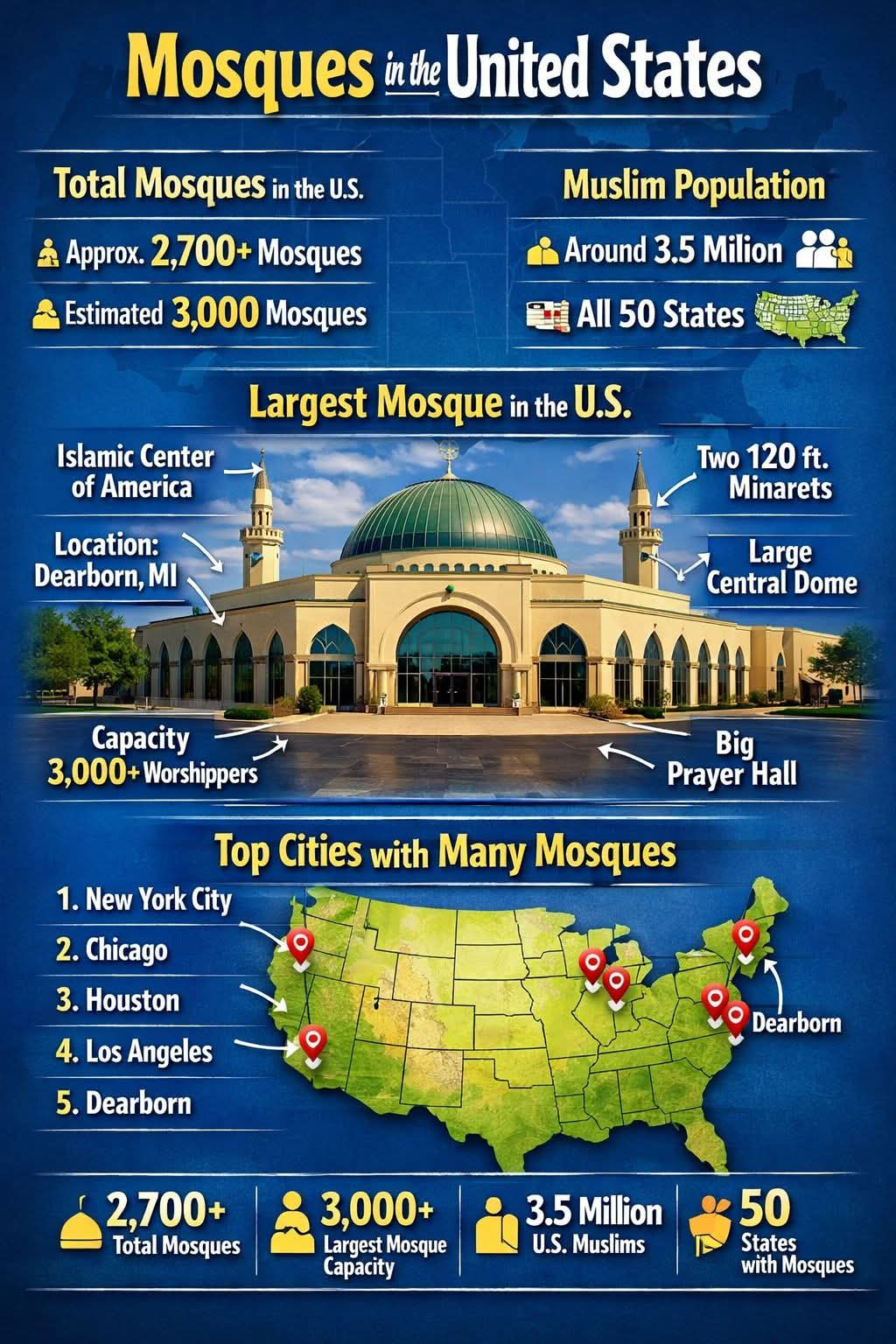
  • The United States has a growing Muslim community and thousands of mosques spread across the country. According to research by the Institute for Social Policy and Understanding, there are approximately 2,700 to 3,000 mosques in America today. These mosques serve as places for daily prayers, Friday congregational prayers, Islamic education, and community activities. Over the past few decades, the number of mosques has increased significantly due to the rising Muslim population and immigration from different parts of the world.
    The Muslim population in the United States is estimated to be around 3.5 million people. Muslims in America come from diverse ethnic backgrounds including Arabs, South Asians, African Americans, Turks, and Africans. Because of this diversity, many mosques also function as cultural and community centers where people gather for religious learning, charity work, and social support.
    One of the largest and most well-known mosques in the country is the Islamic Center of America, located in Dearborn, Michigan. This mosque is famous for its beautiful architecture, large central dome, and tall minarets. It can accommodate more than 3,000 worshippers at a time and is considered one of the biggest Islamic centers in North America.
    Major cities such as New York City, Chicago, Houston, and Los Angeles have many mosques because they have large Muslim populations. These mosques play an important role in maintaining religious identity, promoting community unity, and supporting charitable and educational activities throughout the United States.
    The United States has a growing Muslim community and thousands of mosques spread across the country. According to research by the Institute for Social Policy and Understanding, there are approximately 2,700 to 3,000 mosques in America today. These mosques serve as places for daily prayers, Friday congregational prayers, Islamic education, and community activities. Over the past few decades, the number of mosques has increased significantly due to the rising Muslim population and immigration from different parts of the world. The Muslim population in the United States is estimated to be around 3.5 million people. Muslims in America come from diverse ethnic backgrounds including Arabs, South Asians, African Americans, Turks, and Africans. Because of this diversity, many mosques also function as cultural and community centers where people gather for religious learning, charity work, and social support. One of the largest and most well-known mosques in the country is the Islamic Center of America, located in Dearborn, Michigan. This mosque is famous for its beautiful architecture, large central dome, and tall minarets. It can accommodate more than 3,000 worshippers at a time and is considered one of the biggest Islamic centers in North America. Major cities such as New York City, Chicago, Houston, and Los Angeles have many mosques because they have large Muslim populations. These mosques play an important role in maintaining religious identity, promoting community unity, and supporting charitable and educational activities throughout the United States.
    0 التعليقات 0 نشر
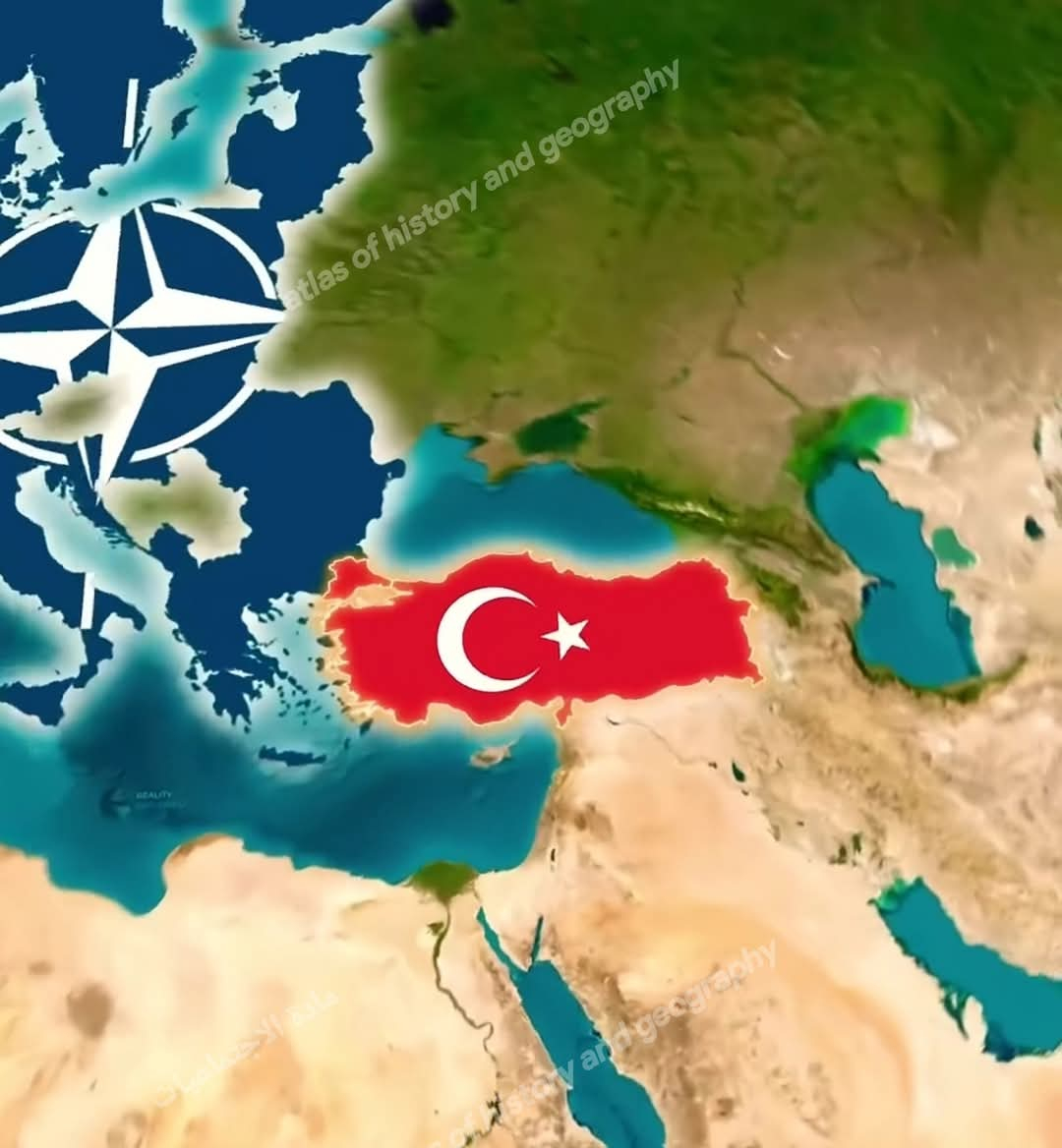
  • Turkey: The Golden Bridge Between East and West
    1. Location & Area
    Turkey spans both Asia and Europe, with a total area of approximately 783,562 km², making it one of the largest countries in the region.

    2. Land of Geographical Diversity
    From Mediterranean coastlines to Anatolian mountains, Turkey offers rich landscapes and diverse cultures.

    3. Ottoman Heritage & Modern Civilization
    With deep roots in the Ottoman Empire, Turkey is filled with historic landmarks like Hagia Sophia and Topkapi Palace.

    4. Population
    Turkey has about 85 million people, mainly concentrated in Istanbul, Ankara, and Izmir.

    5. A Vibrant and Growing Economy
    Its economy is based on industry, tourism, and agriculture, and is considered one of the world’s leading emerging markets.

    6. A Regional Transport Hub
    Turkey acts as a key transport link between Europe and Asia, with modern airways and high-speed rail networks.

    7. A Unique Cultural Identity
    It blends modernity with Islamic traditions, offering a mix of cuisines, arts, and customs from both East and West.

    8. Sports & Entertainment
    Football is the most popular sport, with iconic clubs like Galatasaray and Fenerbahçe based in Istanbul.

    9. Advanced Education & Top Universities
    Turkey attracts international students, especially in fields like medicine, engineering, and political science.

    #Turkey #Istanbul #Anatolia
    Turkey: The Golden Bridge Between East and West 1. 🗺️📏 Location & Area Turkey spans both Asia and Europe, with a total area of approximately 783,562 km², making it one of the largest countries in the region. 2. 🇹🇷🏞️ Land of Geographical Diversity From Mediterranean coastlines to Anatolian mountains, Turkey offers rich landscapes and diverse cultures. 3. 🕌🏛️ Ottoman Heritage & Modern Civilization With deep roots in the Ottoman Empire, Turkey is filled with historic landmarks like Hagia Sophia and Topkapi Palace. 4. 👥📊 Population Turkey has about 85 million people, mainly concentrated in Istanbul, Ankara, and Izmir. 5. 💹🏗️ A Vibrant and Growing Economy Its economy is based on industry, tourism, and agriculture, and is considered one of the world’s leading emerging markets. 6. ✈️🚅 A Regional Transport Hub Turkey acts as a key transport link between Europe and Asia, with modern airways and high-speed rail networks. 7. 🕌🧕 A Unique Cultural Identity It blends modernity with Islamic traditions, offering a mix of cuisines, arts, and customs from both East and West. 8. ⚽🎭 Sports & Entertainment Football is the most popular sport, with iconic clubs like Galatasaray and Fenerbahçe based in Istanbul. 9. 🧠🎓 Advanced Education & Top Universities Turkey attracts international students, especially in fields like medicine, engineering, and political science. #Turkey #Istanbul #Anatolia
    0 التعليقات 0 نشر
  • Kıbrıs ( kktc) Kuzey Kıbrıs Kıbrıs Türk Cumhuriyetinin 35. Kurtuluş yıldönümü kutlu olsun.

    Kıbrıs Türk’ünün varlığını ve kimliğini korumak için bütün imkansızlıklara, zorluklara rağmen Kurtuluş Savaşı ruhuyla zulme ve enosise direnen ve bu yolda ölümsüzleşen bütün şehitlerimizi minnet ve rahmetle anıyorum.
    #KKTC #Kıbrıs #Turkey #Türkiye

    We remember all martys with respect and gratitude who gave their lives to preserve the existence and the identity of Turkish Cypriots, as the Turkish Republic of Northern Cyprus commemorates “Struggle and Martyrs Week.”
    Kıbrıs ( kktc) Kuzey Kıbrıs Kıbrıs Türk Cumhuriyetinin 35. Kurtuluş yıldönümü kutlu olsun. Kıbrıs Türk’ünün varlığını ve kimliğini korumak için bütün imkansızlıklara, zorluklara rağmen Kurtuluş Savaşı ruhuyla zulme ve enosise direnen ve bu yolda ölümsüzleşen bütün şehitlerimizi minnet ve rahmetle anıyorum. #KKTC #Kıbrıs #Turkey #Türkiye We remember all martys with respect and gratitude who gave their lives to preserve the existence and the identity of Turkish Cypriots, as the Turkish Republic of Northern Cyprus commemorates “Struggle and Martyrs Week.”
    0 التعليقات 0 نشر
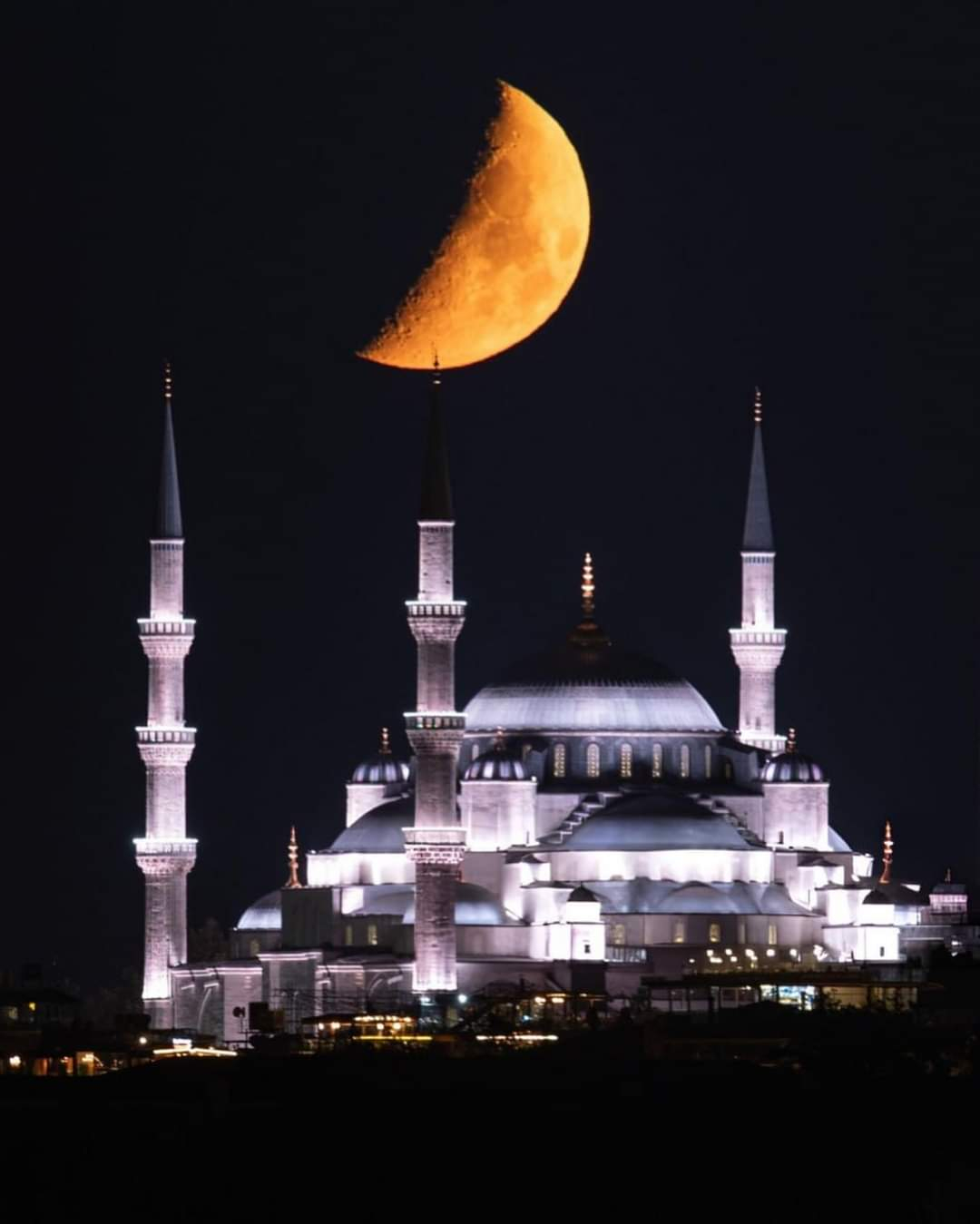
  • Crescent Moon Graces Istanbul’s Sky, Captured Alongside Sultanahmet Mosque

    Istanbul, Turkey – In a breathtaking moment that epitomizes the city’s timeless beauty, a crescent moon was captured shining in the sky above Istanbul, forming a stunning backdrop to the historic Sultanahmet Mosque. The delicate sliver of moonlight seemed to hover directly over the mosque, enhancing the elegance of its minarets and domes. This serene scene, blending natural beauty with architectural grandeur, reflects the rich cultural and spiritual heritage of Istanbul.

    The image of the crescent moon, a symbol deeply intertwined with Turkish identity and Islamic tradition, alongside one of the most iconic mosques in the world, has captivated the hearts of locals and visitors alike. This fleeting yet powerful visual encapsulates the essence of Istanbul, a city where the past and present coexist in perfect harmony.

    Photo by: Hakan Sarı
    .
    .
    #istexpats #istanbulexpatcommunity #istanbul #expat #news
    Crescent Moon Graces Istanbul’s Sky, Captured Alongside Sultanahmet Mosque Istanbul, Turkey – In a breathtaking moment that epitomizes the city’s timeless beauty, a crescent moon was captured shining in the sky above Istanbul, forming a stunning backdrop to the historic Sultanahmet Mosque. The delicate sliver of moonlight seemed to hover directly over the mosque, enhancing the elegance of its minarets and domes. This serene scene, blending natural beauty with architectural grandeur, reflects the rich cultural and spiritual heritage of Istanbul. The image of the crescent moon, a symbol deeply intertwined with Turkish identity and Islamic tradition, alongside one of the most iconic mosques in the world, has captivated the hearts of locals and visitors alike. This fleeting yet powerful visual encapsulates the essence of Istanbul, a city where the past and present coexist in perfect harmony. Photo by: Hakan Sarı . . #istexpats #istanbulexpatcommunity #istanbul #expat #news
    0 التعليقات 0 نشر
  • In just over two months, Israel has wreaked more destruction in and upon Palestine’s Gaza than Russian attacks on Ukraine’s Mariupol or, proportionally, the Allied bombing of Germany in World War II.

    In deliberately targeting civilian infrastructure, Israel has, since October 7, entirely or partially destroyed — among other sites and buildings — places of worship, cemeteries, libraries, universities and schools in an attempt to erase everything related to Palestinian culture and identity in Gaza and render the territory uninhabitable for its residents.

    Israel’s war on the enclave has destroyed over two-thirds of all structures in northern Gaza and a quarter of the buildings in the southern area of Khan Younis, according to an analysis of Copernicus Sentinel-1 satellite data.

    Since the start of its large-scale attacks, Israel has dropped 53,000 tons of explosives on Gaza.

    The Israeli attacks have reduced 192 mosques to rubble in the besieged enclave as of December 11, according to Israeli media. Israel’s ground offensive in northern Gaza has also razed at least six cemeteries, according to The New York Times.

    Israeli strikes have also destroyed the “Central Archives” in Gaza, which contained thousands of historical documents dating back more than 150 years. Gaza’s largest library, housing a myriad of historical documents and books, was also unable to escape the Israeli war machine.

    Here’s a look at just some of the destruction of civilian architecture.
    In just over two months, Israel has wreaked more destruction in and upon Palestine’s Gaza than Russian attacks on Ukraine’s Mariupol or, proportionally, the Allied bombing of Germany in World War II. In deliberately targeting civilian infrastructure, Israel has, since October 7, entirely or partially destroyed — among other sites and buildings — places of worship, cemeteries, libraries, universities and schools in an attempt to erase everything related to Palestinian culture and identity in Gaza and render the territory uninhabitable for its residents. Israel’s war on the enclave has destroyed over two-thirds of all structures in northern Gaza and a quarter of the buildings in the southern area of Khan Younis, according to an analysis of Copernicus Sentinel-1 satellite data. Since the start of its large-scale attacks, Israel has dropped 53,000 tons of explosives on Gaza. The Israeli attacks have reduced 192 mosques to rubble in the besieged enclave as of December 11, according to Israeli media. Israel’s ground offensive in northern Gaza has also razed at least six cemeteries, according to The New York Times. Israeli strikes have also destroyed the “Central Archives” in Gaza, which contained thousands of historical documents dating back more than 150 years. Gaza’s largest library, housing a myriad of historical documents and books, was also unable to escape the Israeli war machine. Here’s a look at just some of the destruction of civilian architecture.
    0 التعليقات 0 نشر
  • The Arbëreshë, also known as Albanians of Italy, are an Albanian ethnolinguistic group in Southern Italy, mostly concentrated in scattered villages in the region of Calabria and, to a lesser extent, in the regions of Abruzzo, Apulia, Basilicata, Campania, Molise and Sicily.

    They are the descendants of Albanian refugees who fled Albania, and later some from Morea between the 14th and the 18th centuries following the Ottoman conquest of the Balkans.

    Nowadays, most of the fifty Arbëreshë communities are adherents to the Italo-Albanian Church, an Eastern Catholic Church.

    The Arbëreshë speak Arbëresh, a Tosk Albanian variety involving code-mixing with regional Romance languages of Italy. It is of particular interest to students of the modern Albanian language as it retains speech sounds, morphosyntactic and vocabulary elements of the language spoken in pre-Ottoman Albania. In Italy, the Albanian language (and not specifically Arbëresh) is protected by law number 482/99, concerning the protection of the historic linguistic minorities.

    It is estimated that there are about 100,000 Italo-Albanians (400,000 if including those outside of Italy); they constitute one of the oldest and largest minorities in Italy. Being Italian and Arbëreshë are both central to Italo-Albanians' identity.

    Among the Arbëreshë the memory of Skanderbeg and his exploits was maintained and survived through songs

    The Arbëreshë cuisine is a mix of Albanian cuisine with Sicilian, Calabrian, and Lucanian influences. Traditional dishes include: Strangujët, Kanojët and Bukë

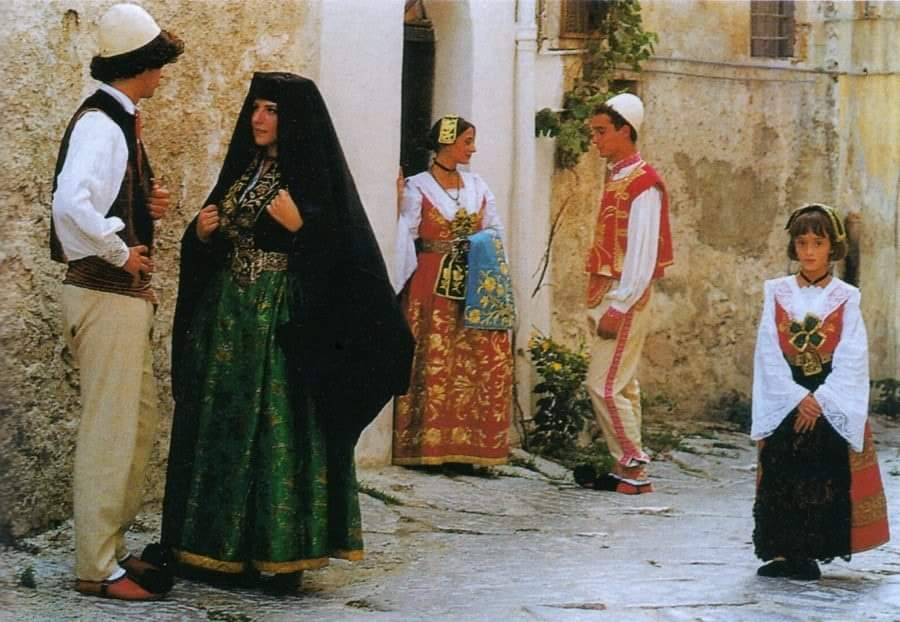
    Arbëreshë people in their traditional clothes
    The Arbëreshë, also known as Albanians of Italy, are an Albanian ethnolinguistic group in Southern Italy, mostly concentrated in scattered villages in the region of Calabria and, to a lesser extent, in the regions of Abruzzo, Apulia, Basilicata, Campania, Molise and Sicily. They are the descendants of Albanian refugees who fled Albania, and later some from Morea between the 14th and the 18th centuries following the Ottoman conquest of the Balkans. Nowadays, most of the fifty Arbëreshë communities are adherents to the Italo-Albanian Church, an Eastern Catholic Church. The Arbëreshë speak Arbëresh, a Tosk Albanian variety involving code-mixing with regional Romance languages of Italy. It is of particular interest to students of the modern Albanian language as it retains speech sounds, morphosyntactic and vocabulary elements of the language spoken in pre-Ottoman Albania. In Italy, the Albanian language (and not specifically Arbëresh) is protected by law number 482/99, concerning the protection of the historic linguistic minorities. It is estimated that there are about 100,000 Italo-Albanians (400,000 if including those outside of Italy); they constitute one of the oldest and largest minorities in Italy. Being Italian and Arbëreshë are both central to Italo-Albanians' identity. Among the Arbëreshë the memory of Skanderbeg and his exploits was maintained and survived through songs The Arbëreshë cuisine is a mix of Albanian cuisine with Sicilian, Calabrian, and Lucanian influences. Traditional dishes include: Strangujët, Kanojët and Bukë 📸 Arbëreshë people in their traditional clothes
    0 التعليقات 0 نشر
  • We stand with women around the globe fighting to end child marriage, sexual assault, and gender-based violence.

    We stand with women harassed and persecuted for their sexual orientation and gender identity.

    We stand with women whose land was taken from them. #IWD23
    We stand with women around the globe fighting to end child marriage, sexual assault, and gender-based violence. We stand with women harassed and persecuted for their sexual orientation and gender identity. We stand with women whose land was taken from them. #IWD23
    0 التعليقات 0 نشر
  • "The Byzantines tried their best to bribe Seljuk Turks or convince them to convert to Christian Faith but that conversion never came about. The Orthodox Sunni Islam, embraced by the Seljuk Turks in the 10th century, bonded all those Turks together and it was all important, it was the cement to Turkish identity and there is still a close identification of Orthodox Sunni Islam with the overall Turkish identity today. So it's a very very powerful bond that has survived for over a thousand years under Seljuk and Ottoman rule. This bond proved far stronger than the materialism, culturalism, images of imperial grandeur, and the exchanges with Byzantines. So, the Turks largely remain ever loyal to Orthodox Sunni Islam even today"

    ~Professor Kenneth W Harl (Phd historian from Yale university USA ). Taken from Lecture 15 titled "Sunni Islam and Ottoman Civilization".

    #Sunni #turkiye #turkey #Turkish #byzantine
    #osmanbey #sejuk #christian #christianity
    #islamic #islam #identity #cultural #bond
    #yale #usa #history #historylovers #historical
    "The Byzantines tried their best to bribe Seljuk Turks or convince them to convert to Christian Faith but that conversion never came about. The Orthodox Sunni Islam, embraced by the Seljuk Turks in the 10th century, bonded all those Turks together and it was all important, it was the cement to Turkish identity and there is still a close identification of Orthodox Sunni Islam with the overall Turkish identity today. So it's a very very powerful bond that has survived for over a thousand years under Seljuk and Ottoman rule. This bond proved far stronger than the materialism, culturalism, images of imperial grandeur, and the exchanges with Byzantines. So, the Turks largely remain ever loyal to Orthodox Sunni Islam even today" ~Professor Kenneth W Harl (Phd historian from Yale university USA 🇺🇸 ). Taken from Lecture 15 titled "Sunni Islam and Ottoman Civilization". #Sunni #turkiye #turkey #Turkish #byzantine #osmanbey #sejuk #christian #christianity #islamic #islam #identity #cultural #bond #yale #usa #history #historylovers #historical
    0 التعليقات 0 نشر
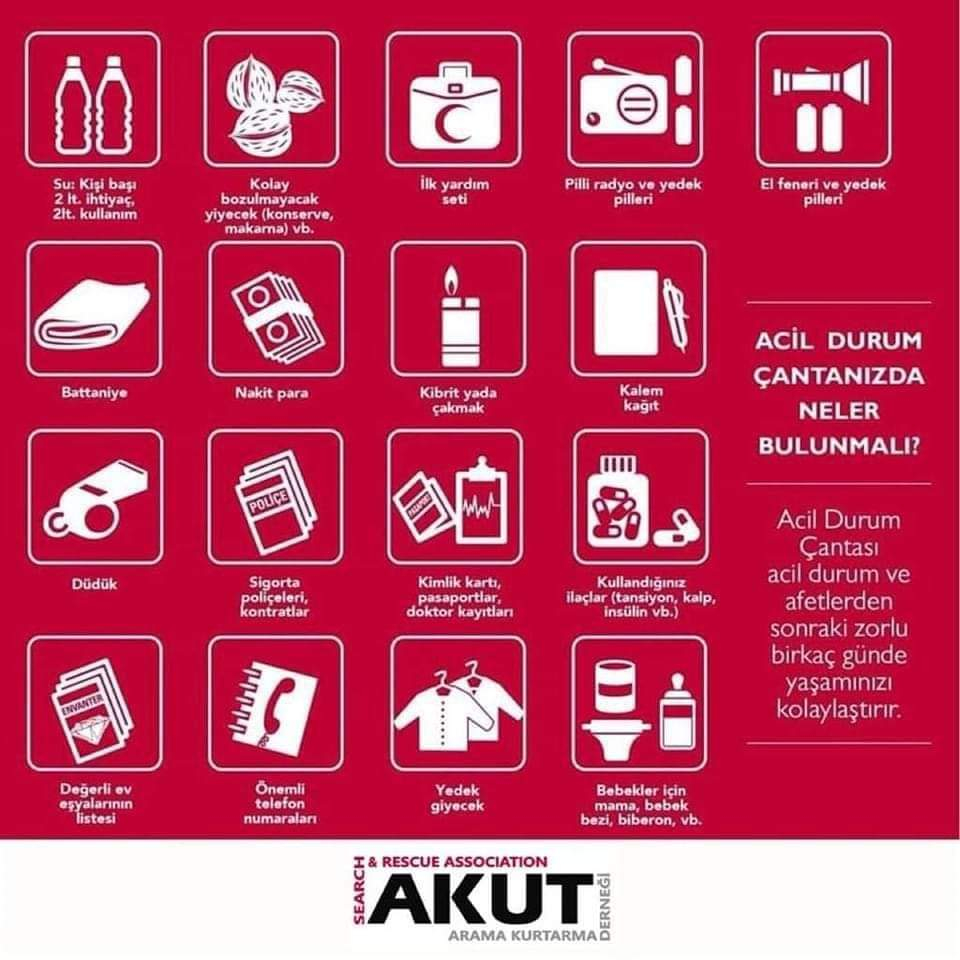
  • AFET ÇANTASINDA NELER OLMALI?

    AFAD'ın sitesinde yer alan Afet ve Acil Durum Çantası'nın içerisinde neler olması gerektiği ise başlıklar halinde şu şekilde sıralanıyor:

    Afet ve Acil Durum Çantasının İçerisinde Neler Olmalı?

    *Gıda

    >> Yüksek kalorili, vitamin ve karbonhidrat içeren, su kaybını önleyen ve dayanıklı (çabuk bozulmayan) gıdalar (Konserve, kuru meyveler, tahin–pekmez, meyve suyu, vb.).

    *Önemli belge fotokopileri

    >> Kimlik kartları (nüfus cüzdanı, ehliyet vb.)

    >> Tapu, sigorta, ruhsat belgeleri

    >> Zorunlu Deprem Poliçesi

    >> Diplomalar

    >> Pasaport, banka cüzdanı vb.

    >> Diğer (evcil hayvan sağlık karnesi, vb.)

    Giyecekler

    >> İç çamaşırı

    >> Çorap

    >> Yağmurluk

    >> İklime uygun giysiler

    *Su

    Her bir aile üyesi düşünülerek yeterli içme suyu alınmalı.

    *Hijyen malzemeler

    >> Sabun ve Dezenfektanlar

    >> Diş fırçası ve macunu

    >> Islak mendil

    >> Tuvalet kâğıdı

    >> Hijyenik ped

    *Diğer malzemeler

    >> İlk yardım çantası

    >> Uyku tulumu veya battaniye

    >> Çakı, düdük, küçük makas

    >> Kâğıt, kalem

    >> Pilli radyo, el feneri ve yedek piller (dayanıklı/uzun ömürlü pil seçilmeli)

    WHAT SHOULD BE IN THE DISASTER BAG?

    What should be in the Disaster and Emergency Bag on the website of AFAD is listed under the headings as follows:

    What Should Be Inside the Disaster and Emergency Bag?

    *Food

    >> Foods that contain high calories, vitamins and carbohydrates, prevent water loss and are durable (not perishable) (Canned, dried fruits, tahini-molasses, fruit juice, etc.).

    *Copy of important documents

    >> Identity cards (ID card, driver's license, etc.)

    >> Title deed, insurance, license documents

    >> Mandatory Earthquake Policy

    >> Diplomas

    >> Passport, bank wallet etc.

    >> Other (pet health card, etc.)

    clothes

    >> Underwear

    >> Socks

    >> Raincoat

    >> Clothing suitable for the climate

    *This

    Adequate drinking water should be taken with each family member in mind.

    *Hygiene materials

    >> Soap and Disinfectants

    >> Toothbrush and paste

    >> Wet wipes

    >> Toilet paper

    >> sanitary pad

    *Other materials

    >> First aid kit

    >> Sleeping bag or blanket

    >> Pocket knife, whistle, small scissors

    >> Paper, pencil

    >> Battery-powered radio, flashlight and spare batteries (durable/long-life batteries should be selected)
    AFET ÇANTASINDA NELER OLMALI? AFAD'ın sitesinde yer alan Afet ve Acil Durum Çantası'nın içerisinde neler olması gerektiği ise başlıklar halinde şu şekilde sıralanıyor: Afet ve Acil Durum Çantasının İçerisinde Neler Olmalı? *Gıda >> Yüksek kalorili, vitamin ve karbonhidrat içeren, su kaybını önleyen ve dayanıklı (çabuk bozulmayan) gıdalar (Konserve, kuru meyveler, tahin–pekmez, meyve suyu, vb.). *Önemli belge fotokopileri >> Kimlik kartları (nüfus cüzdanı, ehliyet vb.) >> Tapu, sigorta, ruhsat belgeleri >> Zorunlu Deprem Poliçesi >> Diplomalar >> Pasaport, banka cüzdanı vb. >> Diğer (evcil hayvan sağlık karnesi, vb.) Giyecekler >> İç çamaşırı >> Çorap >> Yağmurluk >> İklime uygun giysiler *Su Her bir aile üyesi düşünülerek yeterli içme suyu alınmalı. *Hijyen malzemeler >> Sabun ve Dezenfektanlar >> Diş fırçası ve macunu >> Islak mendil >> Tuvalet kâğıdı >> Hijyenik ped *Diğer malzemeler >> İlk yardım çantası >> Uyku tulumu veya battaniye >> Çakı, düdük, küçük makas >> Kâğıt, kalem >> Pilli radyo, el feneri ve yedek piller (dayanıklı/uzun ömürlü pil seçilmeli) WHAT SHOULD BE IN THE DISASTER BAG? What should be in the Disaster and Emergency Bag on the website of AFAD is listed under the headings as follows: What Should Be Inside the Disaster and Emergency Bag? *Food >> Foods that contain high calories, vitamins and carbohydrates, prevent water loss and are durable (not perishable) (Canned, dried fruits, tahini-molasses, fruit juice, etc.). *Copy of important documents >> Identity cards (ID card, driver's license, etc.) >> Title deed, insurance, license documents >> Mandatory Earthquake Policy >> Diplomas >> Passport, bank wallet etc. >> Other (pet health card, etc.) clothes >> Underwear >> Socks >> Raincoat >> Clothing suitable for the climate *This Adequate drinking water should be taken with each family member in mind. *Hygiene materials >> Soap and Disinfectants >> Toothbrush and paste >> Wet wipes >> Toilet paper >> sanitary pad *Other materials >> First aid kit >> Sleeping bag or blanket >> Pocket knife, whistle, small scissors >> Paper, pencil >> Battery-powered radio, flashlight and spare batteries (durable/long-life batteries should be selected)
    0 التعليقات 0 نشر
الصفحات المعززة